In a move that signals a paradigm shift in American national security, the Pentagon officially raised the projected cost for the "Golden Dome" missile defense project to $185 billion today, March 17, 2026. The $10 billion "plus-up" from last year’s estimates underscores the government’s urgency to harden U.S. airspace against a new generation of hypersonic and cruise missile threats. While the program—often dubbed the "Iron Dome for America"—promises a near-impenetrable shield, the ballooning price tag is already sending shockwaves through both the defense industry and the halls of Congress.
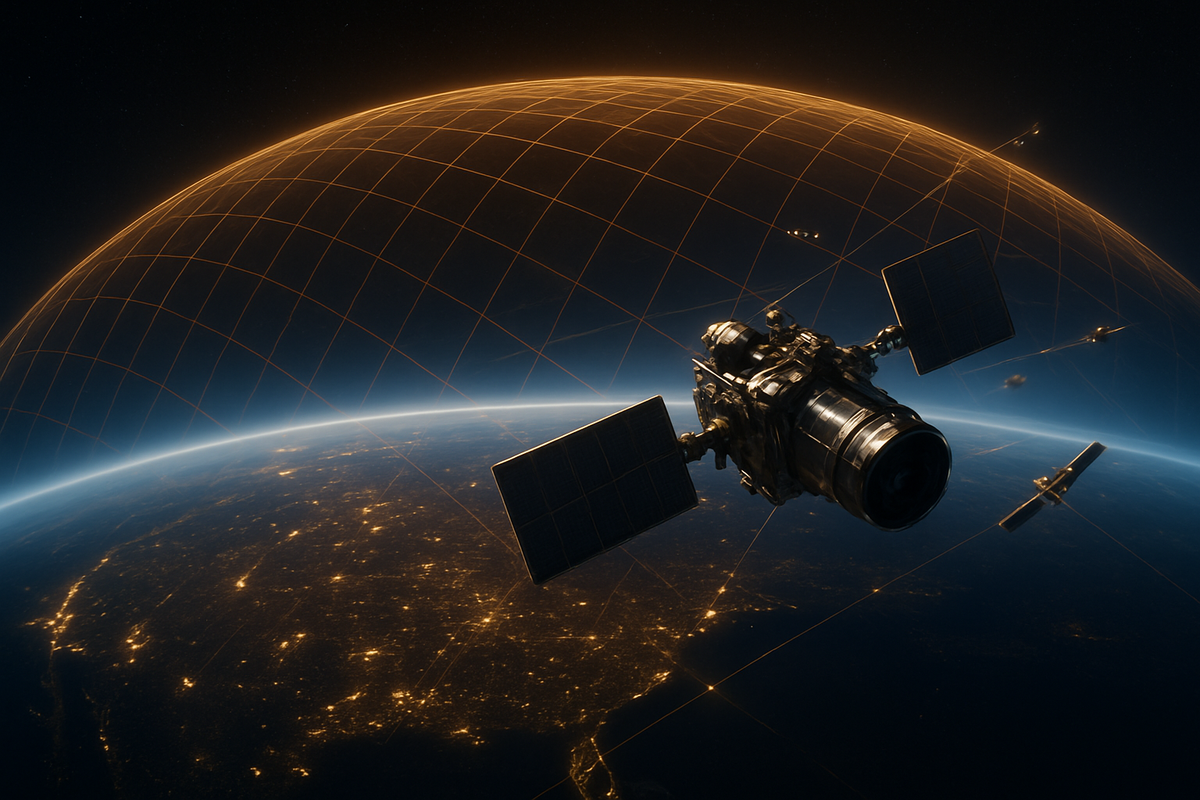
The immediate implications are twofold: a massive windfall for the nation’s largest defense contractors and a burgeoning political firestorm over fiscal transparency. As the project transitions from conceptual architecture to physical deployment, the technical focus has shifted decisively toward the "high ground" of space. This strategic pivot aims to create a multi-layered defense network capable of tracking and intercepting threats from the moment of launch to the point of impact, effectively rewriting the rules of modern strategic deterrence.
The expansion announced this morning by Program Director Gen. Michael Guetlein represents a significant acceleration of the "objective architecture" for the Golden Dome. The $10 billion increase is specifically earmarked to "move schedules from the right to the left" for three cornerstone technologies: the Hypersonic and Ballistic Tracking Space Sensor (HBTSS), the Space Force Data Transport Layer, and the Space-Based Air Moving Target Indicators (SB-AMTI). These systems are designed to maintain "custody" of high-speed, maneuverable hypersonic glide vehicles that traditional ground-based radars often struggle to track.
The timeline leading to this moment has been remarkably fast-tracked. Following an Executive Order in January 2025 that mandated the creation of a next-generation shield, the "One Big Beautiful Bill Act" in July 2025 provided the initial $24.4 billion down payment. By February 2026, the FY2026 Appropriations Act added another $13.4 billion, culminating in today's revised $185 billion total estimate. The Pentagon’s goal is to achieve Initial Operational Capability (IOC) by 2028, featuring a preliminary constellation of space-based sensors integrated with upgraded ground interceptors.
However, the announcement was met with a lukewarm response on Wall Street. Despite the increased funding, shares of major primes saw a modest sell-off as investors weighed the benefits against the aggressive oversight of the newly formed Department of Government Efficiency (DOGE). Market participants expressed concern that the shift toward commercial-style procurement—a favorite strategy of DOGE leadership—could squeeze the historically high margins of traditional "cost-plus" defense contracts.
The primary beneficiaries of this expansion are the "Big Four" of the defense world, though the stakes have never been higher. Lockheed Martin (NYSE: LMT) remains the central pillar of the Golden Dome’s digital backbone. The company was recently named a prime vendor for the command-and-control (C2) architecture and holds a classified "secret" contract for Space-Based Interceptor (SBI) prototypes. Lockheed has already dedicated a portion of its $1.65 billion 2026 capital expenditure budget to scale its "Space Park" campus, anticipating a high-rate production cycle for these orbital "kill vehicles."
Boeing (NYSE: BA) is also carving out a critical niche through its subsidiary, Millennium Space Systems. Boeing has commissioned a 9,000-square-foot production line in El Segundo, California, specifically for Golden Dome’s electro-optical infrared (EO/IR) payloads. While Boeing’s commercial division continues to face scrutiny, its defense segment is betting heavily on the "Foo Fighter" tracking satellites and the X-37B spaceplane as essential orbital testbeds for the project's most sensitive technologies.
Northrop Grumman (NYSE: NOC) and RTX Corporation (NYSE: RTX) round out the consortium, with RTX focusing on the kinetic interceptors and Northrop leveraging its expertise in stealth and satellite integration. However, the $185 billion figure is viewed with skepticism by some analysts. The Congressional Budget Office (CBO) has warned that the true cost could reach $542 billion over the next two decades. For these companies, the challenge will be delivering on highly complex, "highest-risk" elements like the SBIs without falling into the "fixed-price contract traps" that have plagued recent defense programs.
The Golden Dome project is more than just a massive procurement effort; it is the physical manifestation of a broader trend toward the "militarization of the heavens." By integrating thousands of low-earth orbit (LEO) satellites into a cohesive defense grid, the U.S. is moving away from the Cold War-era doctrine of Mutually Assured Destruction (MAD) toward a posture of "strategic invulnerability." This shift has profound geopolitical ripple effects, as evidenced by a joint statement from China and Russia today condemning the project as a violation of the 1967 Outer Space Treaty.
The involvement of the Department of Government Efficiency (DOGE), led by Elon Musk, adds another layer of complexity. DOGE has initiated a high-priority audit to determine if the Golden Dome contracts offer enough "off-ramps" for underperforming components. Critics, however, point to a potential conflict of interest, as Musk’s SpaceX is a frontrunner for the multi-billion dollar launch contracts required to put the Golden Dome into orbit. This tension between "efficiency" and "entrenched interests" is likely to define the project's regulatory environment for years to come.
Historically, projects of this scale—such as the Reagan-era "Star Wars" program—have struggled with technical feasibility and political longevity. The Golden Dome differs in its reliance on "proliferated" constellations—hundreds of small, cheap satellites rather than a few large, expensive ones. This approach reflects the wider industry move toward "Commercial-Off-The-Shelf" (COTS) solutions, which aims to bring the rapid innovation cycles of Silicon Valley to the Pentagon’s slow-moving acquisition process.
Looking ahead, the next 24 months will be a gauntlet for the Golden Dome. The 2028 IOC target requires a series of flawless technical demonstrations, beginning with full-scale Space-Based Interceptor flight tests scheduled for early 2027. Any significant failure in these early stages could give ammunition to political opponents, such as Senators Mark Kelly and Jack Reed, who have already labeled the project a "slush fund" with an unrealistic price tag.
Strategically, the defense primes may need to pivot. If DOGE continues to push for COTS solutions, companies like Lockheed Martin and Northrop Grumman will need to prove they can innovate as fast as commercial startups while maintaining the rigorous standards required for national security. We may also see an increase in mergers and acquisitions as the "Big Four" look to swallow up smaller sensor and AI firms that hold the keys to the Golden Dome’s "digital brain."
The market opportunities are vast, but so are the risks. A successful deployment could secure a multi-decade revenue stream for the winners of the "SHIELD" umbrella contract, which already involves over 2,100 companies. Conversely, if the project is scaled back due to international pressure or technical setbacks, the heavy capital expenditures currently being made by the likes of Boeing and RTX could become significant liabilities.
The $185 billion expansion of the Golden Dome marks a point of no return for U.S. defense strategy. By doubling down on a space-based, multi-layered shield, the Pentagon is betting that technology can finally solve the age-old problem of missile defense. For investors, the takeaway is clear: the defense sector is no longer just about planes, tanks, and ships; it is increasingly a play on space infrastructure, high-speed data networking, and orbital logistics.
Moving forward, the market will be watching the DOGE audits and the FY2027 budget requests with intense focus. If the CBO’s $542 billion estimate proves more accurate than the Pentagon’s $185 billion figure, the political and economic strain could reach a breaking point. For now, the "Golden Dome" remains the most ambitious and expensive defense project in modern history—a high-stakes gamble that the United States can build a ceiling over the world before its adversaries can find a way to break through.
This content is intended for informational purposes only and is not financial advice