As of January 6, 2026, the strategic landscape for North American midstream energy has shifted decisively toward the U.S. Gulf Coast, with Gibson Energy (TSX: GEI) emerging as a primary architect of this transition. Once heavily reliant on the volatile swings of its marketing segment, the Calgary-based energy infrastructure leader has successfully pivoted toward a high-margin, infrastructure-first model. This transformation, anchored by the massive 2023 acquisition of the South Texas Gateway Terminal (STGT), has allowed the company to navigate a challenging period of narrow crude differentials that have crippled its traditional marketing earnings.
The immediate implications of this expansion are clear: Gibson has effectively "de-risked" its balance sheet by securing long-term, take-or-pay contracts with investment-grade global shippers. By integrating the Gateway Terminal—located in the premier deep-water port of Ingleside, Texas—Gibson has not only diversified its geographic footprint but has also established itself as a critical conduit for Permian Basin crude reaching global markets. As marketing revenues faced a steep 57% year-over-year decline throughout 2024 and 2025, the record-breaking throughput at the Gateway Terminal has provided a vital financial cushion, keeping the company’s dividend yield attractive for income-focused investors.
A New Era in Infrastructure: From Calgary to Corpus Christi
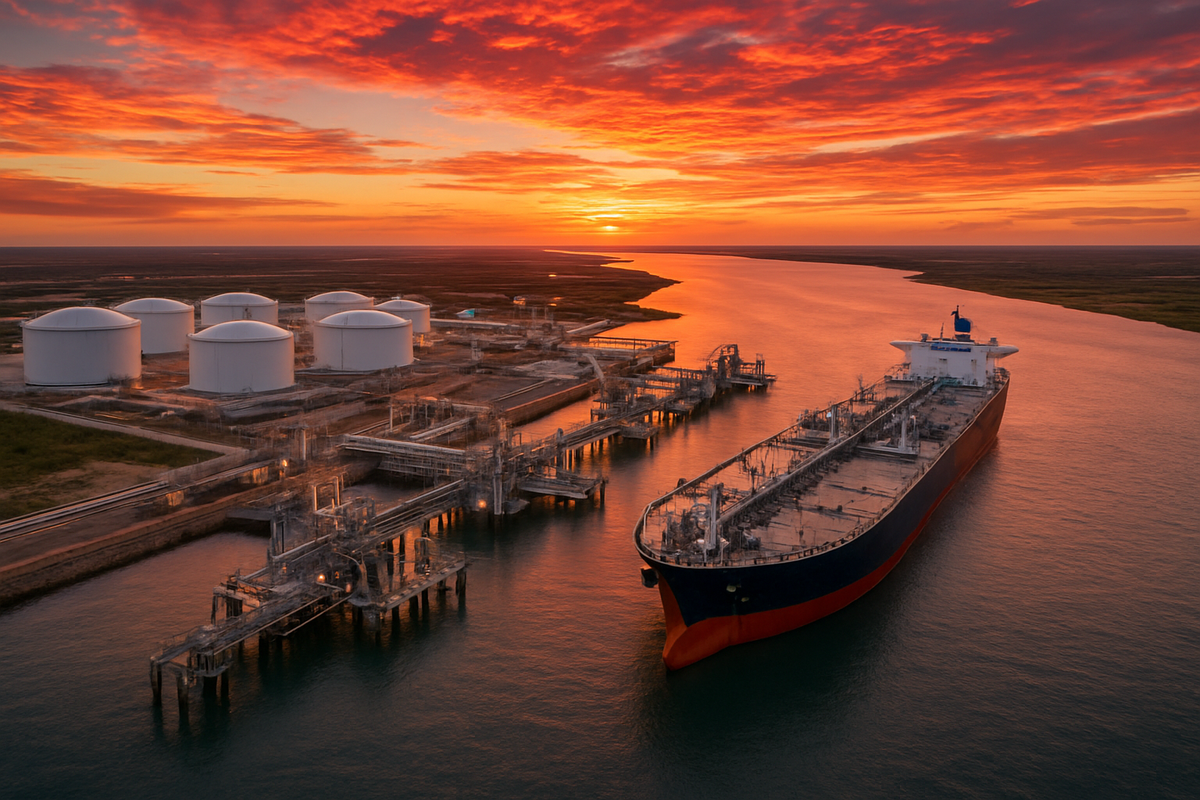
The journey toward Gibson’s current dominance in the Gulf Coast began in earnest on August 1, 2023, when the company finalized its US$1.1 billion (C$1.5 billion) acquisition of the South Texas Gateway Terminal from EnCap Flatrock Midstream. At the time, the move was seen as a bold, multi-billion-dollar bet on the longevity of U.S. crude exports. The facility, capable of loading two Very Large Crude Carriers (VLCCs) simultaneously, immediately became the "crown jewel" of Gibson’s portfolio. Throughout 2024 and 2025, Gibson focused on optimizing this asset, completing a major dredging project in late 2025 that increased loading efficiency and allowed Suezmax vessels to carry 10% more volume directly from the dock.
The timeline of this expansion has been marked by a series of strategic wins. By Q3 2025, the Gateway Terminal reached a record throughput of 717,000 barrels per day (bpd), a staggering 30% increase from its performance at the time of acquisition. This growth was fueled by the full integration of the Cactus II pipeline connection and the sanctioning of the "Wink-to-Gateway" project, which optimized the flow of Permian crude directly to the terminal. These milestones were essential in offsetting the "terrible" performance of the marketing segment, which suffered as market backwardation and tight crude spreads limited blending and storage opportunities in Canada.
Initial market reactions to the expansion were mixed, primarily due to the leverage Gibson took on to fund the purchase. However, as the infrastructure segment began to contribute over 85% of the company’s total EBITDA, investor sentiment shifted. Key stakeholders, including major institutional investors and Permian producers like Occidental Petroleum (NYSE: OXY) and Chevron (NYSE: CVX), have increasingly viewed Gibson as a reliable partner in the export value chain. The company's ability to renew and expand long-term contracts—including a major 40% increase in fixed revenue from a key customer in late 2024—has solidified its standing in the competitive Texas midstream market.
Winners and Losers in the Midstream Shakeup
The primary winner in this strategic shift is undoubtedly Gibson Energy (TSX: GEI) itself, which has successfully transitioned from a regional Canadian player to a North American export powerhouse. By securing assets in Ingleside, Gibson has insulated itself from the logistical bottlenecks that often plague the Western Canadian Sedimentary Basin. Furthermore, Permian Basin producers are major beneficiaries; the increased efficiency at Gateway reduces their "per-barrel" transit costs and provides more reliable access to international markets in Europe and Asia, where demand for light sweet crude remains robust.
Conversely, the "losers" in this scenario are the traditional, marketing-heavy midstream firms that failed to diversify into hard infrastructure. Companies that relied solely on crude oil blending and price arbitrage have seen their margins evaporate in the current environment of narrow price differentials. While Gibson’s marketing segment also took a hit, its infrastructure cash flows acted as a structural hedge. Additionally, smaller terminal operators in the Corpus Christi area that lack the VLCC-loading capabilities of Gateway are finding it increasingly difficult to compete for the business of global supermajors who prioritize speed and scale.
On the Canadian front, the impact is more nuanced. While Gibson’s Edmonton terminal continues to benefit from connections to the Trans Mountain Expansion (TMX) project, the company’s heavy focus on the U.S. has led some domestic-focused peers to scramble for their own cross-border footholds. Enbridge Inc. (TSX: ENB) and TC Energy (TSX: TRP) continue to dominate the large-scale pipeline space, but Gibson has carved out a specialized niche in the export terminal segment that is difficult to replicate. The shift in capital allocation toward Texas means that some smaller-scale Canadian infrastructure projects may see delayed investment as Gibson prioritizes its high-growth U.S. assets.
Broader Industry Trends and the Global Export Surge
Gibson’s expansion fits into a broader industry trend known as the "Southern Migration" of Canadian energy capital. As regulatory hurdles and environmental opposition made large-scale infrastructure projects in Canada increasingly difficult to execute, midstream companies began looking to the U.S. Gulf Coast for growth. The South Texas Gateway Terminal acquisition is a textbook example of this trend, reflecting a shift in focus from merely transporting oil to facilitating global trade. This move aligns with the U.S. maintaining its position as a top global oil producer and a vital supplier to a world seeking alternatives to Russian and Middle Eastern barrels.
The ripple effects of Gibson’s move are being felt across the regulatory landscape as well. The success of the Ingleside terminal has put pressure on other Texas ports to accelerate dredging and expansion projects to keep pace. Furthermore, the event highlights a historical precedent: the midstream sector is moving away from the "merchant" model of the early 2010s toward a "utility-like" model characterized by long-term contracts and stable cash flows. This shift is largely a response to the 2014 and 2020 oil price collapses, which taught the industry that volume-based infrastructure is far more resilient than price-sensitive marketing.
From a policy perspective, Gibson’s success in Texas underscores the importance of the U.S. export ban repeal of 2015, which continues to drive infrastructure investment a decade later. As the U.S. Gulf Coast becomes the global clearinghouse for crude, companies like Gibson are becoming integral to international energy security. This has led to increased scrutiny from regulators regarding terminal safety and emissions, but so far, Gibson has managed these challenges by implementing advanced vapor recovery systems and adhering to stringent Texas environmental standards, setting a benchmark for the industry.
What Comes Next: Deleveraging and the Third Dock
Looking ahead to the remainder of 2026, Gibson Energy faces the critical task of deleveraging its balance sheet. After a period of heavy capital expenditure, management has guided for a return to a net-debt-to-EBITDA ratio of 3.0x to 3.5x by the middle of this year. Achieving this target will be essential for maintaining the company’s investment-grade credit rating and ensuring the sustainability of its 6.7% dividend yield. Investors will be closely watching the company’s quarterly reports for evidence that cost-saving initiatives and rising infrastructure cash flows are successfully bringing debt levels down.
The next major strategic pivot for Gibson may involve the development of a third dock at the Gateway Terminal. With throughput already hitting record highs, the current facility is nearing its functional capacity. A third dock would allow for even greater flexibility in loading schedules and could potentially push throughput toward the 1 million bpd mark. However, such a project would require significant capital and a new round of long-term customer commitments. In the short term, the company is likely to focus on the "Wink-to-Gateway" optimization and further enhancing its TMX-connected tankage in Edmonton to capture the full value of the Canadian export recovery.
Conclusion: A Resilient Future for Gibson Energy
The transformation of Gibson Energy from a Canadian marketing firm to a premier North American infrastructure provider is nearly complete. The acquisition of the South Texas Gateway Terminal has proved to be a masterstroke, providing the necessary growth to offset the cyclical downturn in the marketing segment. By anchoring its future in the U.S. Gulf Coast, Gibson has secured a stable, high-margin revenue stream that is largely insulated from the volatility of commodity prices. The company’s ability to hit record volumes in late 2025 serves as a testament to the strategic value of the Ingleside facility.
For investors, the key takeaway is that Gibson is now a "pure-play" infrastructure story with a marketing "kicker" that provides upside during periods of market volatility. While the current marketing headwinds are significant, they no longer threaten the core stability of the company. Moving forward, the market will be watching for the successful completion of deleveraging goals and any announcements regarding further expansion at Gateway. As global demand for North American energy continues to grow, Gibson Energy (TSX: GEI) sits at the very center of the map, perfectly positioned to facilitate the next decade of global energy trade.
This content is intended for informational purposes only and is not financial advice.