The global oil market was jolted this week as a major operational crisis unfolded at Kazakhstan’s premier oilfield, the Tengiz. Following a devastating fire at the GTES-4 power station on January 18, 2026, the Chevron-led consortium, Tengizchevroil (TCO), has officially declared force majeure on its Caspian Pipeline Consortium (CPC) Blend deliveries. The shut-in has halted production of over 600,000 barrels per day (bpd) at a time when the physical market for light, sweet crude was already grappling with logistical bottlenecks in the Black Sea.
The disruption is expected to last between seven and ten days, removing nearly 4.5 million to 5.2 million barrels from the global supply chain. While the global benchmark Brent crude remains under pressure from a broader 2026 supply surplus, the immediate disappearance of Kazakh barrels has sent physical premiums for regional substitutes soaring. For Kazakhstan, the outage represents a significant blow to its early-year fiscal projections and its delicate balancing act within the OPEC+ alliance.
Fire at GTES-4: A Single Point of Failure Cripples Output
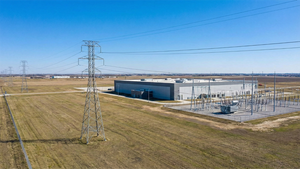
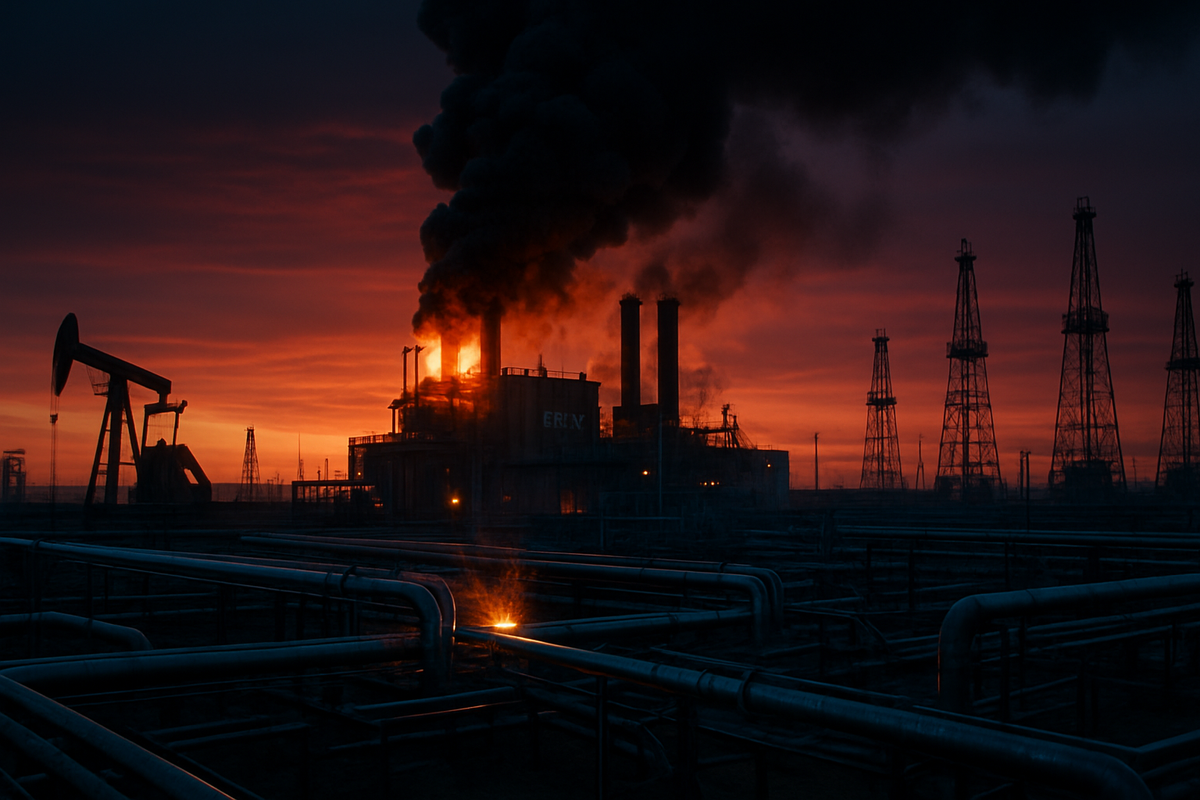
The crisis began on the morning of Sunday, January 18, 2026, when two successive fires broke out at the GTES-4 gas-turbine power plant, the electrical heartbeat of the Tengiz and Korolev fields. According to reports from KazMunayGas (KASE: KMGZ), the first blaze ignited in the GT-9.3 turbine transformer at 9:53 a.m. local time, followed by a second failure in the GT-9.5 unit just over an hour later. While the TCO emergency response team successfully evacuated 473 employees and extinguished the flames with no reported casualties, the damage to the site’s power distribution infrastructure was catastrophic.
Tengizchevroil—a joint venture comprising Chevron (NYSE: CVX) with 50%, ExxonMobil (NYSE: XOM) with 25%, KazMunayGas with 20%, and Lukoil with 5%—initially termed the production halt a "precautionary measure." However, by January 22, the reality of the technical damage forced the consortium to declare force majeure. Industry analysts suggest that because the GTES-4 plant lacks secondary grid redundancy in this remote region of western Kazakhstan, the loss of these transformers created a "single point of failure" that necessitated a total field shutdown to prevent further equipment damage.
The timing of the outage is particularly sensitive. TCO had only recently completed its $47 billion "Future Growth Project" (FGP) in 2025, which was designed to ramp up the field’s total capacity toward 1 million barrels of oil equivalent per day. Instead of a triumphant expansion, the consortium is now managing at least five canceled export cargoes scheduled for late January and early February at the Novorossiysk terminal.
Market Winners and Losers: From Shale Giants to North Sea Majors
The immediate "losers" in this event are undoubtedly the consortium partners. For Chevron (NYSE: CVX), the Tengiz outage represents a direct hit to its Q1 2026 production volumes, complicating its ongoing $3–$4 billion structural cost-savings program. ExxonMobil (NYSE: XOM) also faces a setback; although its portfolio is highly diversified, the loss of high-margin Kazakh crude comes as the company navigates tightening refining margins elsewhere in its global operations. KazMunayGas (KASE: KMGZ) faces the most direct financial pressure, as the Kazakh state relies heavily on Tengiz royalties to fund its national budget.
Conversely, the sudden vacuum of light, sweet crude in the European and Asian markets has created a windfall for producers of similar grades. Equinor (NYSE: EQNR) and Shell (NYSE: SHEL), which operate heavily in the North Sea, have seen physical differentials for the Dated Brent basket reach 15-month highs. Refiners who can no longer access CPC Blend are pivoting to North Sea grades like Forties and Ekofisk, as well as West African (WAF) sweet crudes.
In the United States, exporters of WTI Midland are also seeing a surge in demand from European refiners. This pivot reinforces the dominance of U.S. shale as the "global swing producer," benefiting large-scale operators in the Permian Basin. Furthermore, TotalEnergies (NYSE: TTE) may see a strategic advantage as its various sweet crude projects in Africa become increasingly attractive to buyers looking to diversify away from the volatile Black Sea transit routes.
Geopolitical Friction and the Global Surplus Context
The Tengiz outage does not exist in a vacuum. It arrives during a year that analysts have dubbed the "Year of the Structural Surplus." With total world supply projected to hit 108.7 million bpd in 2026 against a demand of 104.98 million bpd, the overall price of Brent has been anchored near $65 per barrel. However, the Kazakhstan disruption has introduced a sharp "risk premium" into the physical market, largely because it coincides with heightened drone-related shipping risks in the Black Sea.
This event also complicates Kazakhstan’s relationship with OPEC+. As of January 2026, Kazakhstan’s production quota was set at 1.569 million bpd. The country has struggled with "compensation" obligations for overproducing in previous years. While a forced shutdown helps the country meet its volume targets on paper, the loss of revenue is an unwelcome trade-off. Furthermore, the reliance on the CPC pipeline—which traverses Russian territory to reach the Black Sea—remains a persistent strategic anxiety for Western oil majors, as any disruption in Novorossiysk, whether from weather or warfare, immediately strands Kazakh output.
Historically, this event mirrors the 2022 CPC pipeline disruptions caused by storm damage and technical "maintenance" by Russian authorities. However, the 2026 fire at GTES-4 is an internal operational failure, raising questions about the resilience of the aging infrastructure supporting the newly expanded Tengiz facilities.
The Road to Restoration: What Comes Next?
In the short term, the market will be watching the 7-to-10-day restoration window closely. If TCO can restart production by the end of January, the impact may be limited to a temporary spike in CPC Blend premiums. However, if the transformer damage is found to have caused cascading issues within the gas turbines themselves—which operate under extreme temperatures and pressures—the outage could easily stretch into February. A prolonged shutdown would likely force TCO to declare force majeure on even more cargoes, potentially affecting up to 15-20% of Kazakhstan's total monthly exports.
Strategically, this incident may force Chevron and its partners to reconsider their investment in onsite power redundancy. The "Future Growth Project" was supposed to modernize the field, but the GTES-4 fire highlights a vulnerability in the centralized power model. Investors should expect a rigorous safety and infrastructure audit across the Caspian region, likely leading to increased capital expenditure on backup power systems over the next 24 months.
Investor Outlook and Summary
The force majeure at the Tengiz oilfield is a stark reminder of the operational risks inherent in "frontier" energy production. While the global market is currently well-supplied, the loss of 600,000 bpd of light sweet crude is enough to disrupt regional refining balances and trigger significant price volatility in physical grades.
Key takeaways for the coming months include:
- Production Reliability: Investors should monitor Chevron (NYSE: CVX) and ExxonMobil (NYSE: XOM) earnings calls for updates on the "Future Growth Project" and any potential revisions to 2026 production guidance.
- CPC Blend Premiums: Watch the spread between CPC Blend and Brent; a sustained high premium will benefit North Sea and West African producers.
- Geopolitical Resilience: The continued viability of the Novorossiysk export route remains the primary external risk for any investor with exposure to Central Asian energy.
As the industry moves toward the mid-point of 2026, the Tengiz fire serves as a cautionary tale: even in a market defined by surplus, the "single point of failure" remains a potent threat to the global energy hierarchy.
This content is intended for informational purposes only and is not financial advice.