The Victorian agricultural sector has surged into the final weeks of 2025 with a level of optimism not seen in nearly half a decade. According to the latest Rabobank Rural Confidence Survey released this December, net rural confidence in Victoria has climbed to 24%, marking the highest sentiment reading since September 2021. This robust turnaround signals a definitive shift from the "survival mode" that characterized the industry during the volatile climatic and economic conditions of 2023 and early 2024.
The implications for the broader Australian economy are significant. With Victoria serving as a powerhouse for dairy, livestock, and grain production, this surge in confidence is translating into a 24% increase in on-farm investment intentions. As farmers move to upgrade infrastructure and adopt new technologies, the ripple effects are expected to bolster regional employment and provide a tailwind for the national agribusiness supply chain heading into 2026.
A Year of Recovery: From Drought Fears to Market Resilience
The path to this four-year high was far from linear. In late 2024, the Victorian farm sector was mired in pessimism, with confidence levels dipping to -9% amid fears of a prolonged dry spell and stubbornly high input costs. However, 2025 proved to be a year of redemption. A "dry summer" at the start of the year gave way to timely winter and spring rains that revitalized soil moisture levels across key regions like the Western District and the High Country. While the Mallee and Wimmera regions remained more cautious due to patchy rainfall, the overall state-wide production outlook has been drastically upgraded.
Key stakeholders, including the Victorian Farmers Federation and major agricultural lenders, have noted that this sentiment boost is not merely a reaction to the weather. The timeline of recovery was accelerated by a strategic pivot in monetary policy. After a grueling cycle of rate hikes, the Reserve Bank of Australia (RBA) initiated a series of cuts in early 2025, totaling approximately 75 basis points by mid-year. This easing of financial pressure has been a "game-changer" for heavily leveraged family farms, allowing them to refocus on growth rather than debt servicing.
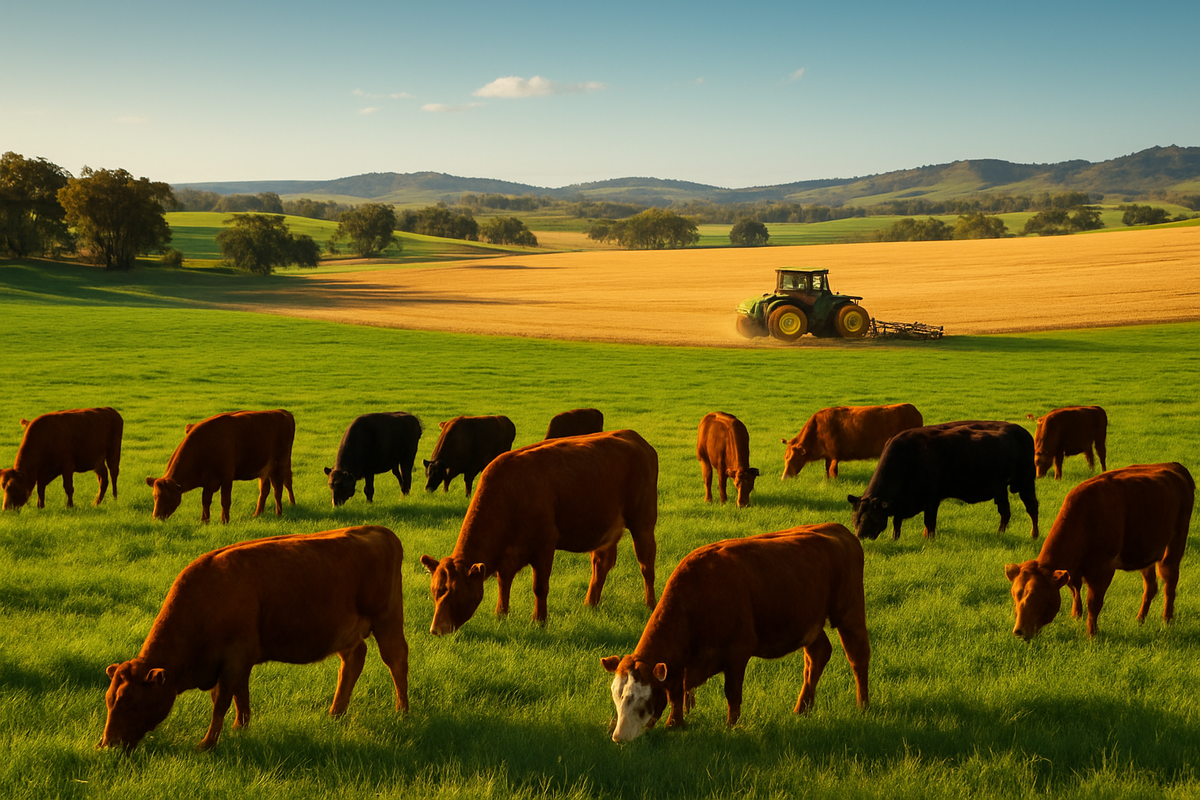
The livestock sector, in particular, has emerged as a primary driver of the current mood. After a collapse in sheep and cattle prices in late 2023, the market rebounded fiercely in 2025. Strong international demand—driven by a supply shortage in the United States for beef and renewed appetite from China for Australian lamb—has kept prices well above five-year averages. For Victorian producers, the combination of abundant feed and high market prices has created a "perfect storm" of profitability.
Winners and Losers in the Agribusiness Arena
The resurgence in farmer confidence has had a palpable impact on the public markets, particularly for companies deeply embedded in the Australian rural landscape. Elders Limited (ASX:ELD) has emerged as a standout winner. The company reported a 12% increase in underlying EBIT to $143.5 million for the 2025 fiscal year, buoyed by its strong livestock agency and real estate divisions. Elders further solidified its market position with the $445 million acquisition of Delta Agribusiness, a move that significantly expands its retail footprint just as farmers are increasing their spending on inputs and equipment.
In the grain and logistics space, GrainCorp Limited (ASX:GNC) has demonstrated remarkable resilience. Despite a smaller-than-expected canola crop in parts of Victoria due to early-season dryness, the company delivered a solid EBITDA of $308 million. GrainCorp’s diversified revenue streams, including record oilseed crush volumes and a robust East Coast grain handle of 31.6 million tonnes, have allowed it to capitalize on steady global demand. Investors have responded favorably to the company’s ability to maintain margins in a complex global trading environment.
Conversely, Nufarm Limited (ASX:NUF) has faced a more challenging 2025. The crop protection and seed technology giant saw its performance pressured by lower canola seed sales earlier in the year and a decline in prices within its Omega-3 fish oil segment. While the surge in overall farm confidence is a positive lead indicator for Nufarm’s future sales, the company is currently in a transition phase, focusing on streamlining its North American and European operations to mitigate the impact of Australian seasonal volatility. Meanwhile, Rural Funds Group (ASX:RFF) continues to benefit from the rising value of high-quality agricultural land, as the 24% spike in investment intentions fuels demand for premium farming assets.
Broader Significance: A Shift in the Agricultural Paradigm
The current surge in confidence fits into a broader global trend where food security and supply chain reliability have become paramount. The Victorian experience in 2025 reflects a "new era of stability" where producers are becoming more adept at managing climate variability through technology and data. This shift is being supported by government policy aimed at enhancing rural connectivity and sustainability, though some friction remains regarding new environmental regulations and labor shortages.
Historically, peaks in rural confidence have often preceded periods of significant capital expenditure in the sector. The 2021 peak was followed by a land price boom; the 2025 peak appears to be directed more toward operational efficiency. For instance, the Victorian dairy sector is currently seeing record farmgate returns, which are being funneled into robotic milking systems and advanced irrigation upgrades. This trend suggests that the industry is preparing for a future where labor is scarce and efficiency is the only way to maintain a competitive edge on the global stage.
Furthermore, the easing of interest rates by the RBA has provided a psychological floor for the market. By reducing the "cost of carry" for livestock and grain inventories, the central bank has effectively encouraged farmers to hold out for better prices rather than engaging in panic selling. This has stabilized the supply chain and prevented the boom-bust cycles that have historically plagued the Victorian rural economy.
The Road Ahead: Opportunities and Strategic Pivots
Looking toward 2026, the Victorian farm sector faces a landscape of both immense opportunity and lingering risk. In the short term, the focus will be on the conclusion of the 2025/26 winter harvest. While yields in the south are looking promising, the industry will be watching global grain prices closely, as high production in the Northern Hemisphere could put downward pressure on local margins.
Strategically, many Victorian producers are pivoting toward "climate-resilient" agriculture. This includes diversifying crop rotations and investing in drought-tolerant seed varieties—a trend that will eventually benefit companies like Nufarm (ASX:NUF) if they can successfully align their product pipeline with these changing needs. Additionally, the integration of carbon farming and biodiversity credits is moving from a niche concept to a mainstream financial strategy, offering a new revenue stream for large-scale landholders.
The primary challenge for the coming months will be the cost of inputs. While interest rates have fallen, the price of fertilizer and urea remains sensitive to geopolitical tensions in Eastern Europe and the Middle East. Farmers will need to maintain their newfound confidence while remaining disciplined in their procurement strategies to ensure that high commodity prices actually translate into bottom-line profits.
Conclusion: A Market Reborn
As of December 24, 2025, the Victorian farm sector stands as a testament to the resilience of the Australian rural economy. The climb to a four-year confidence high of 24% is a clear signal that the industry has successfully navigated a period of extreme uncertainty. The convergence of favorable weather, rebounding livestock prices, and a more accommodative monetary environment has created a robust foundation for growth in 2026.
For investors, the key takeaway is the renewed strength of the agribusiness balance sheet. Companies like Elders (ASX:ELD) and GrainCorp (ASX:GNC) are well-positioned to benefit from a client base that is once again willing to spend and invest. However, the market remains sensitive to global macro trends and input cost volatility. Moving forward, the focus should be on how these public companies manage their expanded footprints and whether the current high-price environment for livestock can be sustained as global supply chains fully normalize. The Victorian "rural engine" is humming once again, but its long-term performance will depend on continued innovation and the maintenance of this hard-won optimism.
This content is intended for informational purposes only and is not financial advice.