In an era where many brands are loudly broadcasting their AI experiments with flashy, often superficial chatbots, Inditex (BME: ITX), the parent company of Zara, has taken a different route. As of early 2026, the retail behemoth has completed a multi-year overhaul of its global operations, centered around a philosophy known internally as "Quiet AI." Rather than using artificial intelligence as a marketing gimmick, Zara has woven it into the very fabric of its supply chain, transforming the brand from a "fast fashion" pioneer into a "just-in-telligent" powerhouse that predicts trends before they even hit social media.
The significance of this shift cannot be overstated. By January 2026, Zara’s AI-driven workflows have fundamentally changed how clothing is designed, manufactured, and sold. The company has moved away from the traditional model of mass production followed by deep discounting, instead utilizing a hyper-efficient system that ensures 85% of its inventory is sold at full price. This "Quiet AI" revolution is setting a new standard for the industry, proving that the most impactful technology is often the kind the customer never sees, but feels through better availability, personalized styling, and a more sustainable approach to consumption.
The Architecture of "Just-In-telligent" Fashion
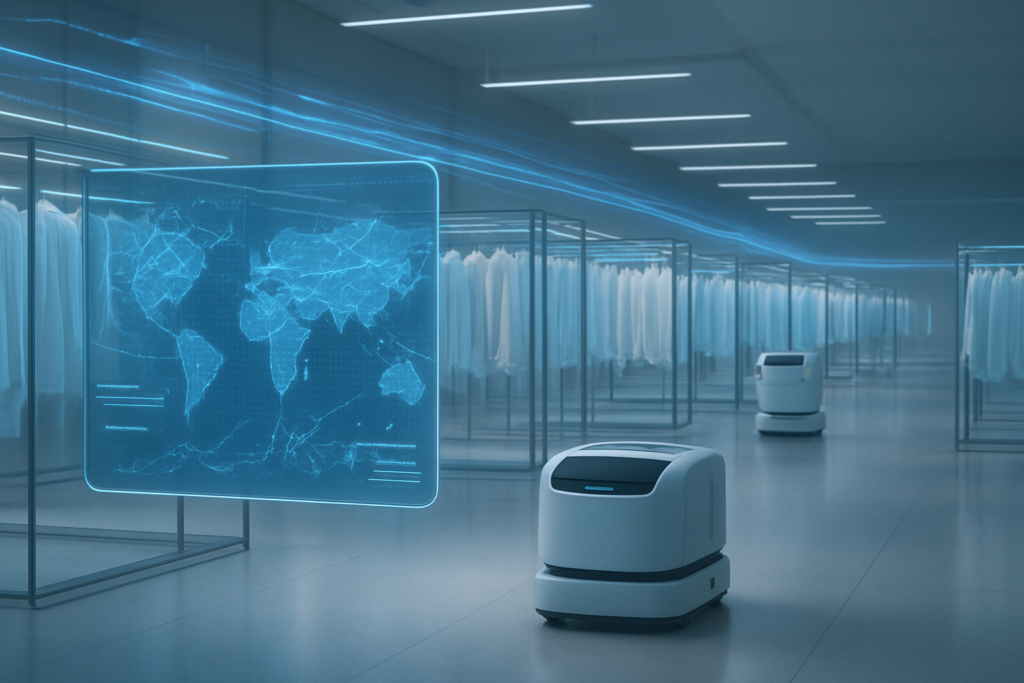
At the heart of Zara’s transformation is its proprietary "Just-In-telligent" (JIT) system, an evolution of the classic Just-In-Time manufacturing model. This system is powered by the Inditex Data AI-Feature Store, a centralized technical hub that allows designers and store managers to access complex machine-learning insights through natural language interfaces. Unlike previous inventory systems that relied on historical sales data, the JIT system performs hyper-local demand forecasting. It analyzes a cocktail of real-time variables—including localized weather patterns, regional social media sentiment, and even foot traffic density captured via IoT sensors—to predict exactly which styles will succeed in specific stores.
The technical backbone of this operation is supported by "Soft Tagging," a next-generation evolution of RFID technology. Developed in partnership with tech giants like Intel (NASDAQ: INTC), these tags provide 100% visibility of every garment from the moment it leaves a factory in Spain or Portugal to the moment it enters a fitting room in New York or Tokyo. In the distribution centers, such as the newly completed Zaragoza II hub, autonomous robots from Fetch Robotics—a subsidiary of Zebra Technologies (NASDAQ: ZBRA)—work alongside AI-driven packing algorithms to optimize shipping volume. This integration has slashed sorting and transit times by 30%, allowing Zara to move a design from the drawing board to store shelves in under two weeks.
Furthermore, Zara has disrupted the traditional e-commerce photography pipeline using synthetic imagery. By employing generative AI to digitally "dress" high-fidelity 3D models in new collections, the company has reduced its photo production cycle from 11 days to less than 48 hours. This capability allows the retailer to test consumer interest in designs before a single physical garment is even sewn, a radical departure from the industry's historical "guess and produce" methodology.
Market Disruption and the Competitive Landscape
Zara’s aggressive yet silent integration of AI has sent shockwaves through the retail sector, forcing competitors to accelerate their own digital transformations. While H&M (STO: HM-B) has focused on "AI Model Twins" to navigate the ethics of digital marketing, and Zalando (ETR: ZAL) has doubled down on size-prediction algorithms to reduce return rates, Zara’s end-to-end integration provides a unique strategic advantage. By controlling the entire value chain—from design to logistics to retail—Inditex has created a feedback loop that is difficult for multi-brand platforms to replicate.
The primary threat to Zara’s dominance remains the "ultra-fast" fashion segment, led by companies like Shein. However, Zara’s use of AI to enhance quality and sustainability serves as a key differentiator. While Shein uses data scraping to compete on price and volume, Zara is using AI to compete on precision and brand equity. This positioning has benefited a secondary tier of AI service providers; logistics visibility platform Project44 and predictive maintenance firm Augury have both seen their valuations swell as they become essential components of the modern, AI-enabled supply chain.
For major AI labs, Zara’s success represents a shift in market demand. The focus is moving away from general-purpose LLMs and toward specialized, industry-specific "Feature Stores" that can handle structured retail data. Tech giants that provide the cloud infrastructure for these operations, such as Microsoft (NASDAQ: MSFT) and Alphabet (NASDAQ: GOOGL), are increasingly competing to offer the most robust "retail-native" AI tools, signaling a new front in the cloud wars.
Sustainability, Privacy, and the Human Element
The wider significance of Zara’s AI revolution lies in its potential to solve fashion’s greatest sin: waste. By using AI to sense demand with surgical precision, Inditex has reported a 20% reduction in overstock compared to 2023 levels. This shift toward a "produce-on-demand" ethos is a significant milestone in the industry’s journey toward sustainability. However, this efficiency comes with a new set of ethical considerations. The rollout of "Digital Twins"—hyper-realistic 3D avatars that allow customers to virtually try on clothes—has sparked intense debate over the storage and security of biometric data.
Critics and privacy advocates warn that Zara’s "virtual fitting room" dataset, which contains the body measurements and likenesses of millions of customers, could be a prime target for cyberattacks or deepfake exploitation. Furthermore, the shift to synthetic imagery has caused friction with creative unions. While Zara still employs human models and photographers, the sheer volume of work being offloaded to AI has led to a decline in demand for traditional production crews, raising questions about the future of creative labor in a "Quiet AI" world.
Compared to previous AI milestones, such as the initial surge in generative art in 2023, Zara’s 2026 implementation represents the "maturity phase" of the technology. It is no longer about what AI can do in a vacuum, but how it can be harnessed to solve structural inefficiencies in a trillion-dollar global industry. The success of this model suggests that the future of AI isn't just in the cloud or on our screens, but in the physical logistics of the world around us.
The Road to Autonomous Retail
Looking ahead, the near-term evolution of Zara’s AI strategy involves the move toward fully autonomous store environments. Industry experts predict that by 2027, "Smart Mirrors" in Zara flagship stores will not only suggest outfits but will also be able to initiate "instant tailoring" requests, where AI-guided machines make minor adjustments to garments on-site. The "Digital Twin" technology is also expected to move beyond the Zara app, potentially integrating with broader "metaverse" platforms or personal digital assistants to provide a seamless, cross-platform style identity.
However, significant challenges remain. The "Just-In-telligent" system relies on a stable global supply chain, and any major geopolitical disruption could feed "bad data" into the predictive algorithms, leading to massive logistical errors. Additionally, as AI becomes more autonomous in the design process, maintaining a unique "brand voice" will become increasingly difficult. Experts predict that the next frontier will be "Emotional AI"—systems that can not only predict what a customer wants to wear but how they want to feel, further blurring the line between technology and human intuition.
A New Chapter in Retail History
Zara’s "Quiet AI" revolution marks a definitive turning point in the history of retail. By January 2026, the company has proven that AI’s greatest value lies in its ability to streamline the invisible—the supply chains, the inventory logs, and the predictive models that keep a global enterprise running. The transition from "Fast Fashion" to "Just-In-telligent Fashion" is not just a technical upgrade; it is a fundamental reimagining of how goods are produced and consumed in the 21st century.
As we move further into 2026, the industry will be watching closely to see if Zara can maintain the delicate balance between high-tech efficiency and the "human touch" that defines high fashion. The key takeaway for the broader tech and business world is clear: the AI winners of the future will not be the ones who shout the loudest about the technology, but the ones who use it most effectively to disappear into the background of a superior customer experience.
This content is intended for informational purposes only and represents analysis of current AI developments.
TokenRing AI delivers enterprise-grade solutions for multi-agent AI workflow orchestration, AI-powered development tools, and seamless remote collaboration platforms.
For more information, visit https://www.tokenring.ai/.