In a landmark keynote at CES 2026, NVIDIA (NASDAQ: NVDA) CEO Jensen Huang officially ushered in the "Rubin Era," unveiling a comprehensive hardware roadmap that marks the most significant architectural shift in the company’s history. While the previous Blackwell generation laid the groundwork for generative AI, the newly announced Rubin (R100) platform is engineered for a world of "Agentic AI"—autonomous systems capable of reasoning, planning, and executing complex multi-step workflows without constant human intervention.
The announcement signals a rapid transition from the Blackwell Ultra (B300) "bridge" systems of late 2025 to a completely overhauled architecture in 2026. By leveraging TSMC (NYSE: TSM) 3nm manufacturing and the next-generation HBM4 memory standard, NVIDIA is positioning itself to maintain an iron grip on the global data center market, providing the massive compute density required to train and deploy trillion-parameter "world models" that bridge the gap between digital intelligence and physical robotics.
From Blackwell to Rubin: A Technical Leap into the 3nm Era
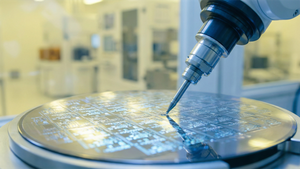
The centerpiece of the CES 2026 presentation was the Rubin R100 GPU, the successor to the highly successful Blackwell architecture. Fabricated on TSMC’s enhanced 3nm (N3P) process node, the R100 represents a major leap in transistor density and energy efficiency. Unlike its predecessors, Rubin utilizes a sophisticated chiplet-based design using CoWoS-L packaging with a 4x reticle size, allowing NVIDIA to pack more compute units into a single package than ever before. This transition to 3nm is not merely a shrink; it is a fundamental redesign that enables the R100 to deliver a staggering 50 Petaflops of dense FP4 compute—a 3.3x increase over the Blackwell B300.
Crucial to this performance leap is the integration of HBM4 memory. The Rubin R100 features 8 stacks of HBM4, providing up to 15 TB/s of memory bandwidth, effectively shattering the "memory wall" that has bottlenecked previous AI clusters. This is paired with the new Vera CPU, which replaces the Grace CPU. The Vera CPU is powered by 88 custom "Olympus" cores built on the Arm (NASDAQ: ARM) v9.2-A architecture. These cores support simultaneous multithreading (SMT) and are designed to run within an ultra-efficient 50W power envelope, ensuring that the "Vera-Rubin" Superchip can handle the intense logic and data shuffling required for real-time AI reasoning.
The performance gains are most evident at the rack scale. NVIDIA’s new Vera Rubin NVL144 system achieves 3.6 Exaflops of FP4 inference, representing a 2.5x to 3.3x performance leap over the Blackwell-based NVL72. This massive jump is facilitated by NVLink 6, which doubles bidirectional bandwidth to 3.6 TB/s. This interconnect technology allows thousands of GPUs to act as a single, massive compute engine, a requirement for the emerging class of agentic AI models that require near-instantaneous data movement across the entire cluster.
Consolidating Data Center Dominance and the Competitive Landscape
NVIDIA’s aggressive roadmap places immense pressure on competitors like AMD (NASDAQ: AMD) and Intel (NASDAQ: INTC), who are still scaling their 5nm and 4nm-based solutions. By moving to 3nm so decisively, NVIDIA is widening the "moat" around its data center business. The Rubin platform is specifically designed to be the backbone for hyperscalers like Microsoft (NASDAQ: MSFT), Google (NASDAQ: GOOGL), and Meta (NASDAQ: META), all of whom are currently racing to develop proprietary agentic frameworks. The Blackwell Ultra B300 will remain the mainstream workhorse for general enterprise AI, while the Rubin R100 is being positioned as the "bleeding-edge" flagship for the world’s most advanced AI research labs.
The strategic significance of the Vera CPU and its Olympus cores cannot be overstated. By deepening its integration with the Arm ecosystem, NVIDIA is reducing the industry's reliance on traditional x86 architectures for AI workloads. This vertical integration—owning the GPU, the CPU, the interconnect, and the software stack—gives NVIDIA a unique advantage in optimizing performance-per-watt. For startups and AI labs, this means the cost of training trillion-parameter models could finally begin to stabilize, even as the complexity of those models continues to skyrocket.
The Dawn of Agentic AI and the Trillion-Parameter Frontier
The move toward the Rubin architecture reflects a broader shift in the AI landscape from "Chatbots" to "Agents." Agentic AI refers to systems that can autonomously use tools, browse the web, and interact with software environments to achieve a goal. These systems require far more than just predictive text; they require "World Models" that understand physical laws and cause-and-effect. The Rubin R100’s FP4 compute performance is specifically tuned for these reasoning-heavy tasks, allowing for the low-latency inference necessary for an AI agent to "think" and act in real-time.
Furthermore, NVIDIA is tying this hardware roadmap to its "Physical AI" initiatives, such as Project GR00T for humanoid robotics and DRIVE Thor for autonomous vehicles. The trillion-parameter models of 2026 will not just live in servers; they will power the brains of machines operating in the real world. This transition raises significant questions about the energy demands of the global AI infrastructure. While the 3nm process is more efficient, the sheer scale of the Rubin deployments will require unprecedented power management solutions, a challenge NVIDIA is addressing through its liquid-cooled NVL-series rack designs.
Future Outlook: The Path to Rubin Ultra and Beyond
Looking ahead, NVIDIA has already teased the "Rubin Ultra" for 2027, which is expected to feature 12 stacks of HBM4e and potentially push FP4 performance toward the 100 Petaflop mark per GPU. The company is also signaling a move toward 2nm manufacturing in the late 2020s, continuing its relentless "one-year release cadence." In the near term, the industry will be watching the initial rollout of the Blackwell Ultra B300 in late 2025, which will serve as the final testbed for the software ecosystem before the Rubin transition begins in earnest.
The primary challenge facing NVIDIA will be supply chain execution. As the sole major customer for TSMC’s most advanced packaging and 3nm nodes, any manufacturing hiccups could delay the global AI roadmap. Additionally, as AI agents become more autonomous, the industry will face mounting pressure to implement robust safety guardrails. Experts predict that the next 18 months will see a surge in "Sovereign AI" projects, as nations rush to build their own Rubin-powered data centers to ensure technological independence.
A New Benchmark for the Intelligence Age
The unveiling of the Rubin roadmap at CES 2026 is more than a hardware refresh; it is a declaration of the next phase of the digital revolution. By combining the Vera CPU’s 88 Olympus cores with the Rubin GPU’s massive FP4 throughput, NVIDIA has provided the industry with the tools necessary to move beyond generative text and into the realm of truly autonomous, reasoning machines. The transition from Blackwell to Rubin marks the moment when AI moves from being a tool we use to a partner that acts on our behalf.
As we move into 2026, the tech industry will be focused on how quickly these systems can be deployed and whether the software ecosystem can keep pace with such rapid hardware advancements. For now, NVIDIA remains the undisputed architect of the AI era, and the Rubin platform is the blueprint for the next trillion parameters of human progress.
This content is intended for informational purposes only and represents analysis of current AI developments.
TokenRing AI delivers enterprise-grade solutions for multi-agent AI workflow orchestration, AI-powered development tools, and seamless remote collaboration platforms.
For more information, visit https://www.tokenring.ai/.