Shareholders of Fiverr would probably like to forget the past six months even happened. The stock dropped 54.7% and now trades at $10.59. This was partly driven by its softer quarterly results and might have investors contemplating their next move.
Is there a buying opportunity in Fiverr, or does it present a risk to your portfolio? Get the full stock story straight from our expert analysts, it’s free.
Why Is Fiverr Not Exciting?
Despite the more favorable entry price, we're cautious about Fiverr. Here are three reasons you should be careful with FVRR and a stock we'd rather own.
1. Declining Active Buyers Reflect Product Weakness
As a gig economy marketplace, Fiverr generates revenue growth by expanding the number of services on its platform (e.g. rides, deliveries, freelance jobs) and raising the commission fee from each service provided.
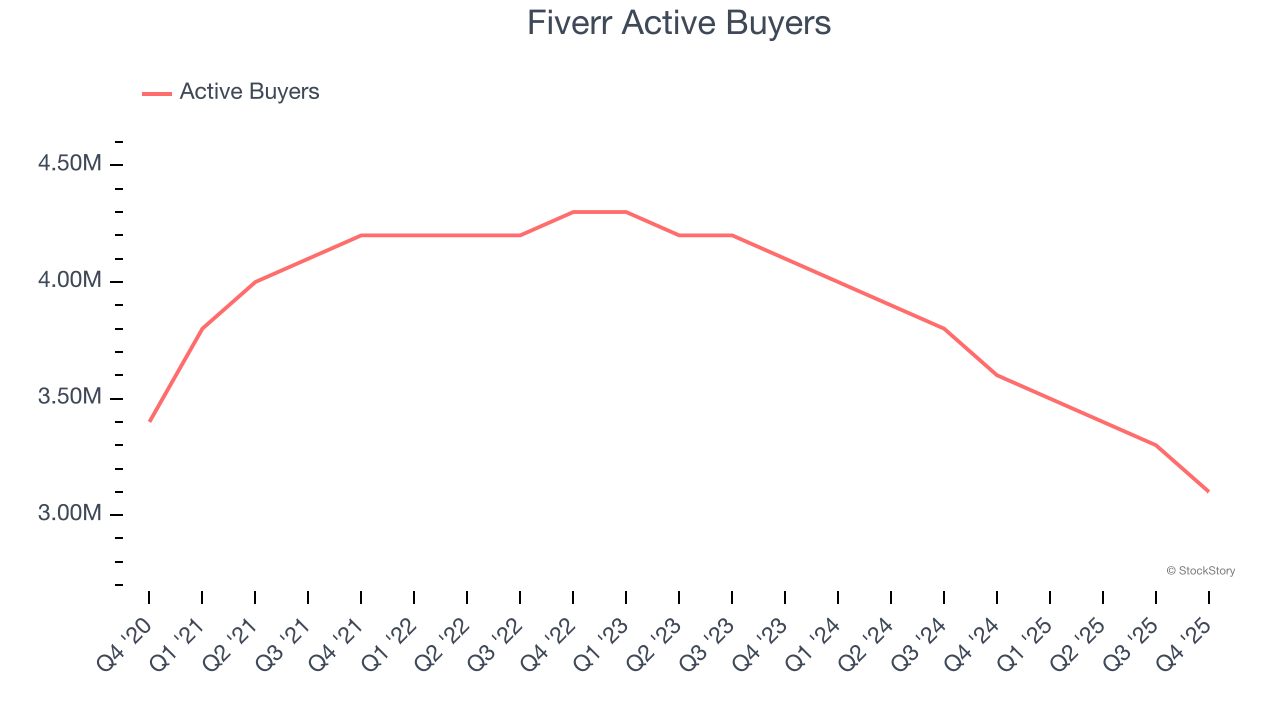
Fiverr struggled with new customer acquisition over the last two years as its active buyers have declined by 11% annually to 3.1 million in the latest quarter. This performance isn't ideal because internet usage is secular, meaning there are typically unaddressed market opportunities. If Fiverr wants to accelerate growth, it likely needs to enhance the appeal of its current offerings or innovate with new products.
2. Revenue Projections Show Stormy Skies Ahead
Forecasted revenues by Wall Street analysts signal a company’s potential. Predictions may not always be accurate, but accelerating growth typically boosts valuation multiples and stock prices while slowing growth does the opposite.
Over the next 12 months, sell-side analysts expect Fiverr’s revenue to drop by 6.4%. This projection is underwhelming and implies its products and services will face some demand challenges.
3. Inefficient Marketing Strategy Eats Into Profits
Unlike enterprise software that’s typically sold by dedicated sales teams, consumer internet businesses like Fiverr grow from a combination of product virality, paid advertisement, and incentives.
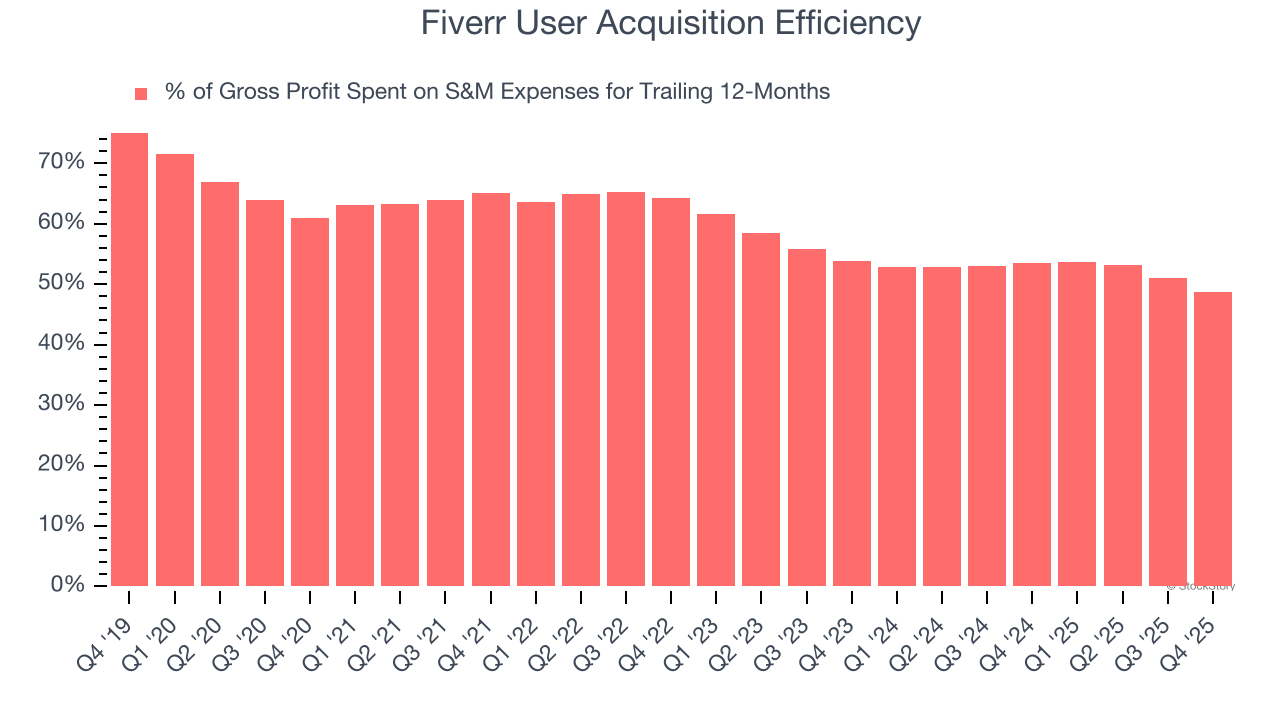
It’s relatively expensive for Fiverr to acquire new users as the company has spent 48.8% of its gross profit on sales and marketing expenses over the last year. This inefficiency indicates that Fiverr operates in a competitive market and must continue investing to maintain an acceptable growth trajectory.
Final Judgment
Fiverr’s business quality ultimately falls short of our standards. Following the recent decline, the stock trades at 1.2× forward price-to-gross profit (or $10.59 per share). While this valuation is reasonable, we don’t really see a big opportunity at the moment. We're fairly confident there are better investments elsewhere. Let us point you toward the Amazon and PayPal of Latin America.
Stocks We Like More Than Fiverr
WHILE YOU’RE HERE: Top 9 Market-Beating Stocks. The best stocks don't just beat the market once. They do it again. And again. Robust revenue growth, rising free cash flow, returns on capital that leave their competition in the dust. The market has already rewarded these businesses.
But our AI platform says the party isn't over. Find out which 9 stocks made the cut this week — FREE. Get Our Top 9 Market-Beating Stocks for Free HERE.
Stocks that have made our list include now familiar names such as Nvidia (+1,326% between June 2020 and June 2025) as well as under-the-radar businesses like the once-small-cap company Exlservice (+354% five-year return). Find your next big winner with StockStory today.