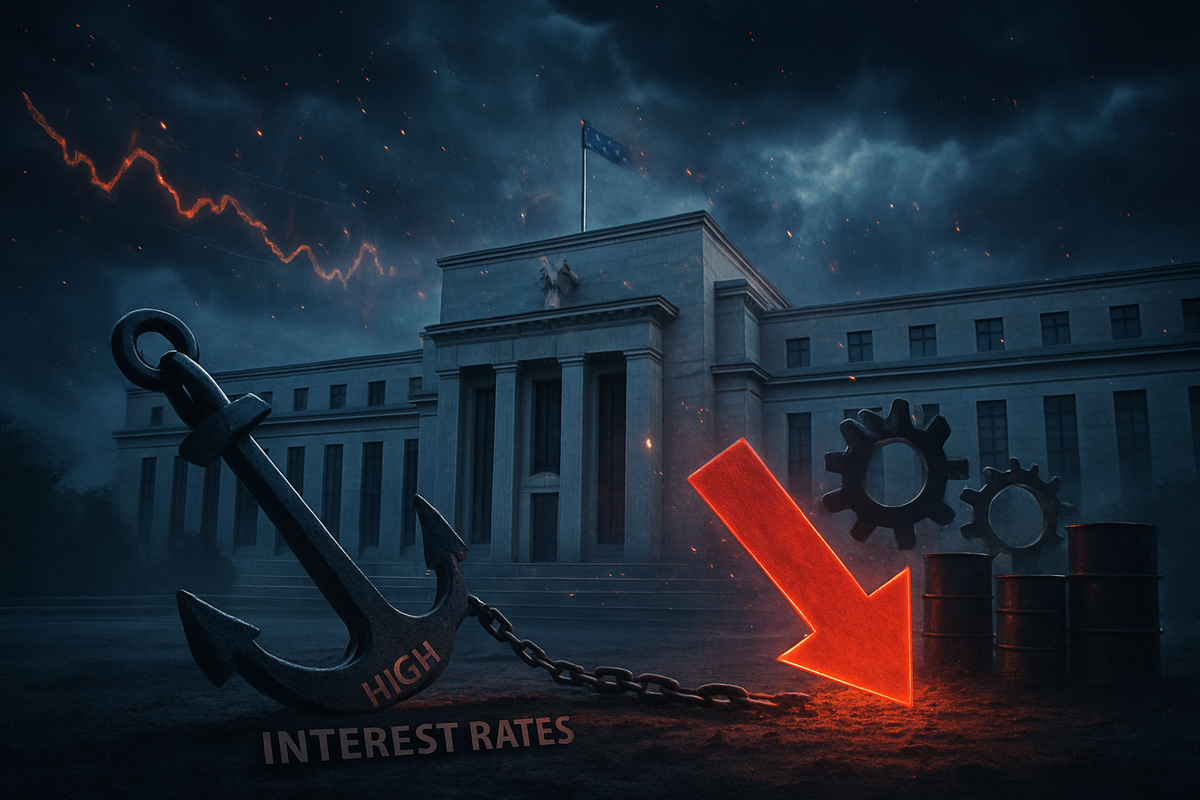
As of March 3, 2026, the long-awaited pivot toward lower interest rates has hit another significant roadblock. Wall Street's hopes for a spring rate cut have evaporated following a string of "hot" Producer Price Index (PPI) reports and escalating geopolitical tensions that have reignited fears of a second wave of inflation. Traders, who just weeks ago were pricing in a May reduction, are now aggressively pushing back their expectations for the first Federal Reserve rate cut into the mid-summer months, leaving the "higher-for-longer" narrative firmly in place.
The shift in market sentiment comes at a time of unprecedented political friction. Former President Donald Trump has escalated his rhetoric against the central bank, issuing what observers describe as "angry and personal" demands for immediate and massive rate cuts. This collision between stubborn economic data, global instability, and high-stakes political pressure has created a volatile environment for investors, who must now navigate a landscape where the cost of capital remains stubbornly high.
Resilience or Reheating? The Data Behind the Delay
The immediate catalyst for the current market pessimism was the release of the late-winter inflation data, which showed that "pipeline inflation" is far from extinguished. The January and February 2026 PPI prints significantly exceeded consensus estimates, driven largely by rising service costs and a resurgence in energy prices. This follows a volatile 2025, during which a shocking +0.9% month-over-month PPI surprise in August derailed the Fed's initial easing cycle. The current data suggests that the "last mile" of bringing inflation down to the 2% target is proving to be the most difficult, forcing Federal Reserve Chair Jerome Powell and the FOMC to maintain a restrictive stance.
Compounding the domestic data is a darkening geopolitical backdrop. The intensification of conflicts in the Middle East and continued disruptions in the Red Sea have kept oil prices elevated, acting as a persistent "inflation tax" on the global economy. These tensions have not only fueled price pressures but have also driven a "flight to safety," strengthening the U.S. Dollar and further complicating the Fed’s path. Leading up to this moment, the Fed had managed to deliver three modest cuts in late 2024, but the 2025-2026 resurgence of prices has essentially frozen the central bank in its tracks.
The most explosive element of the current discourse, however, is the external pressure from the political arena. Donald Trump has moved beyond policy critiques to launch personal broadsides against Jerome Powell, reportedly labeling him a "numbskull" and a "Trump Hater." Trump has demanded that the Fed slash rates by as much as 300 basis points (3 percentage points) immediately, arguing that the current policy is "destroying" the housing market and handicapping American industry. This "angry" rhetoric has raised concerns about the future of central bank independence, especially as the political cycle intensifies.
Winners and Losers in the 'High Rate' Extension
The delay in rate cuts has created a stark divide between market sectors. Among the primary beneficiaries of the "higher-for-longer" regime are the major money-center banks. JPMorgan Chase & Co. (NYSE: JPM) and Bank of America (NYSE: BAC) continue to reap the rewards of elevated Net Interest Income (NII), as they are able to charge higher rates on loans while keeping deposit costs relatively contained. However, this "win" is double-edged; both institutions are also forced to increase their loss provisions as higher rates begin to strain the balance sheets of their more leveraged corporate clients.
Conversely, the technology sector is feeling the pinch of rising yields once again. High-growth firms like NVIDIA Corporation (NASDAQ: NVDA) and Alphabet Inc. (NASDAQ: GOOGL), whose valuations are heavily dependent on discounted future cash flows, have seen their stock prices experience heightened volatility. When interest rates rise (or fail to fall), the present value of those future earnings is diminished, leading to a "re-rating" of tech multiples across the board. Small-cap companies, represented by the Russell 2000 index, are also struggling, as many carry floating-rate debt that becomes increasingly burdensome the longer the Fed waits to act.
Real Estate Investment Trusts (REITs) like Realty Income (NYSE: O) are perhaps the most direct "losers" in this environment. As "yield-proxy" stocks, they become less attractive to investors when risk-free Treasury yields remain high. Furthermore, the high cost of refinancing existing debt portfolios is eating into their Funds From Operations (FFO). On the other hand, specialized tech-infrastructure REITs like Equinix, Inc. (NASDAQ: EQIX) have shown more resilience, as the unrelenting demand for artificial intelligence and data processing power provides a structural floor for their growth, regardless of the interest rate environment.
The Battle for Central Bank Independence
The current standoff is more than just a debate over basis points; it represents a significant stress test for the institution of the Federal Reserve. Historically, the Fed has prided itself on being "data-dependent" and insulated from the short-term whims of the White House. However, Trump’s persistent and "personal" attacks on Powell mark a departure from traditional norms. While previous presidents have occasionally expressed a preference for lower rates, the current vitriol—including threats to "override" the Chair’s decisions—is without modern precedent.
This event fits into a broader global trend of "fiscal dominance," where high government debt levels and political populism exert pressure on monetary authorities. The ripple effects are being felt by international partners as well; as the Fed holds rates high, other central banks, such as the European Central Bank (ECB) and the Bank of England, find it difficult to cut their own rates without causing their currencies to devalue against the dollar. This "monetary policy synchronization" means that the Fed’s delay effectively traps the global economy in a high-rate cycle.
From a regulatory standpoint, the Fed’s refusal to bow to political pressure in the face of hot PPI data reinforces its credibility as an inflation fighter. However, if the economy begins to show signs of a sharp slowdown while rates remain high, the political backlash could result in legislative attempts to curtail the Fed’s autonomy. Investors are closely watching for any signs that the Fed is "flinching," but so far, Powell has maintained that the bank will not be swayed by "political considerations."
The Road Ahead: Summer or Bust?
As we look toward the second half of 2026, the market is bracing for several potential scenarios. The most optimistic "soft landing" scenario involves a cooling of the labor market and a stabilization of energy prices, which would finally allow the Fed to begin a gradual easing cycle in June or July. For this to happen, upcoming CPI and employment data must show consistent deceleration. Strategic pivots are already occurring; many institutional investors are moving into short-duration fixed income to capture current high yields while avoiding the duration risk of a further "higher-for-longer" surprise.
A more concerning scenario is one of "stagflation," where inflation remains sticky above 3% while economic growth stalls. In this case, the Fed may be forced to keep rates at these restrictive levels indefinitely, or even consider a terminal rate hike—a possibility that the market has not yet priced in. Such a move would likely trigger a significant correction in equity markets and a sharp increase in corporate defaults. Companies with strong balance sheets and "moats" around their pricing power will be the only ones capable of thriving in such a challenging environment.
The potential for a "Trump Pivot" also looms large. Should the political pressure become untenable, or should there be changes in the FOMC’s composition, a sudden and aggressive rate cut cycle could be initiated. While this would initially spark a massive rally in stocks and real estate, it would also carry the extreme risk of unanchoring inflation expectations, potentially leading to a 1970s-style price spiral that would require even more drastic intervention later in the decade.
Conclusion: A Tense Standoff for the Markets
The shift in rate cut expectations as of March 2026 serves as a stark reminder that the "inflation monster" is difficult to slay. The combination of resilient producer prices and a world in geopolitical turmoil has effectively neutralized the Fed’s ability to offer the market the "dovish gift" it has been craving. While the political theater surrounding Trump’s demands adds a layer of high-stakes drama, the Federal Reserve’s commitment to its mandate remains the primary driver of market direction.
For investors, the key takeaway is that the "easy money" era is not returning anytime soon. Moving forward, the market will likely reward quality and cash flow over speculative growth. Watch for the April PPI and CPI releases; these will be the ultimate arbiters of whether the "Summer of Easing" is a reality or merely a mirage. In the coming months, the resilience of the American consumer and the stability of global energy markets will be the two most critical factors determining if the Fed can finally find an exit ramp from its restrictive policy.
This content is intended for informational purposes only and is not financial advice.