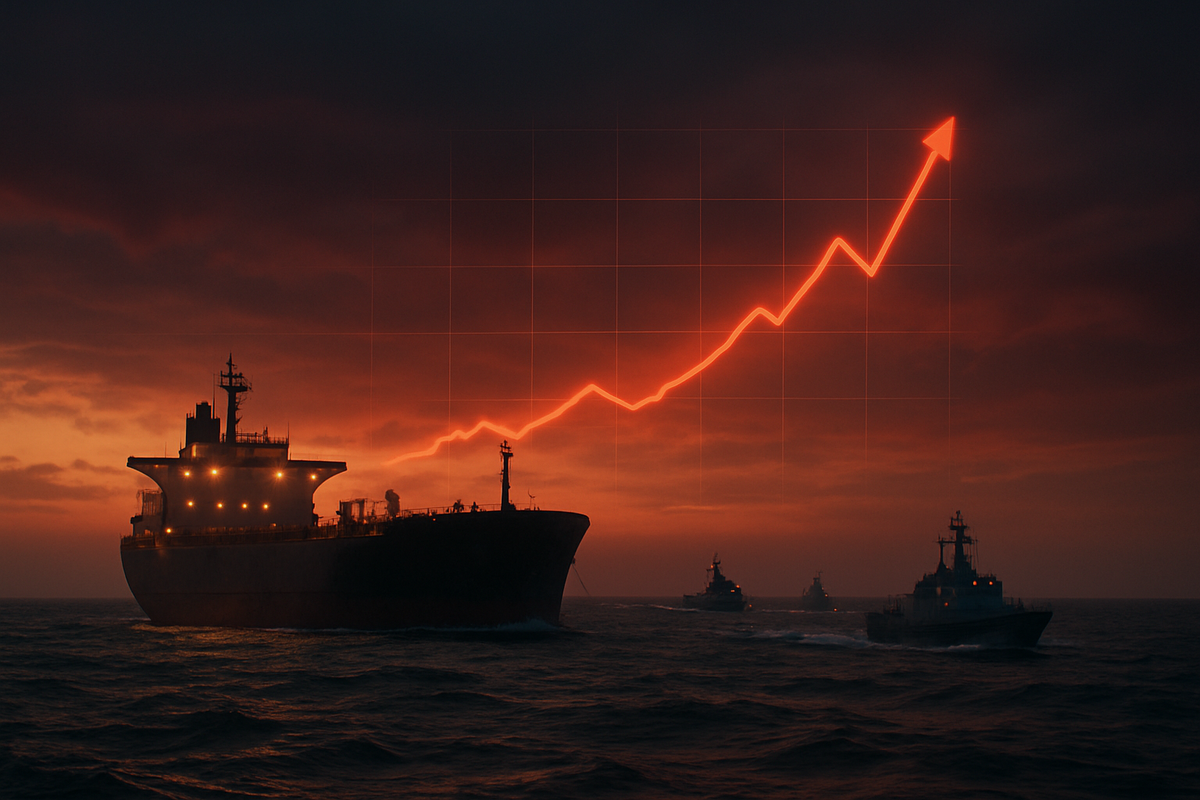
The global energy market has been plunged into a state of high-alert volatility following the effective closure of the Strait of Hormuz by Iranian forces, a move that has sent shockwaves through international trading floors. In the early hours of March 3, 2026, Brent Crude surged by 7.5% to reach $83.58 per barrel, while West Texas Intermediate (WTI) breached the $76 mark. This sudden escalation follows a weekend of intense military conflict in the Middle East, leaving traders and geopolitical analysts scrambling to price in the sudden disappearance of nearly 20% of the world's daily oil supply.
The immediate implications are stark: with the 21-mile-wide waterway—the world’s most critical energy chokepoint—now a de facto no-go zone, the "war premium" on crude has returned with a vengeance. Analysts are already warning that if the blockade persists for more than a few days, the psychological and physical supply squeeze could propel oil prices toward the triple-digit territory of $100 to $120 per barrel. For a global economy already grappling with fragile inflationary balances, this energy shock represents a potential "black swan" event that could redefine the economic landscape for the remainder of 2026.
The Chokepoint Tightens: A Timeline of Escalation
The current crisis traces its immediate origins to "Operation Epic Fury," a massive, coordinated military strike launched on February 28, 2026, by the United States and Israel. The operation targeted over 1,200 Iranian military and nuclear sites in response to a breakdown in nuclear negotiations and rising regional hostilities. The conflict reached a fever pitch following reports of the assassination of Iran’s Supreme Leader, Ayatollah Ali Khamenei, during the initial wave of strikes. In retaliation, the Islamic Revolutionary Guard Corps (IRGC) moved to weaponize the Strait of Hormuz, issuing VHF radio warnings to all commercial traffic and declaring the passage closed to "vessels of aggressor nations and their affiliates."
Since the closure began on March 1, shipping traffic through the Strait has plummeted by an estimated 70%. Over 150 tankers are currently anchored in open waters outside the Persian Gulf, waiting for safety guarantees that have yet to materialize. Major logistics giants have already suspended regional operations, citing the impossibility of securing war-risk insurance. The method of closure has been a hybrid of naval intimidation and targeted missile strikes on regional energy infrastructure, including a significant hit on Qatari LNG facilities that sent European natural gas prices up by 35% in a single session.
Market Winners and Losers: The Shifting Corporate Landscape
In the equity markets, the reaction has been bifurcated. Energy giants with significant North American production footprints are the primary beneficiaries of the supply disruption. Exxon Mobil (NYSE: XOM) and Chevron (NYSE: CVX) have seen their shares climb as investors anticipate a sustained period of high margins. Shale-focused players like Occidental Petroleum (NYSE: OXY), ConocoPhillips (NYSE: COP), and EOG Resources (NYSE: EOG) are also seeing heavy buy-side interest, as they are viewed as the "swing producers" capable of filling the gap left by sidelined Middle Eastern barrels.
Conversely, the "cost-inelastic" sectors are reeling. The airline industry has been the hardest hit, with American Airlines (NASDAQ: AAL), Delta Air Lines (NYSE: DAL), and United Airlines (NASDAQ: UAL) all suffering significant losses due to skyrocketing jet fuel costs and the logistical nightmare of rerouting international flights. Travel and leisure stocks have also taken a beating; Carnival Corp (NYSE: CCL) dropped 12% as bunker fuel costs soared. In the industrial sector, European chemical giant BASF (ETR: BAS) faces a dual crisis of high energy overhead and feedstock shortages, reflecting a broader struggle for energy-intensive manufacturers across the continent.
Wider Significance: A Historic Break in Global Trade
The closure of the Strait of Hormuz is not merely a regional skirmish; it is a fundamental disruption of the global trade order that mirrors the most severe energy crises of the 20th century. Analysts are drawing comparisons to the 1973 Arab Oil Embargo and the 1979 Iranian Revolution, both of which reshaped global geopolitics for a generation. Unlike those previous events, however, the current crisis occurs in an era of hyper-connected global supply chains. A prolonged closure would not only affect oil prices but would also cripple the global trade in liquefied natural gas (LNG), threatening the energy security of major economies like Japan, South Korea, and much of Western Europe.
Furthermore, the policy response from Washington remains a wildcard. Currently, the Trump administration has expressed a reluctance to tap into the Strategic Petroleum Reserve (SPR), which currently sits at approximately 415 million barrels. This stance marks a departure from previous administrations and underscores a strategic desire to maintain domestic reserves for a potential full-scale regional war. This policy "hawkishness" has contributed to the price surge, as markets realize that a government-led supply cushion may not be immediately forthcoming.
What Comes Next: Escorts, Escallation, or Exhaustion?
In the short term, all eyes are on the U.S. Fifth Fleet and the potential for a massive naval escort mission. Informally dubbed "Operation Prosperity Guardian II," this mission would involve NATO and allied warships providing armed protection for commercial tankers transiting the Strait. However, the tactical environment is significantly more dangerous than recent missions in the Red Sea. Iran’s mainland missile batteries and "swarm" boat tactics present a high-risk scenario that could lead to direct naval engagements between U.S. and Iranian forces.
The medium-term outlook hinges on whether the conflict expands into a broader regional war involving other OPEC+ members or if a diplomatic off-ramp can be found. If the Strait remains closed for more than two weeks, the International Energy Agency (IEA) is expected to trigger a coordinated global release of up to 180 million barrels of oil. This would be a desperate measure to prevent a global recession, but its effectiveness would be limited as long as the physical passage of new oil remains blocked.
Market Wrap-Up: Investors on High Alert
The events of early March 2026 have fundamentally altered the risk profile of the global markets. The key takeaway for investors is that the "geopolitical discount" that characterized the early 2020s has been replaced by a "conflict premium" that is likely to persist. As Brent Crude flirts with the mid-$80s, the path to $100 oil is no longer a theoretical exercise but a very real probability depending on the durability of the Iranian blockade.
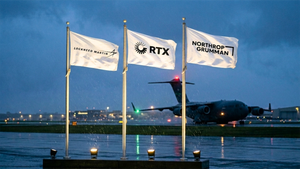
Moving forward, the market will be hyper-sensitive to any news regarding naval movements in the Persian Gulf, SPR policy shifts from the White House, and the potential for domestic political unrest in Iran following the leadership vacuum. For now, the focus remains on energy and defense stocks like Lockheed Martin (NYSE: LMT) and RTX Corporation (NYSE: RTX), which are acting as a hedge against further escalation. Investors should remain cautious, as the volatility index (VIX) is likely to remain elevated until the "veins" of the global oil trade are reopened.
This content is intended for informational purposes only and is not financial advice