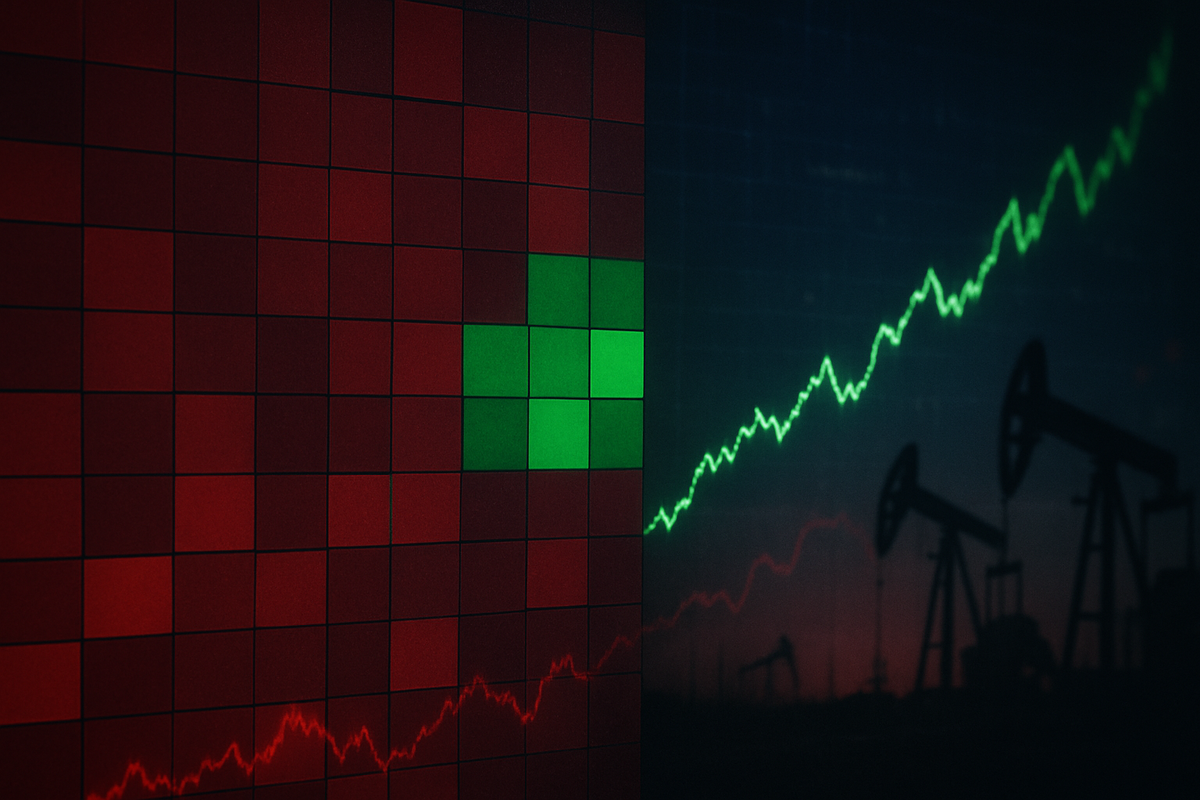
The U.S. equity markets faced a brutal "washout" session on Tuesday, March 3, 2026, as a dramatic escalation of geopolitical tensions in the Middle East sent investors sprinting for the exits. In a day characterized by extreme negative breadth, the traditional market heatmap was bathed in deep crimson, with the Energy sector appearing as the sole island of green in a sea of selling. By the closing bell, an overwhelming 4,776 equities had declined on U.S. exchanges, dwarfing the mere 534 advancing issues in one of the most lopsided trading sessions in recent years.
The immediate implications of this broad-based retreat are profound, signaling a sharp pivot toward "risk-off" sentiment and renewed inflationary fears. As oil prices surged on news of a potential long-term disruption in the Strait of Hormuz, the market’s reaction was swift and indiscriminate, punishing high-growth technology sectors and consumer-sensitive stocks while funneling capital into commodity-linked assets.
A Day of Dominant Declines and Disrupted Expectations
The market rout began in the early pre-market hours following reports that the U.S.-led "special military operation" in Iran, which many had initially hoped would be a brief engagement, was transitioning into a protracted conflict. This shift in timeline shattered investor confidence in a "soft landing" for the global economy. By mid-morning, the Dow Jones Industrial Average had plummeted over 1,000 points, eventually closing down 1,048 points, or 2.2%. The S&P 500 (NYSEARCA:SPY) fell 2.02%, while the small-cap heavy Russell 2000 (NYSEARCA:IWM) took an even harder hit, sliding 2.81%.
Volatility reached a fever pitch as the CBOE Volatility Index (INDEXCBOE:VIX), often referred to as the market’s "fear gauge," spiked 23% to hit 26.43. The primary catalyst was the perceived threat to global energy supply chains. Traders reacted to the real possibility of a blockade in the Strait of Hormuz, a critical chokepoint through which approximately one-fifth of the world’s oil consumption passes. As a result, Brent Crude leaped 7.58% to exceed $83.63 per barrel, while U.S. Crude (WTI) surged 8.07% to settle near $76.95.
The timeline of the decline was relentless. Each news update from the Persian Gulf seemed to trigger a new wave of algorithmic selling. Institutional players and retail investors alike retreated from equities as the 10-year Treasury yield climbed to 4.09%. This rise in yields reflected a sudden repricing of inflation expectations, as higher energy costs are historically a primary driver of consumer price index (CPI) volatility.
Winners in the Well: Energy Giants Surge as Travel and Tech Sink
In a market where almost 90% of stocks finished lower, the Energy sector stood as the undisputed winner. Large-cap oil producers like ExxonMobil (NYSE: XOM) and Chevron (NYSE: CVX) saw significant inflows as they became the primary hedge against rising fuel prices. Occidental Petroleum (NYSE: OXY) also outperformed the broader market, as investors bet on the profitability of domestic production amidst overseas instability. These companies are poised to benefit from expanding margins as the price of crude outpaces the cost of extraction and refining.
Conversely, the list of losers was extensive and dominated by sectors sensitive to fuel costs and interest rates. The airline industry faced a particularly grueling session; United Airlines (NASDAQ: UAL), Delta Air Lines (NYSE: DAL), and American Airlines (NASDAQ: AAL) all saw their shares tumble between 4% and 5%. The combination of surging jet fuel expenses and a potential slowdown in consumer discretionary spending created a "double whammy" for the travel sector.
Big Tech, which had led the market for much of early 2026, also faced a harsh correction. Giants such as Apple Inc. (NASDAQ: AAPL), Microsoft (NASDAQ: MSFT), and NVIDIA (NASDAQ: NVDA) were sold off as rising Treasury yields reduced the present value of future earnings. For these growth-oriented companies, the sudden shift toward a high-inflation, high-rate environment represents a significant headwind that could dampen the premium valuations they have enjoyed over the past year.
Wider Significance: The Return of the Energy Shock
The events of March 3, 2026, signal a departure from the "AI-driven" narrative that has dominated the markets for the last 24 months. This event fits into a broader emerging trend of "reflation and rotation," where the focus shifts from technological innovation to resource scarcity and geopolitical security. The sheer breadth of the decline—with nearly nine stocks falling for every one that rose—suggests that this was not a localized correction but a systemic re-evaluation of risk across the entire financial landscape.
Historically, this session draws comparisons to the oil shocks of the 1970s and the initial market reaction to the invasion of Ukraine in 2022. In both instances, an unexpected spike in energy costs served as a tax on the global consumer and a catalyst for central bank hawkishness. If the conflict in Iran continues to escalate, it could force the Federal Reserve to reconsider any planned rate cuts, as the inflationary pressure from $80+ oil threatens to unmoor inflation expectations.
Furthermore, the regulatory and policy implications are likely to be significant. We can expect renewed political pressure for domestic energy independence and potentially strategic petroleum reserve releases from the administration. Competitors in the renewable energy space might eventually benefit from a long-term shift away from fossil fuel volatility, but in the immediate term, even green energy stocks were pulled down by the general market malaise and rising capital costs.
Looking Ahead: A Volatile Path to Recovery
In the short term, the market is likely to remain tethered to the headlines coming out of the Middle East. If the Strait of Hormuz remains open and the conflict is contained, we could see a rapid "relief rally" as the 4,776 declining stocks regain some of their lost ground. However, if the blockade becomes a reality, market analysts suggest that crude oil could test the $100 per barrel mark, which would likely lead to a deeper and more sustained bear market.
Strategic pivots will be required for institutional managers who have been heavily overweight in technology and growth. We are likely to see a continued rotation into defensive sectors such as Utilities and Consumer Staples, as well as a sustained interest in "hard assets" including gold and energy. The challenge for investors in the coming weeks will be distinguishing between a temporary geopolitical dip and a fundamental shift in the economic cycle that favors value over growth.
Potential scenarios range from a "V-shaped" recovery if diplomatic channels prevail, to a "stagflationary" slog if energy prices remain elevated while economic growth slows. Market participants should watch for any signs of a "credit crunch" or liquidity issues in the bond market, which often follow such violent moves in equity breadth and Treasury yields.
Final Assessment: A Wake-Up Call for the Markets
The March 3 market rout serves as a stark reminder of the fragility of global equity valuations in the face of geopolitical instability. While the Energy sector provided a temporary sanctuary for capital, the breadth of the decline across 4,776 stocks underscores the interconnectedness of the modern global economy. When the "bloodstream" of commerce—energy—is threatened, the entire body of the market feels the pain.
Moving forward, investors should be wary of assuming that the low-volatility environment of the early 2020s will return anytime soon. The "Energy Green, Others Red" heatmap is a visual representation of a market that is fundamentally on edge. The resilience of the U.S. consumer and the adaptability of corporate earnings will be tested in the coming months as they navigate this new landscape of geopolitical risk and inflationary pressure.
For those watching the markets, the key indicators to monitor will be the daily fluctuations in Brent Crude, the rhetoric from the Pentagon, and the weekly updates on U.S. oil inventories. Today was a clear "washout," but whether it marks the bottom or just the beginning of a larger correction remains the critical question for the remainder of 2026.
This content is intended for informational purposes only and is not financial advice