The global defense sector witnessed an unprecedented rally this week, as the outbreak of a major military campaign in the Middle East sent shockwaves through financial markets. On March 2, 2026—the first full trading day following the escalation—large-cap industrial and aerospace stocks surged to record highs. Investors are aggressively pricing in a structural shift in global security, moving beyond traditional valuation models to account for a multi-year cycle of high-intensity conflict and massive munitions replenishment.
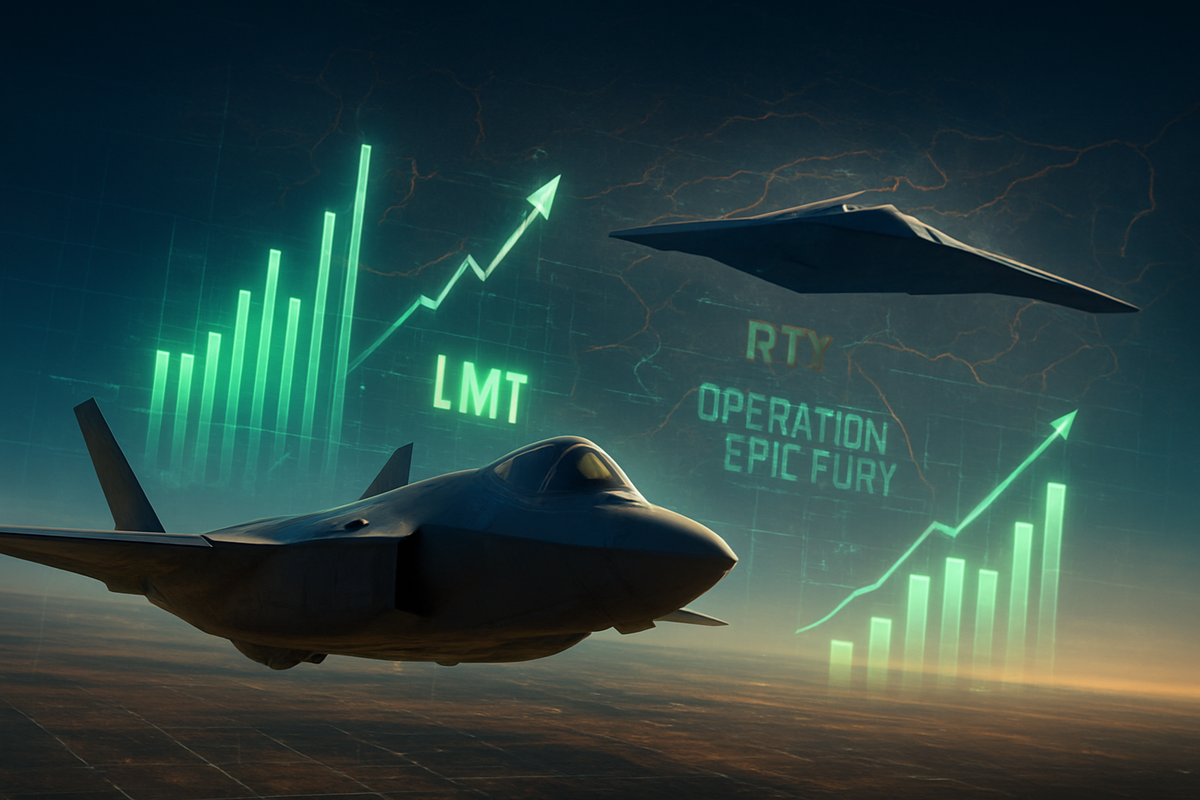
The immediate catalyst was the launch of "Operation Epic Fury," a significant military offensive that has fundamentally altered the geopolitical landscape of the Middle East. With the U.S. defense budget now surpassing the historic $1 trillion mark and projections for fiscal year 2027 trending even higher, the market is undergoing a "re-rating" of the defense sector. Analysts are no longer viewing these companies as steady, low-growth dividend plays, but rather as essential structural growth beneficiaries in a period of prolonged global instability.
The Dawn of 'Operation Epic Fury' and the Market Reaction
The current market frenzy stems from the events of February 28, 2026, when a joint military campaign targeted high-level strategic assets in Iran. The operation, characterized by its speed and technological sophistication, reportedly neutralized key IRGC infrastructure and leadership compounds. The fallout was instantaneous: by March 2, 2026, the Strait of Hormuz was officially closed to transit, causing crude oil prices to spike and heightening the urgency for advanced maritime and missile defense capabilities.
The timeline leading to this moment was marked by months of deteriorating diplomacy and regional civil unrest, but the scale of the February 28 strikes caught many off-guard. The tactical execution relied heavily on premium U.S. air assets, including stealth bombers and advanced fighter jets, which served as a live-fire validation of the industry’s most expensive programs. Market participants responded on Monday with a buying spree that saw the aerospace and defense sub-sectors significantly outperform the broader S&P 500, as the realization set in that the "peace dividend" of the late 20th century has been decisively retired.
High-Flyers: The Companies Reshaping the Modern Battlefield
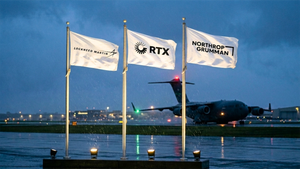
The primary beneficiaries of this shift are the "Big Five" defense contractors, whose order books are expected to swell as the Pentagon and its allies move to replenish depleted stockpiles. Lockheed Martin (NYSE: LMT) has emerged as a frontrunner, hitting 52-week highs after its F-35 Lightning II aircraft played a central role in the initial strikes. The company recently secured a $25.36 billion ceiling contract for microelectronics and is reportedly in talks to quadruple its production of THAAD interceptors to meet the surging demand for missile defense in the Middle East.
RTX Corporation (NYSE: RTX), formerly Raytheon, saw its shares jump 6.5% on the news, driven by its dominance in the munitions and sensor markets. The company’s Patriot missile systems and Tomahawk cruise missiles are currently the most sought-after commodities in the regional theater. Similarly, Northrop Grumman (NYSE: NOC) gained 6.0% as its B-2 Spirit stealth bombers were highlighted as the cornerstone of the deep-strike mission. Meanwhile, Textron (NYSE: TXT)—often overshadowed by its larger peers—is gaining traction through its Bell military rotorcraft division. Textron’s MV-75 (V-280 Valor) program reached critical production milestones just as the conflict began, and its recent $163 million contract for Commando Select vehicles underscores its growing role in ground-based tactical mobility.
General Dynamics (NYSE: GD) also saw substantial interest, particularly through its Electric Boat and specialized materials divisions. As the U.S. Navy prepares for an expanded, permanent presence in the Middle East and the Indo-Pacific to secure shipping lanes, General Dynamics' role in submarine and surface ship maintenance has become a "must-own" for institutional investors looking for long-term maritime exposure.
A Structural Re-Rating: From Safe Haven to Growth Engine
This rally represents more than just a temporary spike; it is a fundamental "re-rating" of the industrial sector. Historically, defense stocks traded at multiples between 15x and 18x forward earnings. However, as of March 2026, companies like Lockheed Martin are trading closer to 31x P/E. This shift is fueled by the "One Big Beautiful Bill Act," a legislative package that front-loaded $113 billion for immediate military modernization, pushing the total 2026 defense budget over $1 trillion.
The broader industry trend is moving toward "Software-Defined Defense." The market is now rewarding defense contractors that integrate high-margin AI and digital backbones into their hardware, leading to "tech-like" valuation multiples. Furthermore, NATO allies are now targeting defense spending at 5% of their respective GDPs, up from the previous 2% benchmark. This global shift creates a massive tailwind for U.S. exporters, who provide the interoperable systems required for coalition warfare. The precedent for this level of spending has not been seen since the height of the Cold War, and the current instability in the Middle East is serving as the catalyst for a permanent increase in the "security premium" applied to these stocks.
The Road Ahead: Scenarios and Strategic Pivots
In the short term, the market will remain hyper-focused on the status of the Strait of Hormuz and the potential for a wider regional conflagration. Should the conflict drag into a protracted war of attrition, the demand for "expendable" tech—such as loitering munitions and low-cost drones—will likely skyrocket. Textron, for instance, is already pivoting with its LASSO program (Low Altitude Stalking and Strike Ordnance), positioning itself to capture the rapidly growing market for autonomous battlefield systems.
Long-term, the strategic challenge for these companies will be scaling production fast enough to meet the 2027 "Dream Military" budget proposal, which seeks to authorize a staggering $1.5 trillion in spending. The primary risk to this outlook remains supply chain fragility; the defense industry is still grappling with the availability of specialized materials and semiconductors. Investors should watch for potential strategic acquisitions as the "Big Five" seek to bring more of their supply chain in-house to guarantee delivery timelines in an era where "on-time" means the difference between victory and defeat.
Conclusion: A New Era for Defense Investing
The rally of March 2026 marks a turning point in how the market values the defense and industrial complex. Driven by the exigencies of "Operation Epic Fury" and a bipartisan consensus on the need for massive military modernization, the sector has transitioned into a primary growth engine for the industrial economy. The era of the "safe haven" is over; these companies are now at the forefront of a global technological and military arms race.
As we move forward into the middle of 2026, the key takeaways are clear: the floor for defense spending has been permanently raised, and the "re-rating" of these stocks reflects a world where geopolitical risk is a constant, rather than an outlier. Investors should keep a close eye on upcoming budget hearings and the status of regional missile defense shields, as these will be the primary drivers of the next leg of this historic rally.
This content is intended for informational purposes only and is not financial advice.