In a move that fundamentally reshapes the landscape of enterprise software and cybersecurity, ServiceNow (NYSE: NOW) has finalized the details of its $7.75 billion acquisition of Armis, the global leader in cyber-exposure and asset visibility. Announced during the company’s high-stakes Investor and Analyst Day on January 8, 2026, the deal represents the largest acquisition in ServiceNow’s history and signals a definitive shift toward a "security-first" approach to automated business workflows.
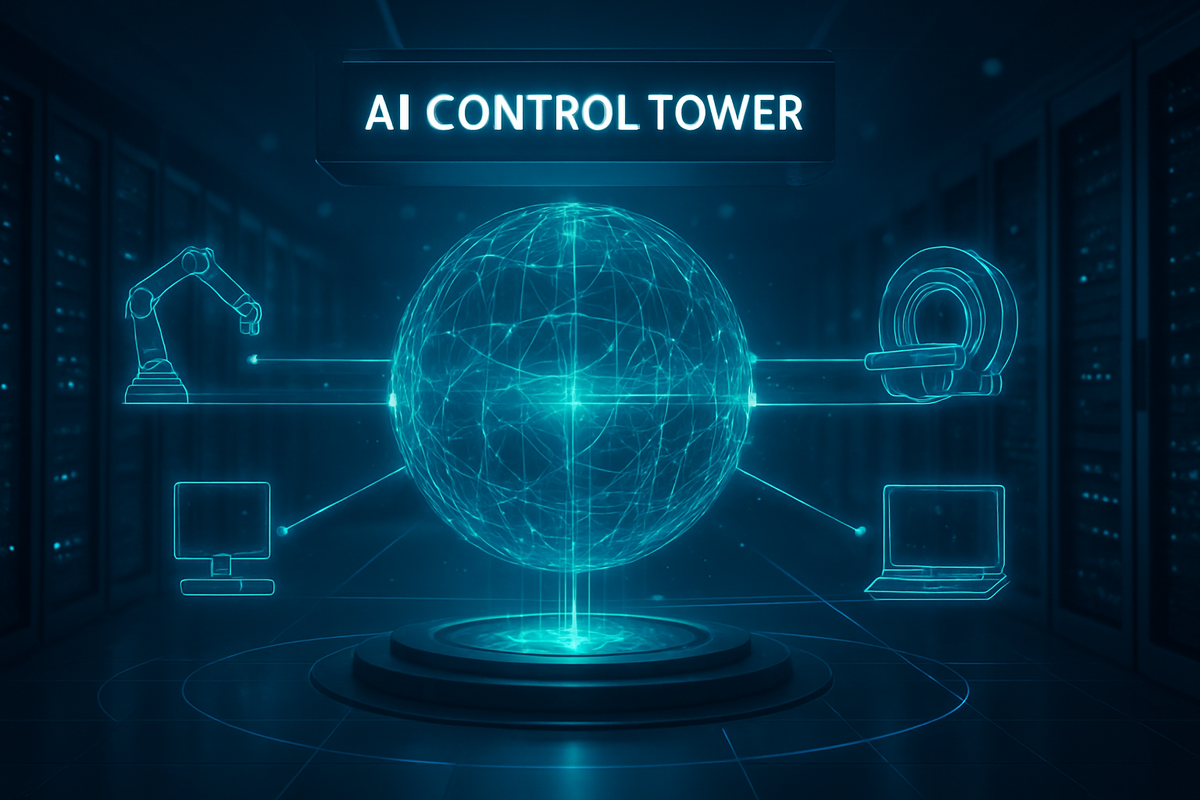
The acquisition is designed to bridge the gap between "seeing" a threat and "remediating" it. By integrating Armis’s real-time telemetry into the ServiceNow platform, the combined entity aims to create what CEO Bill McDermott describes as the "AI Control Tower" for the modern enterprise. This integration allows organizations to gain visibility into every connected device—from traditional IT assets to unmanaged IoT, medical devices, and manufacturing robots—and automatically trigger remediation workflows when vulnerabilities are detected.
The Road to the $7.75 Billion "AI Control Tower"
The path to this landmark deal began in earnest on December 23, 2025, when ServiceNow entered into a definitive agreement to acquire the privately held Armis for an all-cash consideration of $7.75 billion. The price tag represents a premium valuation of approximately 23 times Armis’s Annual Recurring Revenue (ARR), which had surged to $340 million by mid-2025. While the formal integration planning is now underway as of early January 2026, the transaction is expected to officially close in the second half of the year, following customary regulatory reviews.
The strategic timing of the deal is no coincidence. Throughout 2025, ServiceNow’s Security and Risk business saw explosive growth, crossing the $1 billion Annual Contract Value (ACV) threshold. However, the company faced a persistent challenge: its workflows were often "blind" to the millions of unmanaged devices—Internet of Things (IoT) and Operational Technology (OT)—that now make up the majority of the enterprise attack surface. Armis, which had been preparing for a highly anticipated 2026 IPO, chose instead to join forces with ServiceNow, effectively ending its pursuit of the public markets in favor of a massive strategic exit.
Industry reaction has been swift, with analysts noting that ServiceNow is effectively "moating" its platform. By marrying identity management and asset visibility with its core IT Service Management (ITSM) dominance, ServiceNow is positioning itself as the indispensable operating system for the "Agentic AI" era. The deal was funded through a combination of ServiceNow’s robust cash reserves and new debt, a move supported by the company’s consistent free cash flow margins of over 35%.
Winners and Losers in the Platformization War
The primary winner in this transaction is undoubtedly ServiceNow (NYSE: NOW), which has successfully transformed from a back-office tool into a critical "security shield." By absorbing Armis, ServiceNow now controls the "unmanaged" device gap that has long plagued Chief Information Officers (CIOs). This allows them to bundle sophisticated OT and IoT security directly into their existing licenses, providing a "utility" version of security that may be "good enough" for many Fortune 500 companies.
Conversely, niche vulnerability management specialists like Tenable Holdings, Inc. (NASDAQ: TENB), Qualys, Inc. (NASDAQ: QLYS), and Rapid7, Inc. (NASDAQ: RPD) face significant headwinds. As platform giants like ServiceNow integrate scanning and visibility as native features of their workflow suites, these "point solution" firms risk being "zero-priced" out of the market. Similarly, pure-play OT security firms like Claroty and Nozomi Networks now find themselves in a "squeeze," forced to compete against a $1 billion+ security business embedded within the ServiceNow ecosystem.
In the broader cybersecurity space, the deal puts ServiceNow on a direct collision course with platformization leaders like Palo Alto Networks, Inc. (NASDAQ: PANW) and CrowdStrike Holdings, Inc. (NASDAQ: CRWD). While CrowdStrike remains the king of the "managed" endpoint (laptops and servers), ServiceNow now holds the keys to the "unmanaged" physical world. This may force CrowdStrike to accelerate its own expansion into cyber-physical systems to maintain its competitive edge.
A New Paradigm: Agentic AI and Regulatory Pressure
The ServiceNow-Armis deal is a reflection of two major trends dominating the 2026 financial landscape: the rise of Agentic AI and increasingly stringent SEC cyber-disclosure rules. We are now in an era where autonomous AI agents and IoT devices often outnumber human employees. For an enterprise to govern an "agentic workforce," it must be able to see every asset those agents interact with. Armis provides the real-time telemetry that allows ServiceNow’s AI agents to "decide and act"—for instance, an agent could detect a vulnerable MRI machine and autonomously initiate a patch workflow without human intervention.
Furthermore, the SEC’s heightened focus on cybersecurity materiality (Items 1.05 and 106) has moved security from the server room to the boardroom. Boards are now legally required to disclose material cyber incidents and their risk management strategies. The integration of Armis into ServiceNow provides a "documented materiality framework," tying technical vulnerabilities directly to business impact and financial risk. This makes ServiceNow a critical tool for compliance as much as for security.
Historically, this deal draws parallels to the $28 billion acquisition of Splunk by Cisco Systems, Inc. (NASDAQ: CSCO) in 2024. Just as Cisco used Splunk to marry networking with observability, ServiceNow is using Armis to marry business workflows with security telemetry. Both represent "old guard" software giants using their massive balance sheets to pivot into high-growth, AI-driven security segments to avoid stagnation in a maturing SaaS market.
The Road Ahead: Autonomous Remediation
In the short term, ServiceNow must navigate the complex technical integration of Armis Centrix™ into its Vancouver and Washington DC platform releases. Investors will be watching closely to see if the company can maintain Armis’s 50%+ growth rate while cross-selling the technology to its existing ITSM and HR service delivery customers. The success of this deal hinges on whether ServiceNow can convince CIOs that security should not be a siloed department, but a native property of every business process.
Longer-term, the market should expect a "ripple effect" of further M&A. As ServiceNow moves deeper into the infrastructure layer, other enterprise software giants may feel compelled to acquire their own "visibility" engines. We may see a period of intense consolidation where the remaining independent cybersecurity firms are snatched up by platform players looking to complete their "AI Control Tower" visions.
The strategic pivot required for ServiceNow is significant; it is moving from managing software to managing the "cyber-physical" world. If successful, ServiceNow will not just be the company that helps you reset your password or request a new laptop—it will be the company that secures the robots on your factory floor and the medical devices in your hospitals, all through the power of automated, AI-driven workflows.
Final Assessment: The Security-Integrated Future
The finalization of the Armis acquisition marks a turning point for ServiceNow and the broader tech sector. By spending $7.75 billion, ServiceNow has signaled that the future of enterprise software is not just about productivity, but about the resilience and security of the underlying infrastructure. The "system of record" has officially become a "system of action."
For investors, the key metric to watch in the coming months will be the "Security & Risk" segment's contribution to ServiceNow’s total contract value. If ServiceNow can successfully leverage Armis to win larger, multi-year "platform" deals that include OT and IoT security, the current stock valuation may prove to be a significant bargain. However, the challenge of integrating a high-growth startup into a massive corporate structure remains a risk.
Ultimately, this deal reinforces the reality that in 2026, cybersecurity is no longer an IT problem—it is a business continuity requirement. ServiceNow has placed a $7.75 billion bet that it can be the one to solve it.
This content is intended for informational purposes only and is not financial advice.