NEW YORK — Shares of Warby Parker Inc. (NYSE: WRBY) surged nearly 9% over a two-day trading period ending January 6, 2026, following a high-conviction upgrade from TD Cowen. The rally, which saw the stock climb from a January 5th open of $22.62 to intraday highs near $24.55 today, marks a significant vote of confidence in the eyewear disruptor’s transition from a digital-first startup to an AI-integrated retail powerhouse.
The catalyst for the jump was a detailed research note from TD Cowen’s Senior Retail and Luxury Analyst, Oliver Chen, who raised the firm’s price target on WRBY to $26.00. Chen’s upgrade highlights Warby Parker’s successful navigation of a complex 2025, citing its landmark partnership with Alphabet Inc. (NASDAQ: GOOGL) and its aggressive physical expansion—including a deepening relationship with Target Corp (NYSE: TGT)—as primary drivers for long-term value creation.
A Strategic Pivot into the "Smart Eyewear" Era
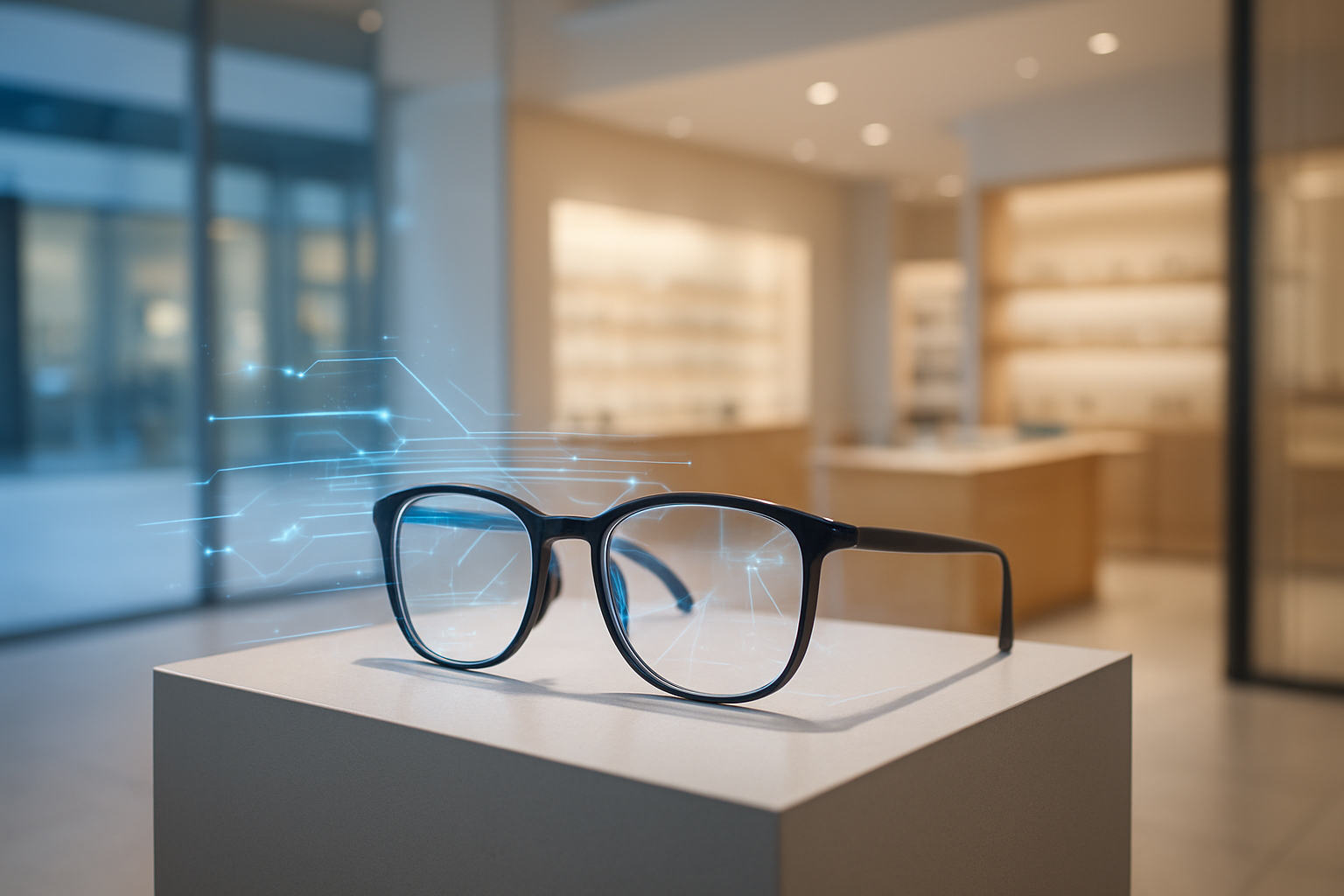
The market's enthusiastic response on January 6th reflects a broader realization that Warby Parker is no longer just a purveyor of $95 frames. The centerpiece of the TD Cowen upgrade is the company’s collaboration with Google to launch AI-powered smart glasses in mid-2026. This partnership, bolstered by a reported $75 million development investment from Google, aims to integrate Google Gemini and Android XR technology into Warby Parker’s signature aesthetic. By positioning itself as the primary hardware partner for Google’s wearable ecosystem, Warby Parker is creating a formidable "Google-Warby" camp to challenge the "Meta-Luxottica" dominance currently held by EssilorLuxottica (OTC: ESLOY).
The timeline leading to this week's stock jump began in late 2025, when Warby Parker signaled a definitive shift from "growth-at-all-costs" to a model centered on bottom-line sustainability. Throughout 2025, the company expanded its retail footprint by roughly 40 stores, maintaining impressive four-wall margins of approximately 35%. This disciplined growth, combined with the expansion of its "shop-in-shop" presence within Target locations, has allowed the brand to capture a more diverse suburban demographic while leveraging Target’s massive foot traffic.
Winners and Losers in the New Vision Landscape
Warby Parker’s ascent is creating a clear ripple effect across the eyewear and retail sectors. The immediate winners include Alphabet Inc. (NASDAQ: GOOGL), which finally has a stylish, consumer-facing vessel for its AI ambitions, and Target Corp (NYSE: TGT), which continues to benefit from the "halo effect" of hosting premium DTC brands. Investors are increasingly viewing Warby Parker as a rare success story in the "hybrid" DTC space—a company that successfully used its digital data to build a high-margin physical empire.
Conversely, traditional value players like National Vision Holdings (NYSE: EYE) are feeling the pressure. While National Vision is currently executing a "Bold Reinvention" plan to close underperforming stores and scale its telemedicine capabilities, it faces a dual threat: Warby Parker is moving "down-market" into suburban hubs, while EssilorLuxottica (OTC: ESLOY) is moving "up-tech" with its Ray-Ban Meta and Nuance Audio hearing-aid glasses. For National Vision, the challenge in 2026 will be defending its value-segment market share against competitors who are increasingly offering more "tech-forward" or "lifestyle-branded" alternatives.
The 2026 Retail Reality: AI and the "Phygital" Hybrid
The surge in WRBY stock is a microcosm of the broader retail trends defining early 2026. The industry has moved beyond the "DTC vs. Traditional" debate, entering an era where "omnichannel" is a mandatory baseline. The most successful retailers are those that blend physical showrooms with advanced digital tools—a strategy often termed "phygital." Warby Parker’s use of AI virtual try-ons, combined with in-person optometry services, has become the gold standard for this model.
Furthermore, the event highlights the "K-shaped" recovery of the retail sector. While overleveraged specialty retailers are facing a wave of bankruptcies in 2026 due to persistent high interest rates, companies with strong unit economics and technological moats are thriving. The integration of AI into hardware—like the upcoming Google-Warby glasses—is no longer a gimmick; it is a critical strategy for retailers to capture the "Smart Eyewear" category, which is projected to see triple-digit growth as consumers look for ways to interact with AI assistants hands-free.
Looking Ahead: The Road to $26 and Beyond
In the short term, investors will be closely watching Warby Parker’s Q1 2026 earnings for signs that the Google partnership is meeting development milestones. The successful rollout of the smart glasses in the second half of the year will be the ultimate litmus test for the stock’s $26 price target. Strategically, Warby Parker may need to continue diversifying its insurance network, which already covers over 30 million lives, to ensure that its higher-tech (and likely higher-priced) smart frames are accessible to a broad consumer base.
The long-term opportunity lies in the "Vision Care" ecosystem. By expanding into contact lenses and comprehensive eye exams, Warby Parker is transforming from a frame seller into a holistic healthcare provider. The challenge will be maintaining its high Net Promoter Scores (NPS) as it scales toward its long-term goal of 900 physical locations. If the company can maintain its boutique feel while operating at a massive scale, it could fundamentally alter the competitive dynamics of the $76 billion global eyewear market.
Final Takeaway for Investors
The 9% jump in Warby Parker’s stock is more than just a reaction to a single analyst's upgrade; it is a recognition of the company’s evolution into a tech-enabled retail leader. As we move further into 2026, the "winners" in the market are becoming increasingly clear: those who can bridge the gap between high-tech innovation and high-touch physical service.
For investors, the key metrics to watch in the coming months will be the expansion of the Target partnership, the specific hardware specs of the Google AI glasses, and the company's progress toward GAAP net profitability. While the eyewear market remains a duopoly at the top, Warby Parker’s aggressive 2026 roadmap suggests that the "disruptor" is finally ready to become a "dominant" player.
This content is intended for informational purposes only and is not financial advice.