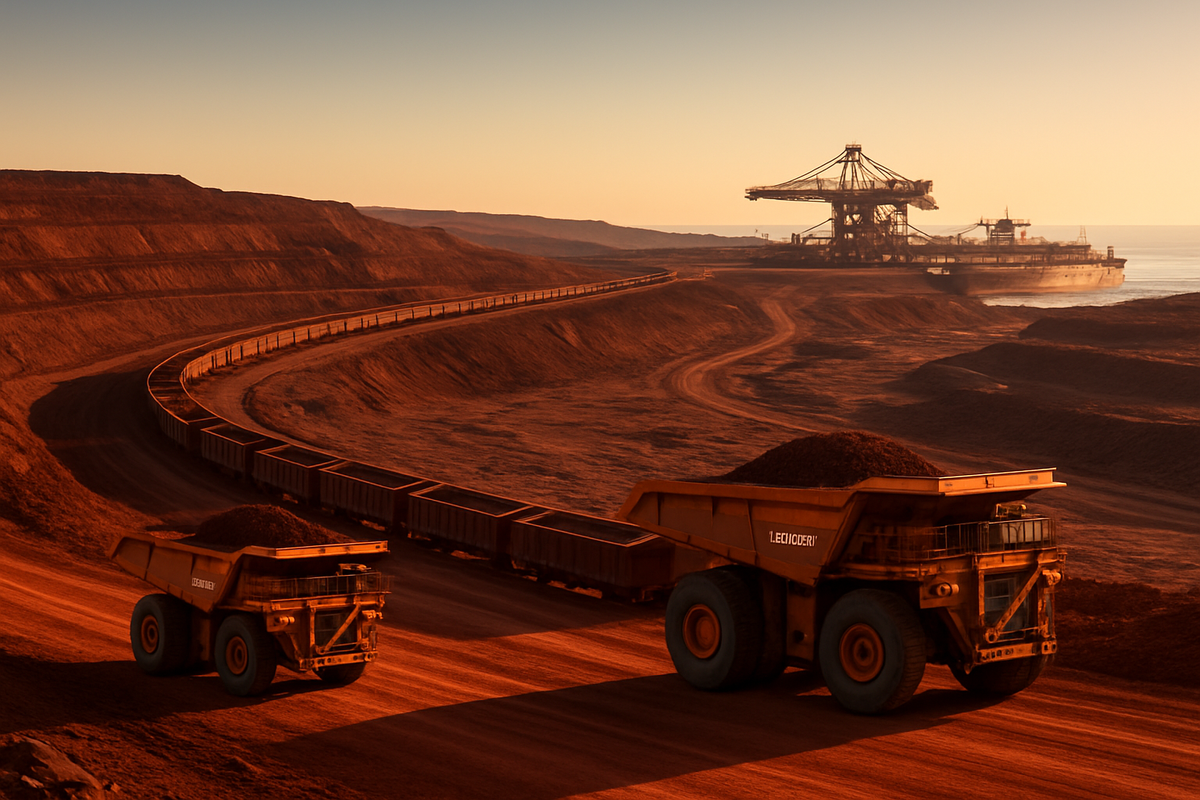
In a landmark shift that signals the end of a decades-long rivalry in the Australian outback, mining giants Rio Tinto (ASX: RIO) and BHP Group (ASX: BHP) announced on January 15, 2026, a sweeping collaboration to integrate their iron ore operations in the Pilbara region. The deal, underpinned by two non-binding Memoranda of Understanding (MoUs), focuses on a "capital-light" strategy aimed at sharing aging infrastructure and unlocking contiguous ore bodies that were previously considered too expensive to develop independently.
The immediate implications are significant for both the companies and the global commodities market. By combining forces, the two largest producers of seaborne iron ore expect to significantly reduce capital expenditure (CapEx) and operational costs, effectively extending the life of their mature mining hubs. For the broader market, the move suggests a strategic pivot toward efficiency over raw expansion, as the industry prepares for a potential structural downturn in iron ore prices amid a global shift toward green steel and energy-transition metals.
A New Era of Cooperation in the Pilbara
The collaboration is centered on the geographical proximity of two specific assets: Rio Tinto’s undeveloped Wunbye deposit and BHP’s Yandi Lower Channel deposit. Under the new framework, BHP will supply ore from its expanded Yandi mine to be processed at Rio Tinto’s existing wet beneficiation plants. This level of technical integration—where one major miner processes the other's raw material—represents a historic departure from the "fortress" mentality that has historically defined the Western Australian mining landscape.
The timeline for this partnership has been building for several years as both companies faced the reality of declining ore grades and rising costs at their flagship Yandi and Yandicoogina projects. Following the formal announcement on January 15, the companies confirmed that first production from this shared framework is anticipated by the early 2030s, ultimately aiming to unlock an additional 200 million tonnes of iron ore over the life of the agreement. The infrastructure sharing will primarily utilize the existing rail and port networks concentrated around Port Hedland, the world’s largest bulk export hub.
Market reaction was swift and largely positive. In the wake of the announcement, BHP’s shares rose by 3% on the Australian Securities Exchange, while Rio Tinto’s stock climbed 0.8%, testing long-term resistance levels. Investors have long called for "productivity in action," and analysts at major firms have characterized the deal as a "lifeline" that allows both companies to extract maximum value from assets that were nearing their natural economic limits.
Winners and Losers: Mapping the Economic Fallout
The clear winners in this arrangement are the shareholders of BHP Group (ASX: BHP) and Rio Tinto (ASX: RIO). By utilizing Rio Tinto’s under-used wet processing capacity, BHP is expected to slash the capital requirements for its Yandi expansion by 30% to 40%. This massive saving in CapEx allows both companies to maintain robust dividends while redirecting capital toward more lucrative growth areas like copper and lithium. Engineering and logistics firms that specialize in site integration and automation are also set to benefit as they are called upon to bridge the technical gaps between the two companies' systems.
On the other side of the ledger, smaller "junior" miners in the Pilbara may find themselves at a disadvantage. The increased efficiency and lower unit costs achieved by the "Big Two" will allow them to maintain profitability even if global iron ore prices soften. This could squeeze out marginal players who do not have the scale to compete with the optimized cost-curves of Rio Tinto and BHP. Furthermore, equipment manufacturers who relied on the development of entirely new, standalone processing plants may see a reduction in potential order books as "sharing" becomes the new industry standard.
Industry Significance and the Global Ripple Effect
This event fits into a broader global trend of consolidation and cooperation in the face of inflationary pressures and the decarbonization of the steel industry. Historically, Rio Tinto and BHP have guarded their rail and port networks with fierce protectionism. This reversal echoes past attempts at a merger in 2009—which failed due to regulatory hurdles—but succeeds this time by focusing on operational synergy rather than corporate consolidation. It sets a new precedent for "co-opetition," where rivals collaborate on infrastructure while continuing to compete on sales and marketing.
Regulatory implications remain a key hurdle. While the partnership is currently at the MoU stage, it will require rigorous scrutiny from the Australian Competition and Consumer Commission (ACCC) to ensure that the dominance of these two players does not unfairly stifle competition or harm the interests of smaller miners seeking access to infrastructure. Additionally, the companies have committed to deep engagement with Traditional Owners, as the development of the Wunbye and Yandi deposits will involve significant land-use agreements in culturally sensitive areas.
The Path Ahead: Strategic Pivots and Market Scenarios
In the short term, the market will be watching for the transition from non-binding MoUs to definitive, legally binding agreements. The technical challenges of integrating different mining software, safety protocols, and labor agreements cannot be understated. Strategically, this move allows both companies to prepare for a "low-price scenario." If global demand for iron ore plateaus—as China’s property sector continues to evolve—Rio Tinto and BHP will be the best-positioned producers in the world to survive a price war.
Long-term, this collaboration could be the first of many. As mines get deeper and ore grades lower, the industry may see similar "hub-and-spoke" models emerge in other mining jurisdictions like Chile’s copper belt or Canada’s potash fields. The success of this Pilbara venture will likely serve as a blueprint for how resource giants can navigate the transition from a "growth at all costs" mindset to one of "value over volume."
Summary and Investor Outlook
The January 15, 2026, announcement of the Rio Tinto-BHP collaboration marks a watershed moment for the global mining industry. By prioritizing capital efficiency and infrastructure sharing, these two titans are effectively lowering the floor for iron ore production costs. The key takeaways for the market are clear: the era of redundant, multibillion-dollar standalone projects is ending, replaced by a sophisticated model of asset optimization.
For investors, the coming months will be critical. Watch for regulatory approvals and the specific details of the joint venture structures. Furthermore, any progress in Rio Tinto’s rumored merger discussions with other diversified miners like Glencore (LSE: GLEN) could further complicate or accelerate this trend of industry consolidation. Moving forward, the focus remains on how these "capital-light" savings are redeployed—whether into shareholder returns or the aggressive pursuit of energy-transition metals.
This content is intended for informational purposes only and is not financial advice.