As digital asset markets enter a new phase of maturity in 2026, the intersection of Artificial Intelligence and blockchain is no longer a concept—it is a live market reality. Klardin (KDN) is emerging as a primary focus for both institutional and retail investors, positioned not as a speculative "meme" token, but as the foundational layer for Phygital (Physical + Digital) global commerce.
With its public rollout accelerating and preparations finalized for a coordinated simultaneous debut on Tier-1 exchanges, Klardin is transitioning from a high-potential project to a cornerstone of the next generation of retail.
Strategic Market Entry: The 2026 "Big Four" Launch
A defining event for Klardin in early 2026 is its high-impact market entry strategy. The project has officially confirmed strategic listing frameworks with the industry's four largest exchanges: Binance, Coinbase, KuCoin, and Kraken.
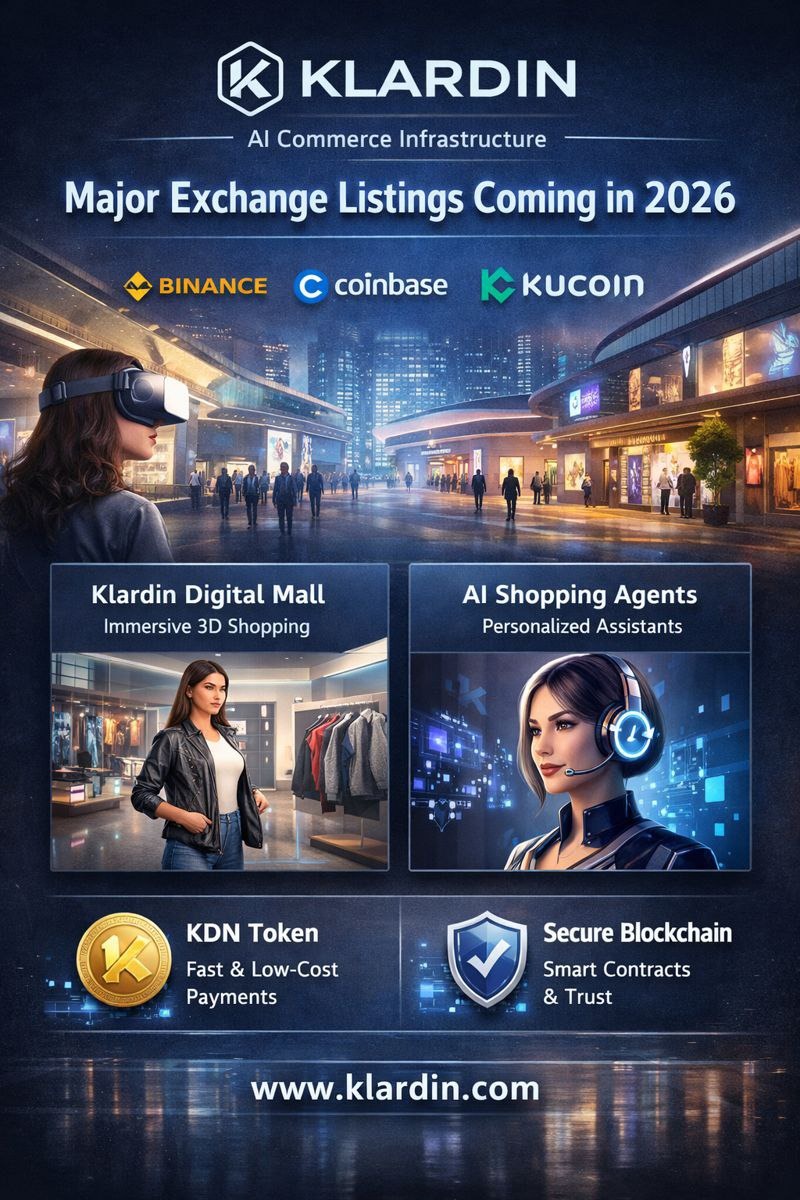
This coordinated rollout represents a calculated shift from the fixed-price pre-sale phase—recently cited at $0.012—to high-liquidity public trading. By bypassing smaller, low-volume venues, Klardin is establishing the deep liquidity rails necessary to support its global payment infrastructure.
Global Retail Velocity (Binance & KuCoin): Provides immediate exposure to high-frequency trading markets across Europe and Asia.
Institutional Trust (Coinbase & Kraken): Validation from North American-regulated platforms confirms Klardin’s commitment to compliance and long-term viability.
The Klardin Architecture: Redefining Digital Shopping
Klardin is a specialized blockchain protocol built on the Base Layer-2 network, designed to dismantle the structural inefficiencies of traditional e-commerce: high fees, review fraud, and the "expectation vs. reality" gap.
1. The Klardin Digital Mall (Immersive Retail)
Moving beyond static 2D scrolling, the Klardin Digital Mall is a high-fidelity 3D environment where commerce meets immersion.
Virtual Try-On: Using visual AI and Augmented Reality (AR), shoppers create lifelike avatars to try on apparel or visualize furniture in their actual living space with 3D spatial mapping. This is designed to drastically reduce product return rates—tackling the $850 billion global return crisis.
Physical Fulfillment: Every digital purchase is tied to a real-world product delivered directly to the user's doorstep, verified via a "Digital Proof of Delivery" on the blockchain.
2. Agentic AI Shopping Companions
Unlike basic chatbots, Klardin’s AI Commerce Agents are autonomous. They analyze user behavior and preferences in real-time to act as digital personal shoppers. These agents can handle complex tasks, from price negotiation across global venues to real-time sizing adjustments, streamlining the decision-making process without intrusive advertising.
The KDN Token: The Economic Engine of 2026
The KDN utility token serves as the transactional backbone of the ecosystem, engineered for high-frequency, real-world utility. It powers the Klardin Currency Exchange Protocol (KCEP), which allows for:
Instant Merchant Settlement: Sellers receive payments without the multi-day delays of traditional banking.
Low-Fee Transactions: Removing intermediaries to keep costs minimal for both consumers and retailers.
Security and Operational Efficiency
Security is embedded directly into the Klardin protocol. Machine-learning models continuously analyze feedback patterns to identify and purge inauthentic "botted" reviews, ensuring a merchant's Trust Score is mathematically proven rather than marketing-derived. Furthermore, all escrow and order settlements are automated via Smart Contracts, removing intermediaries and reducing overhead for small and large merchants alike.
Official Website: https://klardin.com/