As urban lights illuminate the evening, the streets and alleys of Guiyang, Guizhou Province, China, refuse to fade into silence. At plaza corners, outside shopping malls, and in park nooks, musicians set up microphones and instruments, allowing melodious tunes to drift through the night breeze.
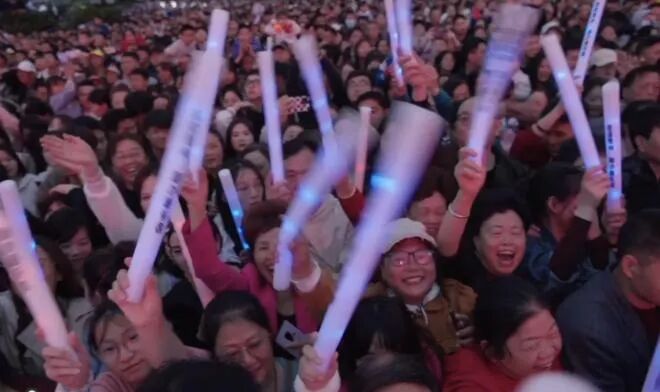
There are no steep admission fees here, no tight security inspections—only crowds drawn together by shared passion. This is the Guiyang Roadside Concert. According to statistics from the Guiyang Performing Arts Industry Association, over the past two-plus years, these concerts have hosted more than 610 performances, attracting over 5 million on-site participants, with 40 percent of audiences hailing from outside the province. Some 120,000 local residents have taken the stage, while online engagement has surpassed 40 billion views—this cultural initiative, originating from local resident participation and facilitated by responsive local governance, is forging a “Guiyang Model” for public cultural activities in urban China. It is carving out a vibrant new path for public cultural engagement nationwide and serving as an “invisible engine” driving local cultural tourism development.
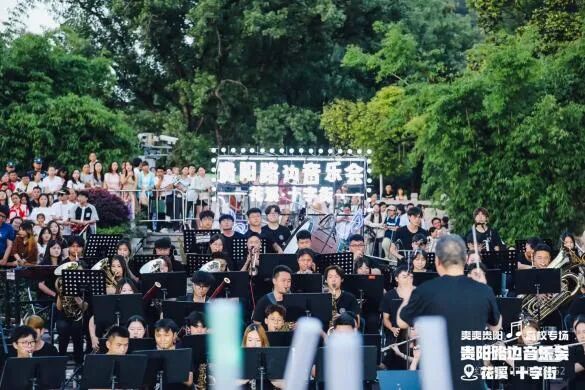
The head of the Guiyang Performing Arts Industry Association told us that the core value of the Guiyang Roadside Concert lies in its use of vivid data sets to demonstrate the new possibilities of public cultural activities. The 80,000 local residents who have taken the stage vividly embody the essence of “performed by the public, watched by the public, enjoyed by the public.” From retired teachers to food delivery riders, from kindergarten children to silver-haired seniors, every ordinary person who has stepped onto the stage across more than 610 performances is rewriting the definition of cultural participation.
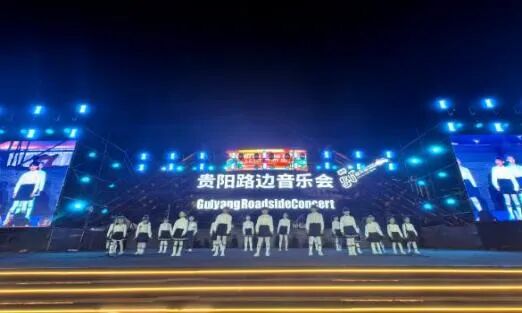
There are no lavish stages here, no exorbitant sound systems, yet it has generated on-site attendance exceeding 5 million and online dissemination surpassing 40 billion views. With local government providing only basic support—venues, security, and order maintenance—the initiative, organized spontaneously by the city’s performing arts industry association and driven by broad public engagement, has yielded social benefits far beyond expectations.
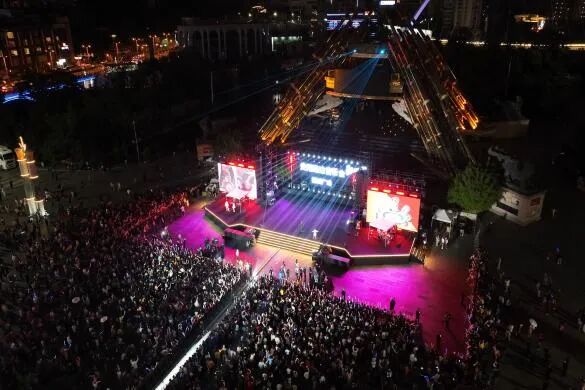
40% of on-site audiences come from outside Guizhou Province and from overseas. Each attendee spontaneously becomes a “citizen journalist,” using mobile phone lenses to carry the warmth of Guiyang to all corners of the world.
The Guiyang Roadside Concert has demonstrated through concrete data how cultural soft power translates into hard economic support.
The Data Code Behind Turning “Traffic” into “Retention”: The 40 percent out-of-town audience means that 4 out of every 10 attendees are tourists who came specifically for or incidentally joined the event. Based on a total footfall of 5 million, this alone has generated 2 million additional tourist visits. These music-inspired travelers extend their stay by an average of 1.5 days, with their accommodation and dining expenditures directly boosting local tourism revenue.
The Multiplier Effect of Turning “Popularity” into “Prosperity”: According to incomplete statistics, surrounding merchants have seen average revenue increases of over 30 percent during the Guiyang roadside concert period. Taking the renowned tourist destination “Qingyun Market” as an example, merchants there experienced 2-3 times higher daily sales during concert days compared to regular days. Among the 120,000 local residents who have performed on stage, a considerable proportion have earned additional income through live-streaming tips and talent showcases, forming a distinctive “street performance economy.”
The Communication Miracle of Image-Shaping and Brand-Building: The 40 billion online engagement equals billions of RMB in free publicity for Guizhou’s cultural tourism sector. More than 100 professional media outlets across China have covered the story, while over 400 mainstream media organizations worldwide have competed to spotlight it. The Douyin topic “Guiyang Roadside Concert” has garnered 5.8 billion views, with more than 2 million related posts on Xiaohongshu. This organically generated “word-of-mouth effect” proves far more persuasive and infectious than traditional advertising.
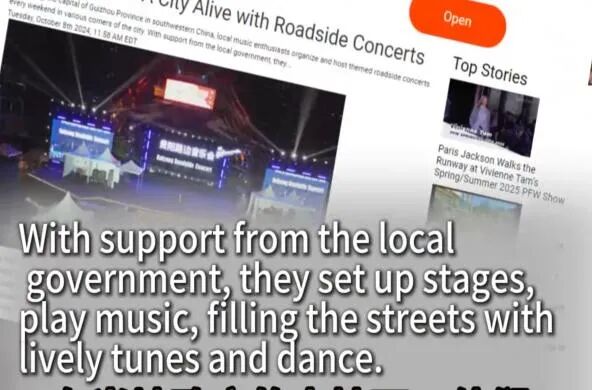
These figures belong not only to Guiyang—they embody universal principles governing public cultural activities. The data showing 80,000 local residents taking the stage demonstrates that when sufficiently low barriers to entry and adequate platforms for display are provided, ordinary people’s cultural creativity will surge forth like a spring. Every city harbors numerous “hidden artists”; the key lies in offering them a stage. An Innovative Demonstration of Space Utilization: Virtually all more than 610 performances utilized existing urban spaces without constructing new dedicated venues. This “slotting-in” approach to spatial deployment transforms every underutilized corner of the city into a potential site for cultural emergence. Behind the 40 billion views lies a new communication model combining “on-site experience plus social sharing.” Authentic, vibrant, and down-to-earth cultural content possesses an inherent viral quality that traditional performances struggle to match.
More than 610 performances, 5 million attendees, 120,000 members of the public on stage, 40 percent out-of-town visitors, 40 billion online views—these figures sketch out not merely a city’s cultural vitality, but a replicable development model. Public culture requires no grand narratives; the most moving melodies are often born in the most ordinary street corners. Cultural-tourism integration needs no forced grafting; the most effective dissemination resides in the mobile phones of every ordinary person.
We look forward to more cities deciphering from these data the true essence of public culture, allowing more “roadside concerts” to bloom around us, and jointly composing a new movement for our new lives.
Media Contact
Company Name: China Intercontinental Communication Center
Contact Person: Jarek Jia
Email: Send Email
Country: China
Website: www.cicc.org.cn