On this morning of March 5, 2026, The Kroger Co. (NYSE: KR) stands at a pivotal crossroads in its 143-year history. Following the release of its fourth-quarter and full-year 2025 financial results, the Cincinnati-based retail giant has signaled a definitive shift in strategy. After the high-profile collapse of its $24.6 billion merger with Albertsons Companies, Inc. (NYSE: ACI) in early 2025, Kroger has spent the last year refocusing on organic growth, digital infrastructure, and a leadership transition that has captivated Wall Street.
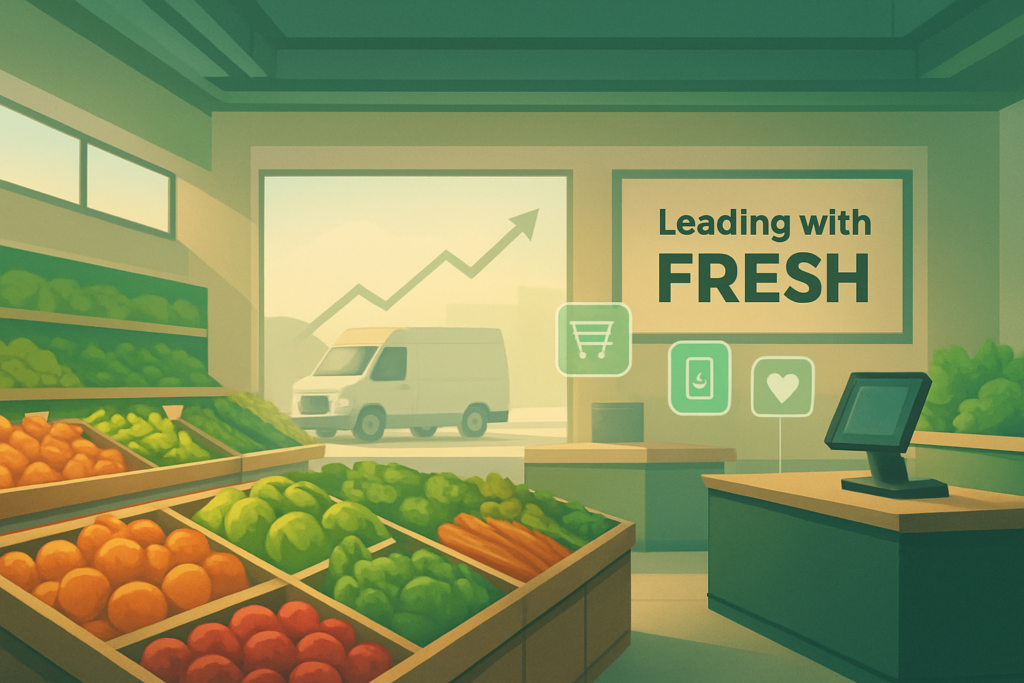
Kroger remains the largest supermarket chain in the United States by revenue, but it faces a landscape defined by cooling inflation—or "disinflation"—and a consumer base that has become increasingly surgical in its spending habits. Today’s earnings report confirms that while the mega-merger era may be on pause, Kroger’s "Leading with Fresh and Accelerating with Digital" mantra is yielding resilient results in a volatile economy.
Historical Background
The Kroger story began in 1883 when Bernard "Barney" Kroger invested his life savings of $372 to open a single grocery store in Cincinnati, Ohio. Operating under the motto, "Be particular. Never sell anything you would not want yourself," Barney Kroger pioneered the concept of the "one-stop shop" by being the first to include bakeries and meat departments within a grocery store in the early 1900s.
The company’s growth over the next century was defined by aggressive and strategic consolidation. Key milestones include the 1983 merger with Dillon Companies, which brought the King Soopers and Fry’s banners into the fold, and the 1999 merger with Fred Meyer, Inc., which gave Kroger a massive footprint in the Western United States. More recently, the 2014 acquisition of Harris Teeter and the 2015 acquisition of Roundy’s (Mariano's) solidified its presence in the Mid-Atlantic and Midwest. This history of expansion created a diverse portfolio of nearly two dozen banners, allowing Kroger to maintain local brand loyalty while leveraging massive corporate scale.
Business Model
Kroger operates a sophisticated hybrid retail-manufacturing model. Unlike many competitors that rely solely on third-party suppliers, Kroger manufactures approximately 30% of its own private-label products across 33 food processing plants.
The company’s revenue is generated through three primary channels:
- Supermarkets: 2,700+ stores across 35 states, ranging from traditional grocery stores to multi-department "marketplace" stores (Fred Meyer) that sell apparel and electronics.
- Health & Wellness: Operating over 2,000 pharmacies and 200 "The Little Clinic" locations, making Kroger a significant player in the healthcare delivery space.
- Alternative Profit Businesses: This is the company’s highest-margin segment, led by Kroger Precision Marketing (KPM). By leveraging data from 60 million loyal households, Kroger sells advertising and insights to CPG (Consumer Packaged Goods) brands, a segment that contributed significantly to the $1.5 billion in alternative operating profit reported in 2025.
Central to the business model is "Our Brands," a private-label portfolio including Simple Truth and Private Selection. These brands allow Kroger to capture higher margins than national brands while offering lower prices to consumers.
Stock Performance Overview
Over the past decade, Kroger has been a pillar of stability for value investors. As of early March 2026, the stock trades near $68, having reached an all-time high of $73.21 in August 2025.
- 1-Year Performance: The stock has seen a moderate gain of 12%, buoyed by the resolution of the Albertsons merger uncertainty and the market’s positive reception of the new CEO.
- 5-Year Performance: Kroger has significantly outperformed the broader retail sector with a total return of approximately 135%. This was driven by the "COVID-19 bump" in grocery spending and subsequent successful execution of its digital transformation.
- 10-Year Performance: Long-term shareholders have seen steady compounding, supported by consistent dividend increases and aggressive share buybacks, which were paused during the merger attempt but resumed in mid-2025.
Financial Performance
In the Q4 2025 earnings report released today, Kroger reported:
- Total Sales: $34.7 billion for the quarter, bringing the FY 2025 total to $147.6 billion.
- Identical Sales (excluding fuel): Grew by 2.4%, a respectable figure in a disinflationary environment where price increases no longer drive the top line.
- Adjusted EPS: $4.85 for the full year, beating the analyst consensus of $4.78.
- Margins: Gross margin reached 22.9%, an improvement of 60 basis points year-over-year. This was achieved despite "price investments" (selective price cuts) to remain competitive against Walmart Inc. (WMT).
- Digital Growth: eCommerce sales rose 20% in Q4, driven by the expansion of the Boost loyalty program and improved fulfillment efficiency.
However, the company took a $2.5 billion GAAP impairment charge in late 2025 related to the restructuring of its Ocado-powered automated fulfillment network, reflecting a shift away from "centralized" delivery toward "store-level" fulfillment.
Leadership and Management
The most significant recent change at Kroger is the appointment of Greg Foran as CEO, who took office in February 2026. Foran, the former CEO of Walmart U.S., is a retail veteran known for operational discipline. He replaced Interim CEO Ron Sargent, who had stepped in following the resignation of long-time chief Rodney McMullen in early 2025 amidst a board-led ethics investigation.
Supporting Foran is CFO David Kennerley, who joined from PepsiCo in 2025. Together, they are tasked with "Project Fresh Start," an initiative to lean into Kroger’s grocery core while trimming non-core assets. The leadership team is currently viewed by analysts as a "turnaround-plus" crew—strong operators focused on extracting value from the existing footprint now that the Albertsons merger is no longer a distraction.
Products, Services, and Innovations
Kroger has pivoted its innovation strategy away from massive, multi-million dollar robotic warehouses (the Ocado partnership) toward more agile, store-centric solutions.
- Boost Membership: Kroger’s paid loyalty program has become a cornerstone of its digital ecosystem. In late 2025, Kroger added Disney+ as a core perk, mirroring the "bundle" strategies of Amazon and Walmart.
- Precision Marketing: Kroger is using AI to deliver personalized digital coupons to consumers’ mobile apps in real-time as they walk through the aisles, a move that has increased coupon redemption rates by 15%.
- Our Brands Expansion: In FY 2025, Kroger launched over 900 new private-label items, specifically targeting the "premium-value" segment where shoppers want gourmet quality at grocery-brand prices.
Competitive Landscape
Kroger operates in the "squeezed middle" of the U.S. grocery market:
- Walmart & Aldi: On the low end, Walmart holds a dominant ~21% share of the U.S. grocery market. Aldi, the German hard-discounter, has expanded to over 2,600 stores by 2026, siphoning off "fill-in" trips with its ultra-low-cost model.
- Costco: Costco Wholesale Corp. (COST) continues to capture the high-income bulk shopper, leveraging a membership model that Kroger’s 'Boost' program is trying to emulate.
- Amazon/Whole Foods: While Amazon’s physical grocery footprint remains small, its delivery integration poses a long-term threat to Kroger’s urban market share.
Kroger’s competitive advantage lies in its fresh-food reputation and its data-rich loyalty program, which allows for more personalized pricing than its bulk or discount rivals.
Industry and Market Trends
The grocery industry in 2026 is grappling with "The Great Disinflation." After years of rapid price hikes, food-at-home inflation has flattened. For grocers, this means volume (the number of items sold) must now drive growth rather than price.
Consumer behavior has also shifted toward "value-seeking." More households are switching from national brands to private labels, a trend that directly benefits Kroger’s high-margin "Our Brands." Additionally, "Omnichannel" shopping is now the standard; nearly 40% of Kroger customers now use a mix of in-store, pickup, and delivery services within a single month.
Risks and Challenges
Despite strong earnings, several risks remain:
- Labor Costs: Kroger is one of the largest employers of unionized labor (UFCW). Recent contract ratifications in 2025 have significantly increased the wage floor, putting pressure on operating margins.
- The "Merger Hangover": The failed Albertsons merger cost Kroger a $600 million breakup fee and years of diverted management attention. There is a risk that competitors gained too much ground during this period.
- Digital Profitability: While eCommerce sales are growing, they are still less profitable than in-store shopping due to the high costs of picking and last-mile delivery.
Opportunities and Catalysts
- FY 2026 Guidance: Kroger’s guidance for the upcoming year suggests an EPS range of $5.10–$5.30, signaling confidence in margin expansion.
- Retail Media: The expansion of Kroger Precision Marketing into third-party websites and social media platforms represents a high-margin growth lever that is not tied to the price of milk or eggs.
- Shareholder Returns: With the merger off the table, Kroger has a massive cash pile. Analysts expect a significant increase in the quarterly dividend and the potential for a $2 billion share buyback program in 2026.
Investor Sentiment and Analyst Coverage
Sentiment on Wall Street is currently "Cautiously Optimistic." Most analysts maintain a Buy or Strong Hold rating.
- Institutional Positioning: Large firms like Vanguard and BlackRock remain the top holders, viewing Kroger as a defensive play that provides a reliable dividend (currently yielding ~2.1%).
- Retail Chatter: On retail investor platforms, the discussion has shifted from the "merger arbitrage" play to a "value recovery" story under Greg Foran’s leadership.
Regulatory, Policy, and Geopolitical Factors
The regulatory environment remains a hurdle. Even after the Albertsons merger was blocked, the FTC continues to scrutinize "algorithmic pricing" in the grocery sector. Furthermore, changes to the SNAP (Supplemental Nutrition Assistance Program) and WIC benefits in the 2025 Farm Bill have influenced Kroger’s strategy, leading to the launch of "Verified Savings," a program that offers deep discounts on produce for benefit recipients to help maintain their purchasing power.
Conclusion
As of March 5, 2026, The Kroger Co. has proven its resilience. By navigating the fallout of a failed merger and a major leadership transition, the company has emerged with a leaner, more data-driven strategy.
For investors, Kroger represents a classic "defensive growth" stock. It is successfully capturing the shift toward private labels and digital convenience while insulating its margins through high-tech advertising and data services. While it may lack the explosive growth of tech-sector peers, its ability to generate cash and adapt to a disinflationary environment makes it a foundational holding in a diversified portfolio. The key metric to watch in 2026 will be the "Identical Sales" volume—proving that Kroger can not only maintain its prices but also win back the American dinner table, one "Our Brands" product at a time.
This content is intended for informational purposes only and is not financial advice.