March S&P 500 E-Mini futures (ESH26) are trending down -1.77% this morning as the Middle East conflict has entered its fourth day with no signs of de-escalation, driving oil prices higher and stoking inflation concerns.
Israel targeted sites in Tehran and Beirut early on Tuesday, while Iran struck the U.S. Embassy in the Saudi capital of Riyadh, prompting President Trump to pledge retaliation. Also, Israel deployed troops into southern Lebanon, where the Iran-backed Hezbollah militia is based. President Trump maintained there was no fixed timeline, while Secretary of State Marco Rubio warned that “the hardest hits are yet to come.”
The price of WTI crude surged more than +7%, adding to yesterday’s gains as concerns over access to the vital Strait of Hormuz intensified after an Iranian commander threatened to set fire to ships attempting to pass through. U.S. Treasury yields climbed on Tuesday amid concerns that higher oil prices would feed into inflation, potentially delaying or derailing further Fed rate cuts.
The International Monetary Fund said on Tuesday that attacks by the U.S. and Israel on Iran, and Tehran’s response, have made the global economic outlook more uncertain, though it is still too early to assess the impact. “That impact will depend on the extent and duration of the conflict,” the IMF said.
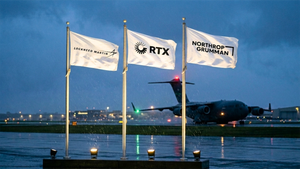
In yesterday’s trading session, Wall Street’s main stock indexes closed mixed. Defense stocks advanced following the U.S.-Israeli strikes on Iran, with Northrop Grumman (NOC) rising over +6% to lead gainers in the S&P 500 and RTX Corp. (RTX) gaining more than +4%. Also, energy stocks climbed as the price of WTI crude jumped more than +6%, with Marathon Petroleum (MPC) and Valero Energy (VLO) advancing over +5%. In addition, cryptocurrency-exposed stocks gained after Bitcoin rose more than +5%, with Strategy (MSTR) climbing over +6% to lead gainers in the Nasdaq 100 and Coinbase Global (COIN) advancing more than +5%. On the bearish side, AES Corp. (AES) plunged over -17% and was the top percentage loser on the S&P 500 after the clean-energy company agreed to be acquired by a consortium led by BlackRock’s GIP and EQT for $15 per share.
“Uncertainty about oil prices may play a big role in determining broader market sentiment,” said Chris Larkin at E*Trade from Morgan Stanley. “There are more questions than answers right now, but a stabilizing energy picture could have a positive ripple effect, while concerns about a longer-term disruption could have the opposite.”
Economic data released on Monday showed that the U.S. February ISM manufacturing index fell to 52.4, stronger than expectations of 51.7. At the same time, the ISM’s gauge of prices paid for manufacturing inputs climbed to 70.5 in February, the quickest pace since 2022, fueling concerns about a resurgence of inflation and leading traders to scale back their bets on Fed rate cuts.
Meanwhile, U.S. rate futures have priced in a 97.2% chance of no rate change and a 2.8% chance of a 25 basis point rate cut at the conclusion of the Fed’s March meeting.
Today, investors will focus on earnings reports from several high-profile companies. Cybersecurity firm CrowdStrike (CRWD), along with prominent retailers Ross Stores (ROST), Target (TGT), and Best Buy (BBY), are scheduled to report their quarterly results.
Market participants will also parse comments today from New York Fed President John Williams and Minneapolis Fed President Neel Kashkari.
The U.S. economic data slate is mainly empty on Tuesday.
In the bond market, the yield on the benchmark 10-year U.S. Treasury note is at 4.100%, up +1.21%.
The Euro Stoxx 50 Index is down -3.98% this morning, extending the prior session’s losses as the Middle East conflict stoked fears that an energy shock will reignite inflation and pressure already fragile growth. Financial, utility, and technology stocks led the declines on Tuesday. Commerzbank said, “Markets are transitioning from a traditional risk-off response to the Middle East conflict toward a stagflationary scenario, where rising energy prices outweigh safe-haven demand for bonds.” European Central Bank Governing Council member Yannis Stournaras said on Tuesday that the central bank should remain flexible in setting interest rates, as the impact of the Iran conflict, including a potential uptick in inflation, will hinge on its duration. Separately, ECB Chief Economist Philip Lane told the Financial Times that the prolonged conflict could significantly lift inflationary pressures and dampen growth in the Eurozone. Meanwhile, preliminary data from Eurostat released on Tuesday showed that the Eurozone’s annual inflation rate remained below the ECB’s target in February, though it could accelerate if the surge in energy prices following U.S. and Israeli strikes on Iran is sustained. In corporate news, Beiersdorf AG (BEI.D.DX) tumbled over -17% after the German cosmetics company provided weak 2026 net sales growth guidance.
Eurozone’s CPI (preliminary) and Eurozone’s Core CPI (preliminary) data were released today.
Eurozone’s February CPI rose +1.9% y/y, stronger than expectations of +1.7% y/y.
Eurozone’s February Core CPI rose +2.4% y/y, stronger than expectations of +2.2% y/y.
Asian stock markets today closed in the red. China’s Shanghai Composite Index (SHCOMP) closed down -1.43%, and Japan’s Nikkei 225 Stock Index (NIK) closed down -3.06%.
China’s Shanghai Composite Index closed lower today as the widening conflict in the Middle East weighed on sentiment. Defense, rare earth, and semiconductor stocks led the declines on Tuesday as investors locked in profits. At the same time, China’s oil majors rallied to the daily limit for a second straight session as the Middle East conflict continued to drive energy prices higher. “The Middle East conflict’s primary economic impact on China is through oil prices. The oil shock could cause headline PPI to turn positive earlier than expected, while Chinese CPI is largely insensitive,” according to Citi analysts. The benchmark index notched its worst session in a month. Investor focus now turns to the upcoming sessions of the National People’s Congress and the National Committee of the Chinese People’s Political Consultative Conference, with the CPPCC set to open on Wednesday and the NPC beginning on Thursday. Investors will be closely watching the “Two Sessions” for key economic targets for 2026, most notably the GDP growth goal. Most analysts expect Premier Li Qiang’s report on March 5th to outline a growth target of between 4.5% and 5%, while pledging to strengthen consumption and investment in high-tech sectors. Investors are also awaiting China’s February PMI data, scheduled for release on Wednesday, which will likely underscore the need for additional policy support after a weak start to the year. In corporate news, MiniMax Group surged over +9% in Hong Kong after the AI company reported stronger-than-expected 2025 revenue.
Japan’s Nikkei 225 Stock Index closed sharply lower today as the escalating conflict in the Middle East deepened risk-off sentiment among investors. Automobile, mining, and real estate stocks were among the biggest losers on Tuesday. The benchmark index posted its largest daily percentage drop since November 18th. Japanese government bonds sold off on Tuesday as the conflict fueled concerns about rising inflation from higher oil prices, which could prompt the Bank of Japan to accelerate the pace of interest rate hikes. Oil prices continued to rise on Tuesday as the U.S. and Israel intensified their war against Iran, while Tehran threatened to fully shut the Strait of Hormuz. Japan, which depends heavily on energy imports, would be severely impacted by rising energy prices. Dilin Wu, a research strategist at Pepperstone Group, said, “Any further supply tightening can quickly push up costs, squeeze corporate margins, fuel inflation, and weigh on risk assets.” Meanwhile, Japanese Finance Minister Satsuki Katayama said on Tuesday that authorities are watching financial markets with increased vigilance as Middle East tensions drive volatility. “We will take all necessary measures while maintaining close and flexible coordination with overseas authorities,” she said. On the economic front, government data released on Tuesday showed that Japanese corporate spending on factories and equipment climbed 6.5% year-over-year in the fourth quarter, suggesting that resilient investment demand continued to underpin a barely expanding economy. Separate data showed that Japan’s unemployment rate unexpectedly rose in January. In corporate news, Sumitomo Pharma cratered over -19% amid investor concerns about a new share issuance. The Nikkei Volatility Index, which takes into account the implied volatility of Nikkei 225 options, closed down -14.32% to 29.98.
The Japanese January Unemployment Rate was 2.7%, weaker than expectations of 2.6%.
The Japanese Capital Spending rose +6.5% y/y in the fourth quarter, stronger than expectations of +3.0% y/y.
Pre-Market U.S. Stock Movers
The Magnificent Seven stocks slid in pre-market trading amid risk-off sentiment, with Alphabet (GOOGL) falling over -3% and Nvidia (NVDA) dropping -3%.
Chip stocks sank in pre-market trading, with Micron Technology (MU) slumping over -5% and Advanced Micro Devices (AMD) sliding more than -4%.
MongoDB (MDB) plummeted over -27% in pre-market trading after the document database company issued below-consensus Q1 adjusted EPS guidance.
Credo Technology (CRDO) plunged more than -12% in pre-market trading after the data-center connectivity company issued FQ4 revenue guidance that disappointed investors.
Energy stocks extended their rally in pre-market trading, with the price of WTI crude up more than +7%. ConocoPhillips (COP) is up over +3%. Also, Exxon Mobil (XOM) and Chevron (CVX) are up more than +2%.
You can see more pre-market stock movers here
Today’s U.S. Earnings Spotlight: Tuesday - March 3rd
CrowdStrike Holdings (CRWD), Ross Stores (ROST), AutoZone (AZO), Target (TGT), Viking Holdings (VIK), Best Buy Co. (BBY), NexGen Energy (NXE), THOR Industries (THO), Versant Media Group (VSNT), Scholar Rock Holding (SRRK), GitLab (GTLB), Kontoor Brands (KTB), Box, Inc. (BOX), Marex Group (MRX), Amylyx Pharmaceuticals (AMLX), WEBTOON Entertainment (WBTN), STAAR Surgical Company (STAA), Accel Entertainment (ACEL), Cricut (CRCT), EVgo, Inc. (EVGO), Latham Group (SWIM), Black Rock Coffee Bar (BRCB), Hyster-Yale (HY), Rayonier Advanced Materials (RYAM), Rigel Pharmaceuticals (RIGL), Village Super Market (VLGEA), Orion Group Holdings (ORN), Neumora Therapeutics (NMRA), enCore Energy (EU), NeuroPace (NPCE), Keros Therapeutics (KROS), Mayville Engineering Company (MEC), Cryoport (CYRX), B&G Foods (BGS), Strata Critical Medical (SRTA), Paysafe (PSFE), L.B. Foster Company (FSTR), Civeo (CVEO), Weyco Group (WEYS), Horizon Technology Finance (HRZN), Evolus (EOLS), 908 Devices (MASS), Arcturus Therapeutics Holdings (ARCT), Gran Tierra Energy (GTE), Antalpha Platform Holding Company (ANTA), Crexendo (CXDO), Advantage Solutions (ADV), Modiv Industrial (MDV), Ascent Industries Co. (ACNT), Superior Group of Companies (SGC), Oxford Square Capital (OXSQ), QuickLogic (QUIK), The Eastern Company (EML), Cassava Sciences (SAVA).
On the date of publication, Oleksandr Pylypenko did not have (either directly or indirectly) positions in any of the securities mentioned in this article. All information and data in this article is solely for informational purposes. For more information please view the Barchart Disclosure Policy here.