Over the past six months, JPMorgan Chase’s shares (currently trading at $285.86) have posted a disappointing 8.3% loss while the S&P 500 was flat. This was partly driven by its softer quarterly results and may have investors wondering how to approach the situation.
Is now the time to buy JPMorgan Chase, or should you be careful about including it in your portfolio? Check out our in-depth research report to see what our analysts have to say, it’s free.
Why Is JPMorgan Chase Not Exciting?
Even though the stock has become cheaper, we don't have much confidence in JPMorgan Chase. Here are three reasons there are better opportunities than JPM and a stock we'd rather own.
1. Long-Term Revenue Growth Disappoints
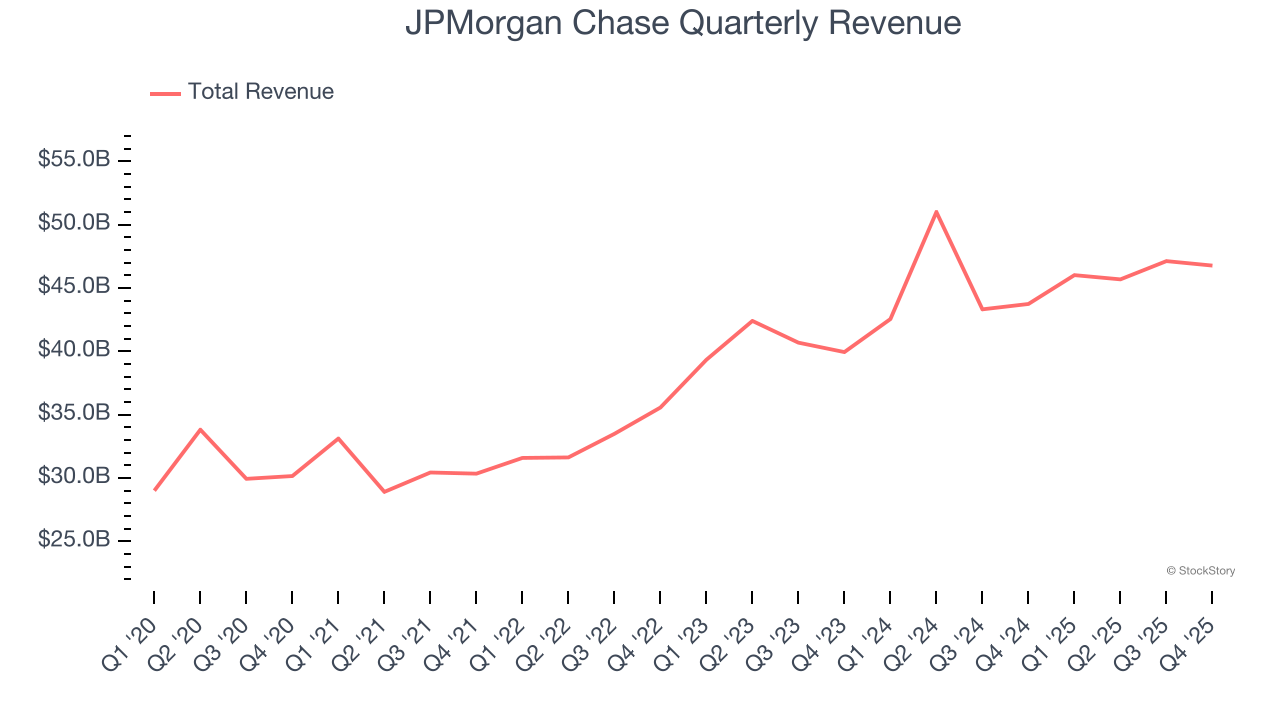
Net interest income and and fee-based revenue are the two pillars supporting bank earnings. The former captures profit from the gap between lending rates and deposit costs, while the latter encompasses charges for banking services, credit products, wealth management, and trading activities.
Unfortunately, JPMorgan Chase’s 8.6% annualized revenue growth over the last five years was mediocre. This was below our standard for the banking sector.
2. Low Net Interest Margin Reveals Weak Loan Book Profitability
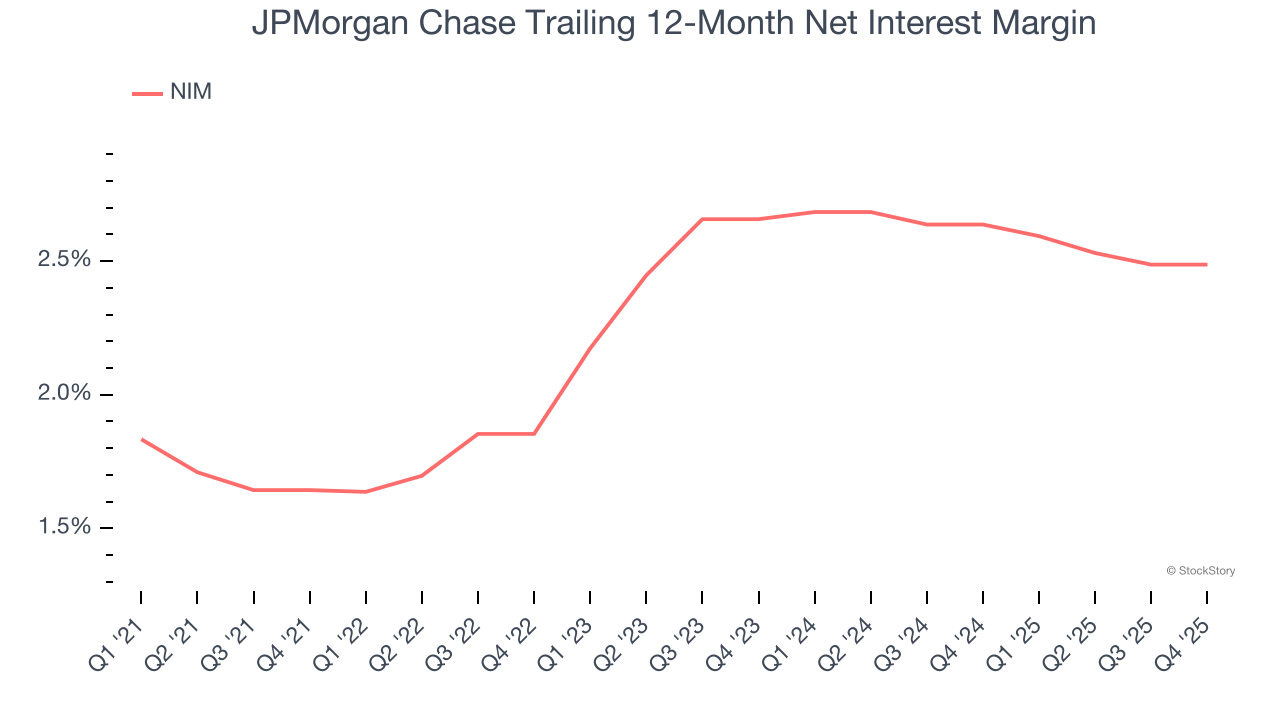
The net interest margin (NIM) is a key profitability indicator that measures the difference between what a bank earns on its loans and what it pays on its deposits. This metric measures how efficiently one can generate income from its core lending activities.
Over the past two years, we can see that JPMorgan Chase’s net interest margin averaged a poor 2.6%, meaning it must compensate for lower profitability through increased loan originations.
3. Efficiency Ratio Expected to Falter
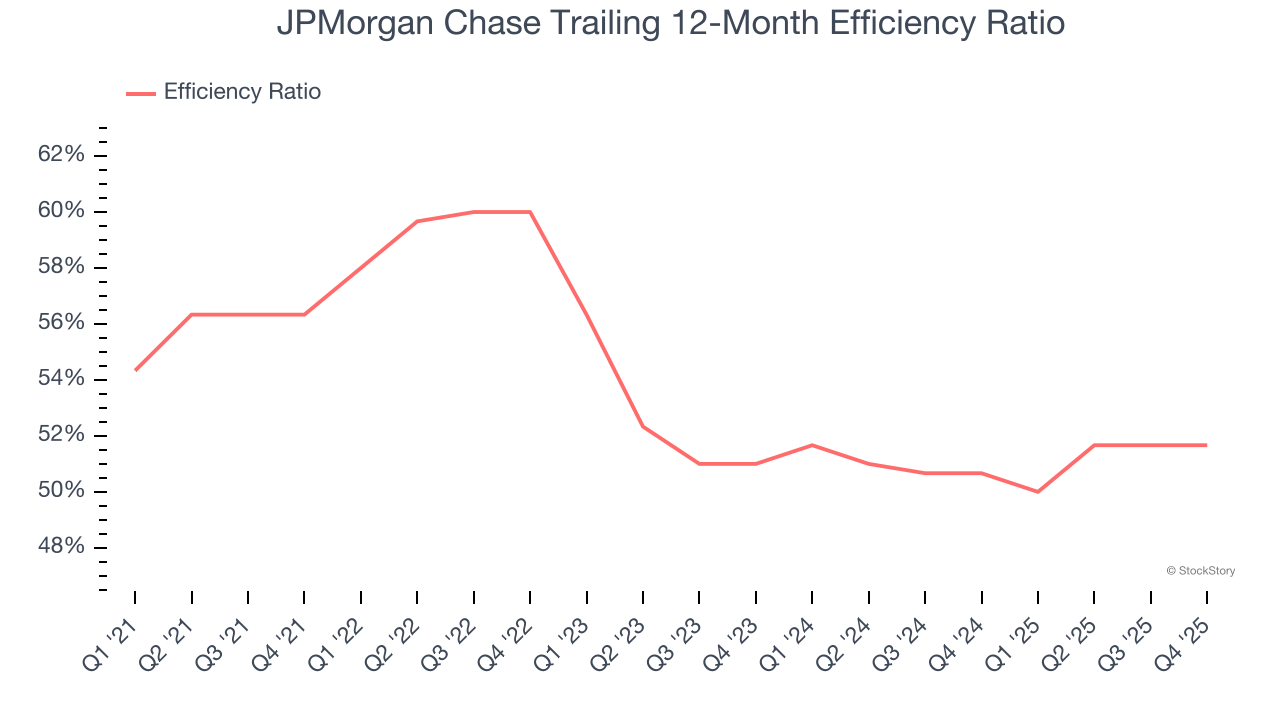
Topline growth is certainly important, but the overall profitability of this growth matters for the bottom line. For banks, we look at efficiency ratio, which is non-interest expense (salaries, rent, IT, marketing, excluding interest paid out to depositors) as a percentage of total revenue.
Markets emphasize efficiency ratio trends over static measurements, recognizing that revenue compositions drive different expense bases. Lower efficiency ratios signal superior performance by indicating that banks are controlling costs effectively relative to their income.
For the next 12 months, Wall Street expects JPMorgan Chase to become less profitable as it anticipates an efficiency ratio of 54% compared to 51.7% over the past year.
Final Judgment
JPMorgan Chase’s business quality ultimately falls short of our standards. Following the recent decline, the stock trades at 2.1× forward P/B (or $285.86 per share). At this valuation, there’s a lot of good news priced in - we think there are better opportunities elsewhere. Let us point you toward the Amazon and PayPal of Latin America.
High-Quality Stocks for All Market Conditions
ONE MORE THING: Top 5 Growth Stocks. The biggest stock winners almost always had one thing in common before they ran. Revenue growing like crazy. Meta. CrowdStrike. Broadcom. Our AI flagged all three. They returned 315%, 314%, and 455%, respectively.
Find out which 5 stocks it's flagging for this month — FREE. Get Our Top 5 Growth Stocks for Free HERE.
Stocks that have made our list include now familiar names such as Nvidia (+1,326% between June 2020 and June 2025) as well as under-the-radar businesses like the once-small-cap company Comfort Systems (+782% five-year return). Find your next big winner with StockStory today.