
Healthcare tech company Privia Health Group (NASDAQ: PRVA) announced better-than-expected revenue in Q4 CY2025, with sales up 17.4% year on year to $541.2 million. The company’s full-year revenue guidance of $2.4 billion at the midpoint came in 3.7% above analysts’ estimates. Its non-GAAP profit of $0.25 per share was 30.2% above analysts’ consensus estimates.
Is now the time to buy Privia Health? Find out by accessing our full research report, it’s free.
Privia Health (PRVA) Q4 CY2025 Highlights:
- Revenue: $541.2 million vs analyst estimates of $516.3 million (17.4% year-on-year growth, 4.8% beat)
- Adjusted EPS: $0.25 vs analyst estimates of $0.19 (30.2% beat)
- Adjusted EBITDA: $31.46 million vs analyst estimates of $26.01 million (5.8% margin, 20.9% beat)
- EBITDA guidance for the upcoming financial year 2026 is $150 million at the midpoint, above analyst estimates of $142.9 million
- Operating Margin: 2.1%, in line with the same quarter last year
- Free Cash Flow Margin: 23.6%, up from 16.2% in the same quarter last year
- Sales Volumes rose 12.3% year on year (11.2% in the same quarter last year)
- Market Capitalization: $2.79 billion
Company Overview
Operating in 13 states and the District of Columbia with over 4,300 providers serving more than 4.8 million patients, Privia Health (NASDAQ: PRVA) is a technology-driven company that helps physicians optimize their practices, improve patient experiences, and transition to value-based care models.
Revenue Growth
A company’s long-term sales performance can indicate its overall quality. Any business can have short-term success, but a top-tier one grows for years. Thankfully, Privia Health’s 21% annualized revenue growth over the last five years was excellent. Its growth beat the average healthcare company and shows its offerings resonate with customers.
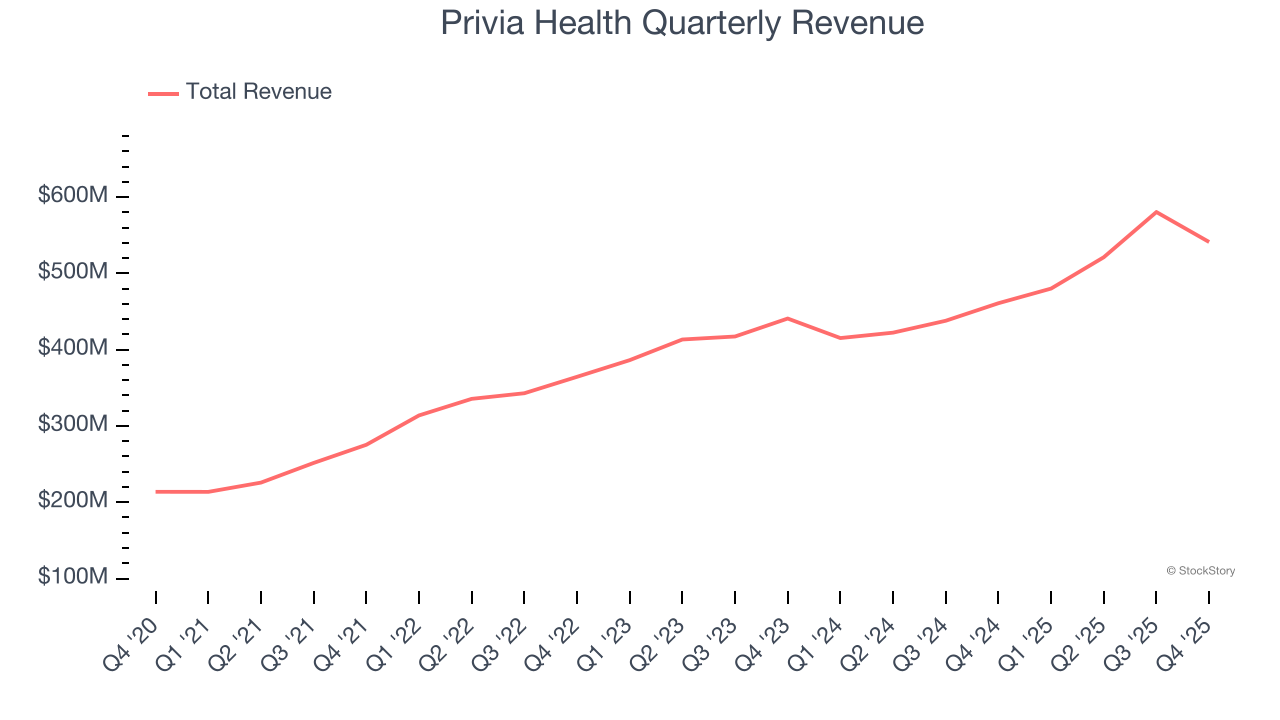
We at StockStory place the most emphasis on long-term growth, but within healthcare, a half-decade historical view may miss recent innovations or disruptive industry trends. Privia Health’s annualized revenue growth of 13.2% over the last two years is below its five-year trend, but we still think the results suggest healthy demand. 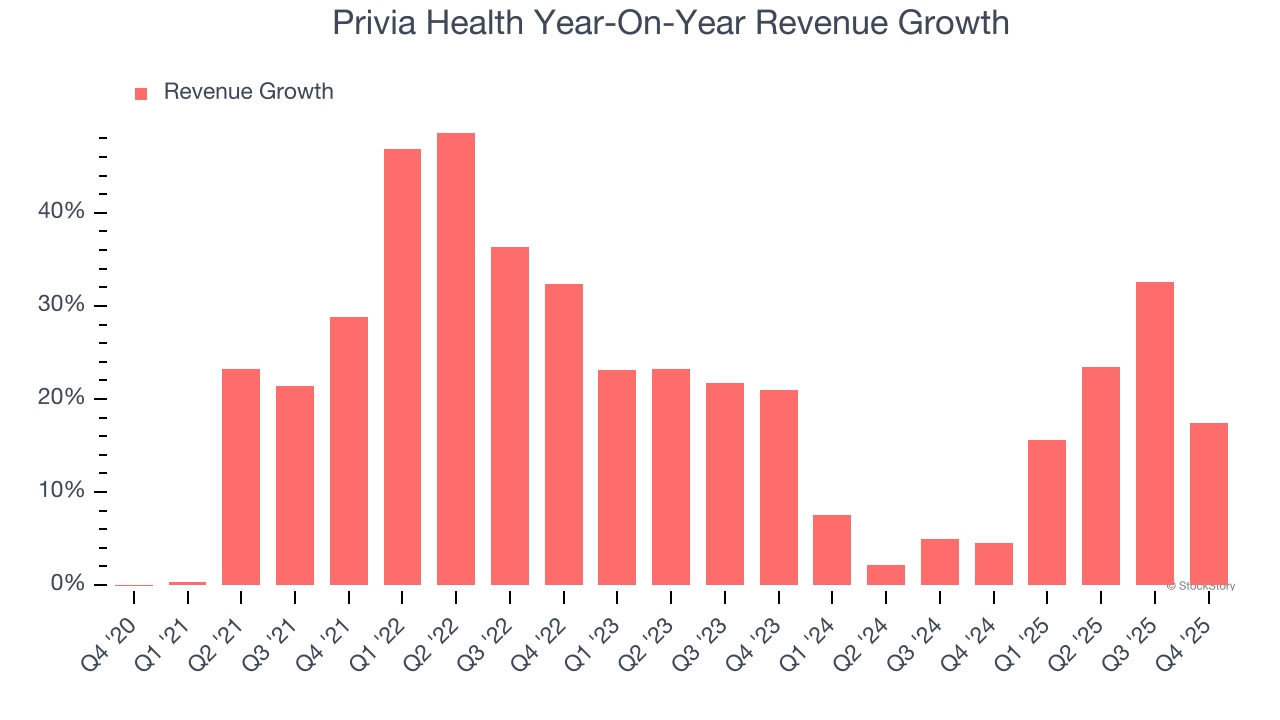
We can dig further into the company’s revenue dynamics by analyzing its number of implemented providers, which reached 5,380 in the latest quarter. Over the last two years, Privia Health’s implemented providers averaged 12.4% year-on-year growth. Because this number is in line with its sales growth, we can see the company’s underlying demand was fairly consistent. 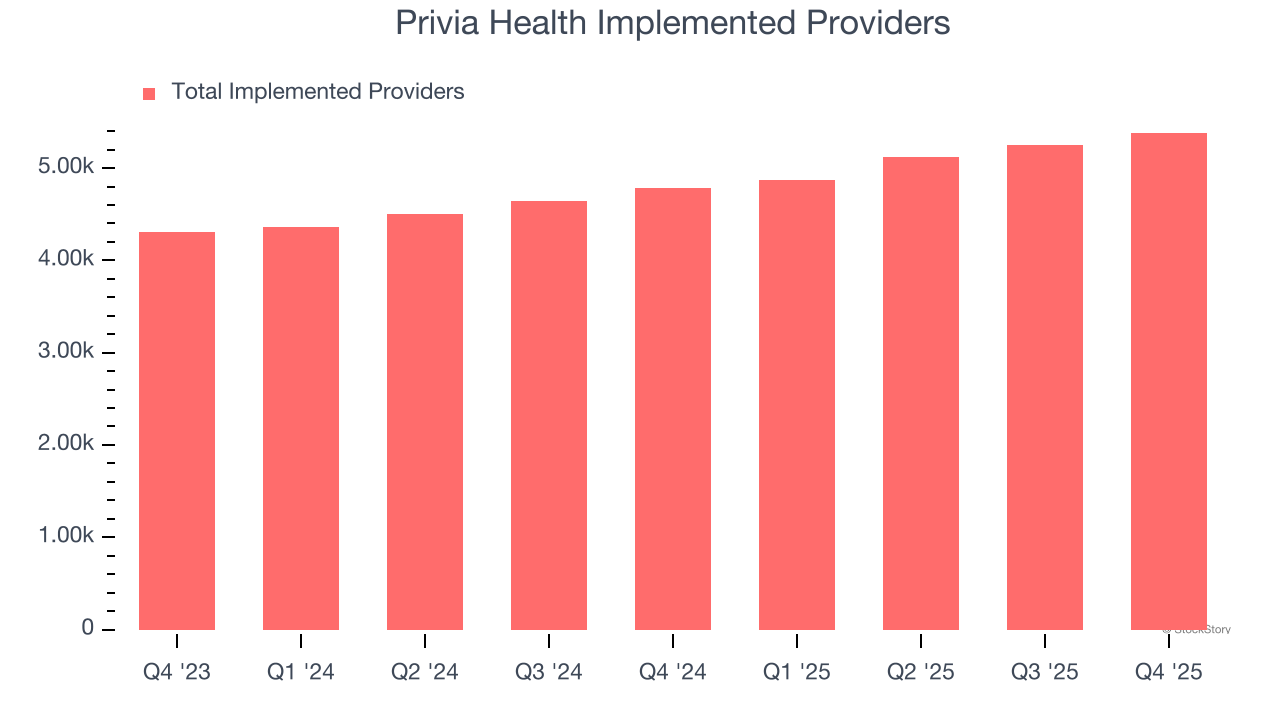
This quarter, Privia Health reported year-on-year revenue growth of 17.4%, and its $541.2 million of revenue exceeded Wall Street’s estimates by 4.8%.
Looking ahead, sell-side analysts expect revenue to grow 8% over the next 12 months, a deceleration versus the last two years. Still, this projection is above average for the sector and suggests the market is baking in some success for its newer products and services.
Software is eating the world and there is virtually no industry left that has been untouched by it. That drives increasing demand for tools helping software developers do their jobs, whether it be monitoring critical cloud infrastructure, integrating audio and video functionality, or ensuring smooth content streaming. Click here to access a free report on our 3 favorite stocks to play this generational megatrend.
Operating Margin
Although Privia Health was profitable this quarter from an operational perspective, it’s generally struggled over a longer time period. Its expensive cost structure has contributed to an average operating margin of negative 2.1% over the last five years. Unprofitable healthcare companies require extra attention because they could get caught swimming naked when the tide goes out. It’s hard to trust that the business can endure a full cycle.
On the plus side, Privia Health’s operating margin rose by 24.1 percentage points over the last five years, as its sales growth gave it operating leverage. Still, it will take much more for the company to show consistent profitability.
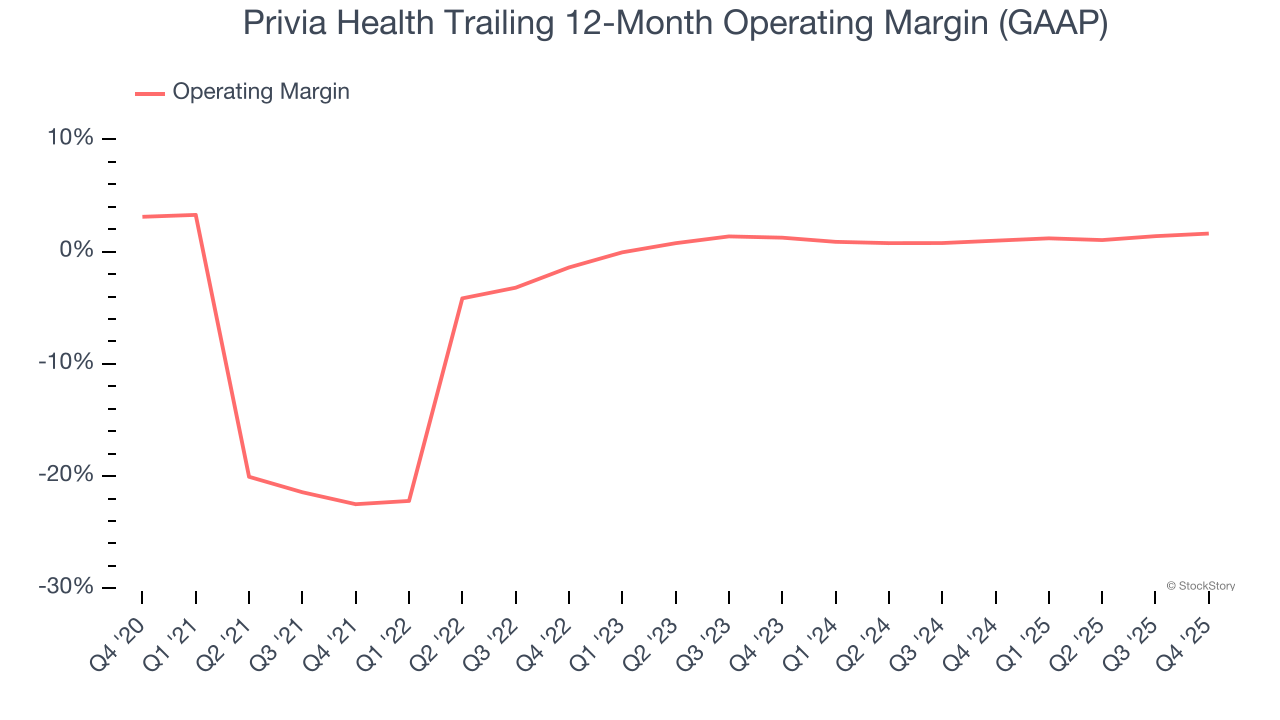
In Q4, Privia Health generated an operating margin profit margin of 2.1%, in line with the same quarter last year. This indicates the company’s overall cost structure has been relatively stable.
Earnings Per Share
We track the long-term change in earnings per share (EPS) for the same reason as long-term revenue growth. Compared to revenue, however, EPS highlights whether a company’s growth is profitable.
Privia Health’s full-year EPS flipped from negative to positive over the last four years. This is encouraging and shows it’s at a critical moment in its life.
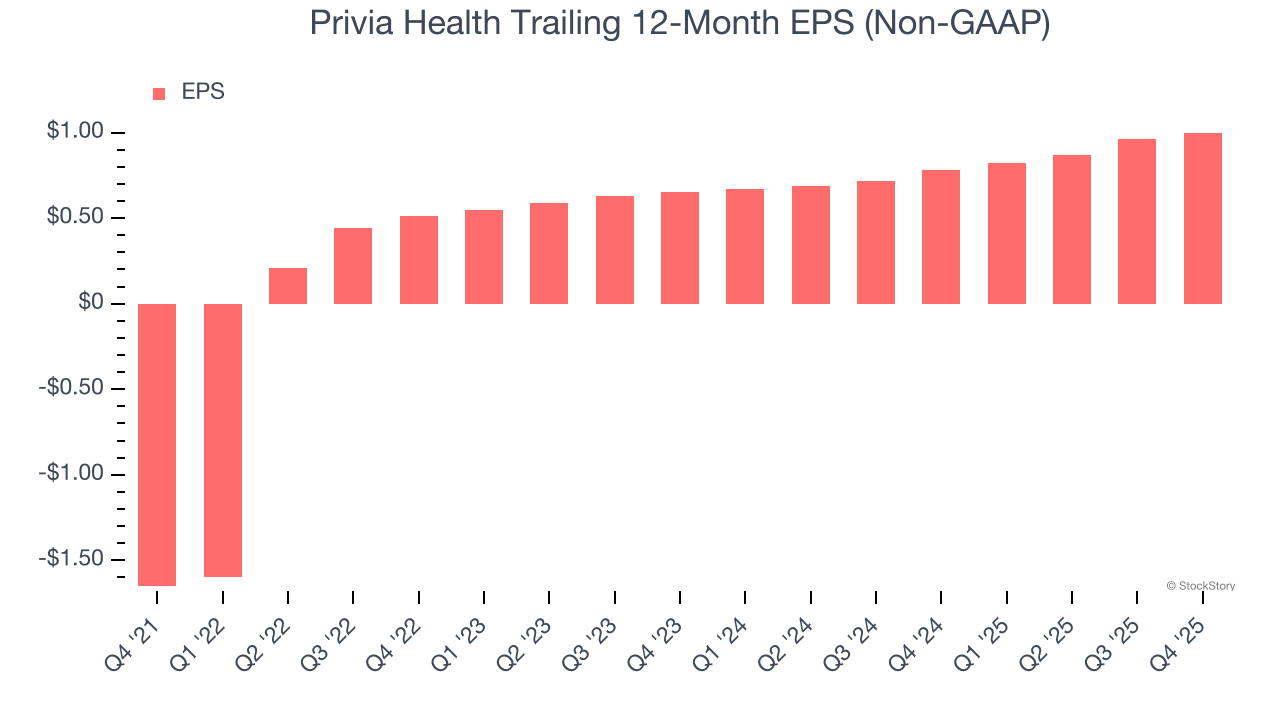
In Q4, Privia Health reported adjusted EPS of $0.25, up from $0.21 in the same quarter last year. This print easily cleared analysts’ estimates, and shareholders should be content with the results. Over the next 12 months, Wall Street expects Privia Health’s full-year EPS of $1 to grow 1.6%.
Key Takeaways from Privia Health’s Q4 Results
It was good to see Privia Health beat analysts’ EPS expectations this quarter. We were also glad its full-year revenue guidance trumped Wall Street’s estimates. Zooming out, we think this was a solid print. The stock remained flat at $22.52 immediately after reporting.
Is Privia Health an attractive investment opportunity at the current price? What happened in the latest quarter matters, but not as much as longer-term business quality and valuation, when deciding whether to invest in this stock. We cover that in our actionable full research report which you can read here (it’s free).