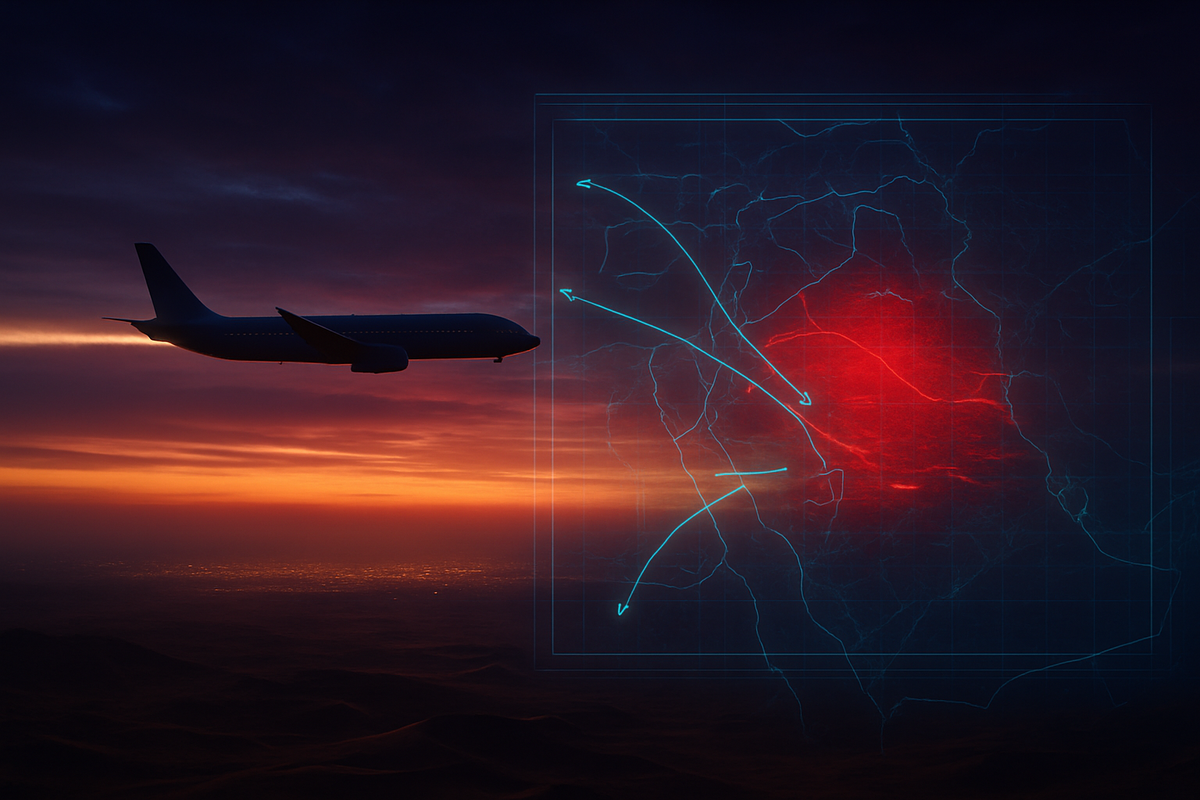
As of March 17, 2026, the global airline industry is navigating its most volatile operational environment in years. Following the dramatic military escalations in the Middle East that began in late February, the primary transit corridors linking the West to Asia have effectively been severed. While crude oil prices have seen a slight reprieve in the last week, dropping from their peak of $119 per barrel to a range of $82–$103, the relief has not translated to the tarmac. A staggering disconnect between raw crude and refined jet fuel has left carriers grappling with record-high "crack spreads" and the logistical nightmare of rerouting thousands of daily flights.
The immediate implications are a "forced contraction" of the industry. International travelers are facing a new reality of higher fares, mandatory technical refueling stops, and flight times extended by as much as five hours. For the major carriers, the crisis has shifted from a tactical annoyance to a strategic existential threat, as the "Golden Route" through the Persian Gulf remains under a cloud of uncertainty.
The Epicenter of the Disruption: A Timeline of Airspace Closure
The current crisis traces its origins to "Operation Epic Fury," a significant military escalation on February 28, 2026. The subsequent weeks saw a rapid-fire series of airspace closures that have fundamentally altered the geography of flight. By March 5, the skies over Iran, Iraq, and Syria were declared no-fly zones for civilian aircraft via emergency NOTAMs (Notices to Air Missions). This closure effectively shuttered the traditional "Silk Road" of the sky, forcing airlines to choose between the high-latitude Northern Route over the Caucasus or a grueling Southern Route around the Horn of Africa.
Major hubs in the Gulf—long the crown jewels of international transit—have been the hardest hit. Emirates, the pride of Dubai, faced a near-total operational collapse in early March, suspending ticket sales for nearly three weeks to clear a backlog of thousands of stranded passengers. Meanwhile, Lufthansa (ETR:LHA) and other European giants have been forced to suspend all services to Tel Aviv, Beirut, and Amman. The International Air Transport Association (IATA) reported that during the peak of the disruption in the first week of March, over 21,300 flights were canceled globally, representing the single largest weekly loss of capacity since the 2020 pandemic.
The market reaction was swift and unforgiving. Airline stocks plummeted in the immediate wake of the February 28 strikes, as investors priced in the combined impact of skyrocketing operational costs and the loss of high-margin long-haul revenue. While the slight dip in crude prices over the last 48 hours has provided a cosmetic lift to some indices, the underlying reality for aviation remains grim due to the physical scarcity of refined jet fuel in the region.
Winners, Losers, and the Refined Reality
In this reshuffled deck, the divide between the "haves" and "have-nots" is dictated by fuel hedging and refining capacity. Delta Air Lines (NYSE: DAL) has emerged as a relative outperformer in the U.S. market. By leveraging its ownership of the Trainer Refinery in Pennsylvania, Delta has been able to "naturally hedge" a portion of its fuel costs, shielding its domestic and North Atlantic operations from the worst of the refining margin spikes. However, even Delta has not been immune to the logistical costs of avoiding Middle Eastern airspace for its deeper Asian network.
Conversely, United Airlines (NASDAQ: UAL) finds itself in a precarious position. Having discontinued its traditional fuel hedging programs in 2025 in favor of a "market-rate" approach, United is now fully exposed to the 200% spike in the jet fuel "crack spread." To manage the crisis, United has been forced to establish Athens as a temporary refueling and crew-change hub for flights that previously transited the Gulf. This added complexity has significantly increased the airline's "Cost per Available Seat Mile" (CASM), putting immense pressure on its Q1 and Q2 2026 earnings projections.
Asian carriers are also feeling the burn. Cathay Pacific (HKG:0293) recently announced it would double its fuel surcharges on long-haul routes, a move mirrored by Air India and Thai Airways. For these carriers, the closure of the Strait of Hormuz—which handles a fifth of the world’s jet fuel exports—is more significant than the price of crude oil itself. Without access to cheap, refined fuel from the Gulf, these airlines are seeing their profit margins evaporate, even as ticket prices climb to levels unseen in a decade.
The Crack Spread Paradox and Industry Shifts
The wider significance of this event lies in the decoupling of crude oil prices from aviation reality. Historically, a dip in Brent Crude would signal a rally for airline stocks. However, in March 2026, the "Crack Spread Paradox" has taken hold. While global strategic reserves have helped stabilize crude prices, the destruction of refining infrastructure and the closure of key shipping lanes in the Red Sea have created a physical bottleneck for jet fuel. Airlines are paying for the refining of the fuel, not just the raw product, leading to a situation where fuel costs remain at record highs despite a "bearish" crude market.
This event is also accelerating a trend toward "regionalization" in the airline industry. For years, the industry leaned on the "Hub and Spoke" model perfected by Gulf carriers. The current conflict has exposed the fragility of this model. We are now seeing a shift toward more direct, point-to-point flights that bypass traditional hotspots, even if they require smaller, more fuel-efficient aircraft like the Airbus A321XLR. The era of the "Mega-Hub" in the Middle East is facing its sternest test yet, as safety concerns and fuel logistics favor routes that stay far North or far South of the conflict zone.
Furthermore, the regulatory environment is shifting. Governments in Europe and Asia are considering emergency subsidies or "fuel tax holidays" to prevent a total collapse of international connectivity. However, such moves are likely to face pushback from environmental regulators, creating a complex policy tug-of-war that could haunt the industry for the remainder of the decade.
What Comes Next: The Pivot to "Technical Stops"
In the short term, the industry is entering the "Technical Stop Era." Until the airspace over Iran and Iraq reopens—which analysts do not expect before late 2026 at the earliest—long-haul travel will be characterized by mid-route refueling stops in safe-haven cities like Athens, Jeddah, or Singapore. This adds hours to journeys and requires a massive relocation of crew and maintenance assets. Strategic pivots are already underway, with carriers likely to announce permanent schedule reductions for the summer 2026 season to account for these slower rotations.
Looking long-term, the conflict may force a massive fleet restructuring. Airlines heavily invested in four-engine "gas guzzlers" like the A380 are finding them increasingly unviable in a high-jet-fuel-price environment. We expect to see an acceleration in the retirement of older wide-body jets in favor of ultra-efficient twin-engine planes. Market opportunities may emerge for secondary airports in Eastern Europe and Central Asia, which are suddenly becoming vital "pit stops" on the new global flight map.
Summary and Investor Outlook
The Middle East conflict of 2026 has fundamentally broken the traditional relationship between oil prices and airline profitability. The key takeaways for the market are the persistent "crack spread" in jet fuel and the massive logistical burden of route diversions. While some carriers like Delta (NYSE: DAL) are better positioned due to refining assets, the industry as a whole is bracing for a period of lower margins and higher consumer costs.
Moving forward, the market will be looking for the IATA’s formal downward revisions to 2026 profit forecasts, which are expected by the end of March. Investors should watch for updates on fuel hedging strategies and any signs of a permanent shift in route structures. The lasting impact of this crisis may well be the end of the "cheap long-haul" era, as the geopolitical cost of flying is finally reflected in the price of the ticket.
This content is intended for informational purposes only and is not financial advice