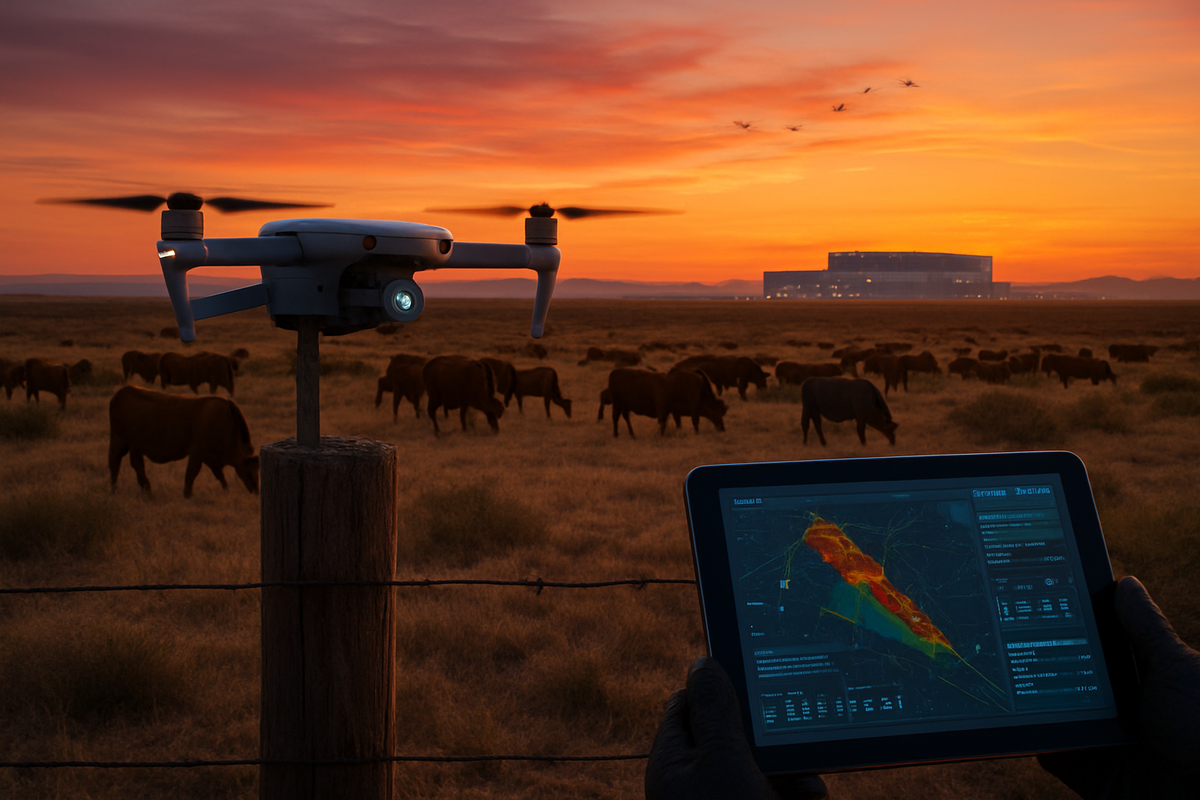
In a decisive move to protect the nation’s multi-billion dollar livestock industry, U.S. Secretary of Agriculture Brooke Rollins announced today, February 5, 2026, the launch of a $100 million "New World Screwworm Grand Challenge." The federal initiative is designed to spur rapid innovation in the detection, containment, and eradication of the New World screwworm (Cochliomyia hominivorax), a devastating flesh-eating parasite that has migrated north from Central America and is now confirmed to be lurking just 70 miles from the Texas border.
The announcement comes as the agricultural sector faces its most significant biological threat in decades. With active cases recently identified in the Mexican state of Tamaulipas, the U.S. Department of Agriculture (USDA) is shifting from a policy of regional containment to one of aggressive domestic preparedness. The $100 million fund will be administered by the Animal and Plant Health Inspection Service (APHIS), with a fast-tracked application deadline of February 23, 2026, signaling the extreme urgency of the situation.
A Growing Biological Crisis at the Border
The current crisis traces its roots back to late 2024, when the screwworm breached the "biological barrier" at the Darien Gap—a dense stretch of jungle between Colombia and Panama that had successfully contained the pest for over thirty years. Since that breach, the parasite has moved with alarming speed through Central America and Mexico. The New World screwworm is particularly fearsome because, unlike other fly larvae, it feeds exclusively on the living tissue of warm-blooded animals, including cattle, horses, dogs, and even humans, often leading to agonizing deaths if left untreated.
The "Grand Challenge" is structured to address four critical pillars: enhanced sterile fly production, next-generation detection systems, new therapeutic developments, and advanced ecological modeling. Currently, the USDA is engaged in a massive aerial campaign, releasing approximately 100 million sterile flies weekly along a 50-mile "polygon" zone extending from the Mexican border into South Texas. The strategy, known as the Sterile Insect Technique (SIT), involves flooding the wild population with sterile males to halt reproduction. However, the current infrastructure—largely dependent on a decades-old facility in Panama—is being stretched to its breaking point.
To bolster domestic capacity, Secretary Rollins highlighted the ongoing construction of a $750 million "Super-Factory" at Moore Air Base in Edinburg, Texas. This facility is expected to eventually produce 300 million sterile flies per week. Until then, the $100 million Grand Challenge seeks "bridge technologies" that can improve the efficiency of existing sterilization processes and deploy modular, portable production units to localized outbreak sites.
Market Winners and Industry Impacts
The escalating threat and the subsequent federal response have sent ripples through the animal health and biotechnology sectors. Zoetis Inc. (NYSE: ZTS) is positioned as a primary beneficiary, having recently received conditional FDA approval for Dectomax-CA1 (doramectin), the first injectable specifically formulated for the prevention and treatment of screwworm in cattle. As ranchers along the border ramp up preventive measures, demand for Zoetis’ parasiticides is expected to surge.
Similarly, Merck & Co. (NYSE: MRK), through its Merck Animal Health division, has secured conditional approval for Exzolt Cattle-CA1 (fluralaner), a topical solution that provides another layer of defense for producers. For the companion animal market, Elanco Animal Health (NYSE: ELAN) has received Emergency Use Authorization (EUA) for its Credelio (lotilaner) line to treat screwworm infestations in dogs, which often serve as early indicators of the parasite’s presence in a community.
Beyond pharmaceuticals, the industrial sterilization sector is seeing increased activity. Sotera Health (NASDAQ: SHC), through its subsidiaries Nordion and Sterigenics, provides the Cobalt-60 isotopes and irradiation technology essential for the SIT process. As the USDA builds out its Texas "Super-Factory," contractors and technology providers like STERIS plc (NYSE: STE) are expected to compete for high-value infrastructure and maintenance contracts. Conversely, the broader livestock industry—represented by major processors like Tyson Foods, Inc. (NYSE: TSN) and JBS S.A. (OTCMKTS: JBSAY)—faces potential supply chain volatility if a full-scale outbreak triggers more restrictive movement controls or culls in the Southern U.S.
A Paradigm Shift in Agricultural Security
This event marks a significant departure from historical pest management strategies. For decades, the U.S. relied on a "defense-in-depth" strategy focused on keeping the screwworm south of the Panama Canal. The breach of the Darien Gap has forced a total re-evaluation of biosecurity, moving it to the forefront of national security concerns. The Grand Challenge reflects a broader industry trend toward "AgTech" integration, specifically the use of AI-powered monitoring traps and genetic markers to differentiate between wild and sterile flies in real-time.
The regulatory implications are equally profound. Secretary Rollins has already maintained a suspension on the import of live cattle, bison, and horses from Mexico, a move that has tightened domestic supply and pressured beef prices. This policy shift underscores the USDA's "zero-tolerance" approach, reminiscent of the 1970s when a similar outbreak cost Texas producers more than $730 million annually (unadjusted for inflation). Today, a widespread infestation across the entire Southern U.S. could result in multi-billion dollar losses, potentially disrupting food security and the consumer price index.
The Grand Challenge also emphasizes international cooperation, with $21 million of separate funding recently allocated to modernize facilities in Metapa, Mexico. This suggests a long-term strategy of "managed retreat" for the parasite, aiming to push the infestation back south through a coordinated, binational effort that combines traditional entomology with modern data science.
Navigating the Road Ahead
In the short term, market observers should focus on the awarding of the $100 million in grants following the February 23rd deadline. These awards will likely signal which technologies—ranging from drone-based dispersal systems to new biological lures—the USDA believes are most viable for immediate deployment. The successful integration of these tools will be critical as the summer months approach, typically a period of peak activity for the screwworm.
Long-term, the livestock industry must adapt to a "new normal" where biosecurity is a permanent line item in operational budgets. Strategic pivots may include the widespread adoption of remote sensing and electronic identification (EID) tags to track animal movement more precisely. If the $100 million initiative fails to stall the northward advance, the industry could see a more permanent shift in cattle production away from the southern border states, creating a geographical realignment of the U.S. beef supply chain.
Summary and Investor Outlook
The USDA’s $100 million Grand Challenge is a high-stakes gamble to prevent a biological and economic catastrophe. By incentivizing the private sector to solve complex entomological problems, Secretary Rollins is attempting to modernize a defense system that has been stagnant for decades. Key takeaways for investors include the rising importance of specialized animal health products from leaders like Zoetis and Merck, and the infrastructure opportunities for sterilization specialists like Sotera Health.
Moving forward, the market will be hypersensitive to any confirmed cases of screwworm within U.S. borders. Investors should watch for the announcement of grant winners in March 2026 and monitor the construction progress of the Edinburg "Super-Factory." The success or failure of this initiative will not only determine the health of the U.S. cattle herd but will also serve as a blueprint for how the government handles future invasive species and biological threats in an increasingly interconnected global economy.
This content is intended for informational purposes only and is not financial advice.