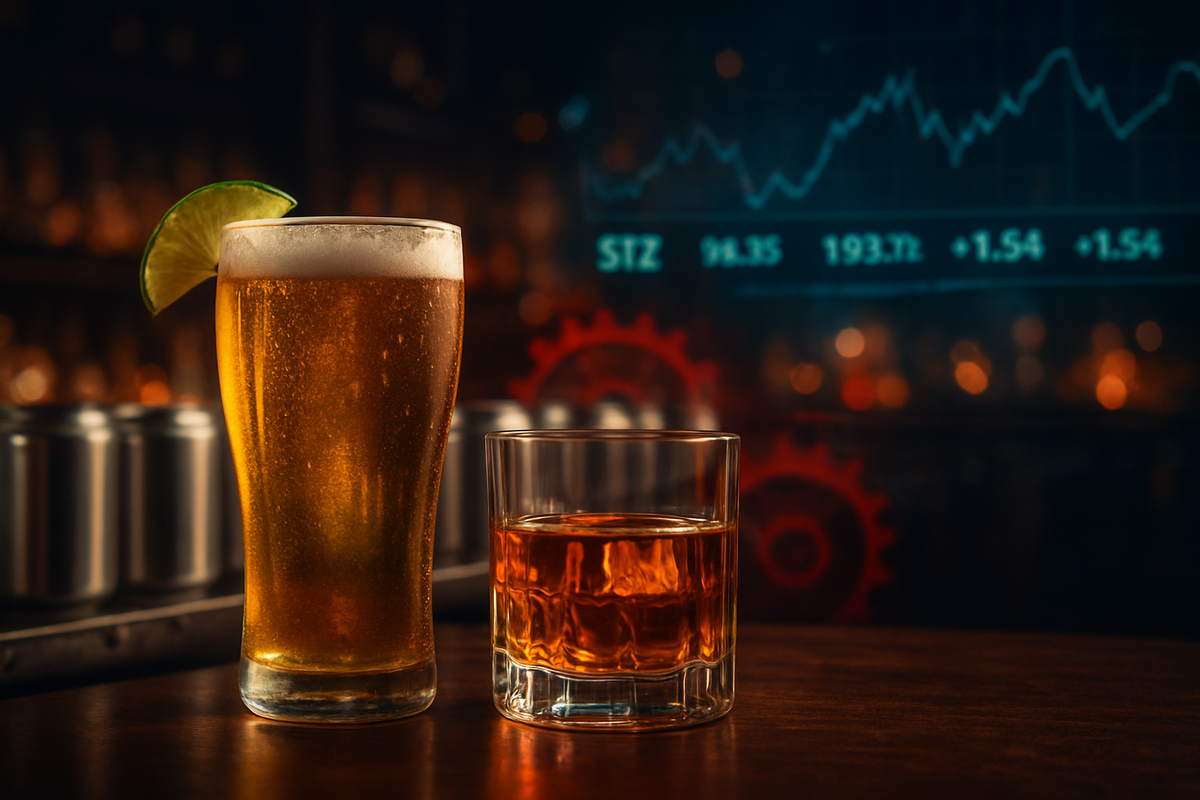
VICTOR, N.Y. — Constellation Brands (NYSE: STZ) reported a "beat-and-lower" third quarter for fiscal year 2026, navigating a complex landscape defined by resilient consumer demand for its premium Mexican imports and a punishing new trade environment. While the company exceeded Wall Street expectations for both revenue and earnings per share, the shadow of a 50% U.S. tariff on aluminum imports loomed large over its operating margins. The results highlight a growing divide in the beverage industry: while brands like Modelo Especial and Pacifico continue to dominate the American palate, the rising cost of the cans they are served in is beginning to bite.
The earnings report, released on January 7, 2026, revealed that Constellation Brands generated $2.22 billion in net sales, a figure that beat the consensus estimate of $2.18 billion despite a 10% year-over-year decline attributed to strategic divestitures. Comparable earnings per share (EPS) came in at $3.06, significantly ahead of the $2.65 predicted by analysts. However, the immediate market reaction was tempered by management’s warning that aluminum tariffs—which were doubled to 50% in mid-2025—would continue to pressure the company's cost structure through the remainder of the fiscal year.
Margin Pressures Meet Premium Performance
The fiscal third quarter was a study in operational efficiency versus external policy headwinds. Constellation’s beer segment maintained a healthy 38.0% operating margin, a slight 10-basis-point increase year-over-year, but this stability was hard-won. Favorable pricing actions and lower depreciation were almost entirely offset by higher Cost of Goods Sold (COGS). The primary culprit was the 50% Section 232 aluminum tariff, which has sent the U.S. Midwest Premium—the regional benchmark for aluminum prices—soaring to record highs of nearly 96 cents per pound.
The timeline leading to this margin squeeze began in June 2025, when the U.S. administration doubled aluminum tariffs to incentivize domestic production. For Constellation, which relies on aluminum cans for approximately 41% of its Mexican beer packaging, the impact was immediate. Management estimated a total hit of $20 million for the 2026 fiscal year alone. While brands like Pacifico (up over 15%) and Victoria (up 13%) showed explosive growth, the company’s "Big Two"—Modelo Especial and Corona Extra—saw depletion declines of 4% and 9%, respectively. Executives attributed these dips to "socioeconomic headwinds" affecting their core consumer base, who are feeling the pinch of broader inflationary pressures.
In the wine and spirits division, the story was one of radical transformation. Operating margins contracted to 15.8% from 22.1% a year ago, primarily due to the 2025 divestiture of the SVEDKA vodka brand and several lower-end wine labels. This pivot toward "premiumization" saw "Power Brands" like Meiomi, Kim Crawford, and High West Whiskey outpace the broader high-end market. However, the massive revenue drop associated with the SVEDKA exit—net sales for the segment fell 51% to $213.1 million—remains a point of transition that investors are watching closely.
Winners and Losers in the New Tariff Era
The doubling of aluminum tariffs has created a clear set of winners and losers across the market. Alcoa Corp (NYSE: AA) initially emerged as a primary beneficiary, with its stock price surging over 120% since the tariff hike as domestic prices rose. However, by January 2026, analysts at firms like JPMorgan have begun downgrading the stock, citing valuation concerns and the fact that even domestic producers are struggling with the logistical chaos caused by Canadian suppliers diverting metal to European markets to avoid the U.S. levy.
On the losing side, Molson Coors Beverage Co (NYSE: TAP) has seen its profit guidance slashed twice in the last six months. With an estimated $40 million to $55 million in incremental annual costs due to the tariffs, Molson Coors has struggled to pass these costs to consumers as effectively as Constellation. Similarly, Anheuser-Busch InBev (NYSE: BUD) was forced into a defensive $3 billion reacquisition of its U.S. metal container plants from Apollo Global Management in early 2026, a move designed to regain control over a volatile supply chain as its previous price hedges began to expire.
Packaging giants like Ball Corp (NYSE: BALL) and Crown Holdings Inc (NYSE: CCK) are also caught in the crossfire. Ball Corp has reported passing through price increases of up to 30% to its North American customers, adding roughly $0.02 to the cost of every beverage can. To mitigate long-term risk, Ball has accelerated the construction of a $4 billion domestic smelter in Oklahoma, but that relief is not expected to come online until late 2026.
A Structural Shift in the Beverage Industry
The current crisis over aluminum costs is driving a broader industry trend toward material substitution and supply chain onshoring. For the first time in decades, major beverage players are reconsidering the ubiquity of the aluminum can. Companies like The Coca-Cola Company (NYSE: KO) have explicitly stated they may de-emphasize cans in favor of PET plastic and glass if regional premiums remain at these levels. This shift creates a significant conflict with corporate sustainability goals, as plastic is far less recyclable than aluminum, forcing many firms to revise their 2030 environmental targets downward.
Historically, this situation echoes the trade tensions of 2018, but with far higher stakes. The 50% tariff level has effectively created a price floor that penalizes any company without a fully domestic supply chain. Constellation Brands is attempting to bypass these issues through "modular brewery expansions" and a $1 billion capital expenditure plan in Mexico aimed at improving long-term efficiency. However, the "Made in America" policy push has forced a total reconfiguration of the North American supply chain, where beverage giants are now competing with the aerospace and automotive industries for a limited pool of domestic primary aluminum.
The Road Ahead: Strategic Pivots and Pricing Power
Looking forward, Constellation Brands faces a delicate balancing act. The company reaffirmed its comparable EPS guidance of $11.30 to $11.60 for the full fiscal year 2026, signaling confidence that its premium brands can sustain further price hikes. Short-term, investors should expect "lightweighting" initiatives—reducing the amount of aluminum used per can—and an increased reliance on domestic scrap aluminum, which is largely exempt from the 50% tariff.
In the long term, the success of Constellation’s $1 billion investment in its Mexico operations will be the ultimate arbiter of its stock performance. If the company can successfully offset packaging costs through manufacturing efficiencies and the continued premiumization of its wine and spirits portfolio, it may emerge from the tariff era with its margins intact. However, if consumer demand for its core beer brands continues to soften under the weight of "socioeconomic headwinds," the company may be forced to choose between market share and profitability.
Investor Takeaway: Resilience in a Protectionist Market
The takeaway from Constellation’s Q3 2026 results is one of operational resilience in the face of protectionist headwinds. The company has proven that its brands—particularly Pacifico and its high-end spirits—possess the "pricing power" necessary to weather significant cost increases. However, the record-high Midwest Premium for aluminum remains a volatile variable that management cannot fully control.
Moving forward, investors should watch for two key indicators: the stability of the core Hispanic consumer base and any further shifts in U.S. trade policy. While the 50% tariff has stabilized for now, any further escalation or a potential retaliatory move from trade partners could disrupt the delicate equilibrium Constellation has maintained. For now, the "Modelo Moat" remains deep, but the cost of building it has never been higher.
This content is intended for informational purposes only and is not financial advice.