As 2025 draws to a close, the financial world is witnessing a historic recalibration of the aerospace and telecommunications sectors. SpaceX, the private juggernaut led by Elon Musk, has reportedly reached a staggering $800 billion valuation following a year-end insider tender offer. This milestone does more than just solidify SpaceX's dominance; it has sent shockwaves through the public markets, acting as a gravitational force that is pulling the valuations of satellite and infrastructure companies into a new "supercycle."
The immediate implications are most visible in the sudden re-rating of legacy players and emerging space-tech firms. As SpaceX moves closer to a rumored 2026 initial public offering (IPO), its private valuation is serving as a benchmark for the entire industry. Nowhere is this more evident than in the recent performance of EchoStar (NASDAQ: SATS), which has seen its stock price and analyst price targets skyrocket as it hitches its wagon to the SpaceX ecosystem.
The Path to $800 Billion: Starship and the Starlink Utility Engine
The ascent to an $800 billion valuation—a 100% increase from mid-2025 levels—was fueled by two primary engines: the operational maturity of Starlink and the successful industrialization of the Starship launch system. By late 2025, Starlink transitioned from a high-growth startup into a high-margin global utility, providing high-speed internet to tens of millions of users and securing massive government contracts for its "Starshield" defense variant. Simultaneously, the Starship program achieved a reliable launch cadence, drastically lowering the cost per kilogram to orbit and opening the door for a new frontier: space-based AI data centers.
The timeline leading to this valuation was marked by a series of strategic maneuvers throughout 2025. In September, a landmark deal between SpaceX and EchoStar (NASDAQ: SATS) signaled a shift in how the market values orbital assets. SpaceX acquired critical AWS-4 and H-block spectrum licenses from EchoStar for $17 billion. Crucially, half of that payment was made in SpaceX equity. As SpaceX’s valuation climbed toward the $800 billion mark in December, the value of EchoStar’s stake effectively doubled, providing a massive balance sheet boost that traditional financial models had previously undervalued.
Market reaction has been swift and decisive. Institutional investors, once wary of the "capital-intensive" nature of space, are now viewing the sector through the lens of infrastructure and recurring revenue. The $800 billion figure is no longer seen as a speculative bubble but as a reflection of SpaceX’s role as the primary gatekeeper to the low-Earth orbit (LEO) economy.
Winners and Losers in the New Space Race
The clear winner in this valuation surge is EchoStar (NASDAQ: SATS). Following the SpaceX milestone, Citigroup (NYSE: C) analyst Michael Rollins aggressively raised the price target for EchoStar from $87 to $111. The hike reflects not just the value of the SpaceX equity stake, but also a transformative partnership where EchoStar’s Boost Mobile service will utilize Starlink’s "Direct-to-Cell" capabilities. This allows EchoStar to offer nationwide coverage without the massive capital expenditure of building new terrestrial towers, positioning it as a formidable challenger to traditional wireless giants.
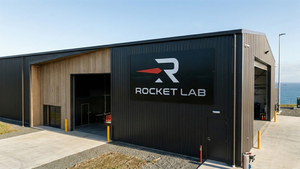
Other public space companies are also feeling the "halo effect." Rocket Lab (NASDAQ: RKLB) has seen its valuation multiples expand as investors seek "pure-play" public alternatives to the still-private SpaceX. Similarly, AST SpaceMobile (NASDAQ: ASTS), which specializes in satellite-to-smartphone connectivity, has benefited from the validated market demand for ubiquitous mobile coverage. These companies are being re-evaluated as critical infrastructure providers rather than experimental tech ventures.
Conversely, traditional telecommunications companies like AT&T (NYSE: T) and Verizon (NYSE: VZ) face a more complex landscape. While they remain dominant in terrestrial 5G, the rapid advancement of satellite-based cellular service threatens their "moat" in rural and underserved areas. These companies may find themselves forced into expensive partnerships or defensive spectrum acquisitions to prevent churn to satellite-integrated competitors like the new EchoStar-SpaceX alliance.
A Broader Shift: From Exploration to Industrialization
The $800 billion SpaceX valuation fits into a broader industry trend where space is becoming the next frontier for "compute" and "connectivity." In 2025, the narrative shifted from simply launching satellites to building a sophisticated orbital infrastructure that supports artificial intelligence. The success of SpaceX has proven that the "Direct-to-Device" (D2D) model—connecting unmodified smartphones directly to satellites—is the future of global telecommunications. This has turned radio frequency spectrum into the "digital real estate" of the 21st century, driving M&A activity across the sector.
The regulatory landscape is also evolving to keep pace. The Federal Communications Commission (FCC) and international bodies are under pressure to streamline spectrum allocation as more companies vie for orbital slots. Furthermore, the U.S. Space Force’s increased budget—approaching $40 billion for 2026—highlights the growing importance of "resilient space architectures" for national security. SpaceX’s valuation reflects its role as a de facto partner to the state, a position that carries both immense power and significant regulatory scrutiny.
Historically, this moment draws comparisons to the early days of the railroad or the internet backbone. Just as the companies that owned the tracks or the fiber-optic cables became the titans of their eras, SpaceX is building the "tracks" for the 21st-century economy. The $800 billion valuation is an acknowledgment that the most valuable real estate may no longer be on the ground.
What Lies Ahead: The Road to the Trillion-Dollar IPO
In the short term, the market is bracing for the potential spin-off or IPO of Starlink, or perhaps SpaceX itself, in 2026. Management is reportedly targeting a $1.5 trillion valuation for a public debut, which would make it one of the most valuable entities on the planet. For investors, the next six months will be critical for watching how SpaceX utilizes its new capital and whether it can maintain its blistering launch schedule for Starship.
Strategic pivots are already underway. We expect to see more "hybrid" deals where terrestrial companies trade assets for space equity, following the EchoStar blueprint. The challenge for the market will be managing the volatility that often accompanies such high-growth sectors. As more public companies become "proxy plays" for SpaceX, their stock prices will likely become increasingly sensitive to every launch success or regulatory hurdle faced by Elon Musk’s firm.
Conclusion: The Market’s New Gravity
The $800 billion valuation of SpaceX marks a turning point where space infrastructure has officially moved from the periphery to the center of the global financial market. It has validated the vision of a connected, orbital economy and provided a massive tailwind for companies like EchoStar (NASDAQ: SATS) that have positioned themselves as strategic partners. For the public markets, the "SpaceX effect" is a reminder that innovation at the edge of possibility can create immense value for those willing to navigate the risks.
Moving forward, investors should keep a close eye on spectrum deals, D2D rollouts, and the progress of the Starship program. The industrialization of space is no longer a futuristic concept—it is a present-day financial reality. As we enter 2026, the question is no longer whether space is a viable market, but who will own the infrastructure that powers the next century of global connectivity.
This content is intended for informational purposes only and is not financial advice.