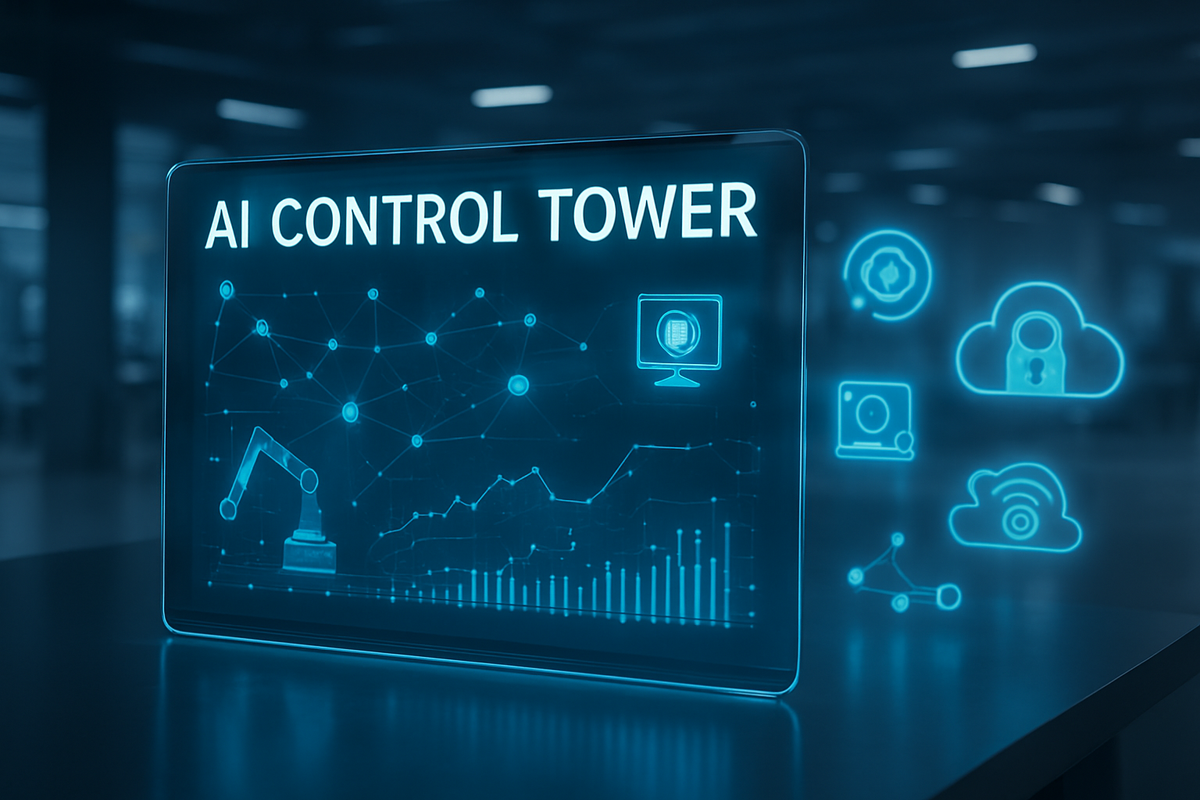
In a move that signals a tectonic shift in the enterprise software landscape, ServiceNow (NYSE: NOW) officially announced on December 23, 2025, that it has entered into a definitive agreement to acquire cyber-asset management leader Armis for approximately $7.75 billion in cash. This landmark transaction, the largest in ServiceNow’s history, aims to integrate Armis’s agentless security capabilities into the ServiceNow platform, creating a unified “AI Control Tower” for the modern enterprise. However, the sheer scale of the deal and the high premium paid have sparked a wave of investor anxiety, sending ServiceNow’s shares lower as the market weighs the risks of this aggressive expansion.
The acquisition comes at a pivotal moment for ServiceNow as it seeks to maintain its high-growth trajectory by moving beyond its traditional roots in IT Service Management (ITSM). By absorbing Armis, ServiceNow is positioning itself as a central nervous system for both digital and physical assets—ranging from industrial robots to medical devices—that are often invisible to traditional security tools. While the strategic logic is clear to management, the immediate financial implications have led to a "sell-the-news" reaction, with the stock price under pressure since rumors of the deal first surfaced earlier this month.
A Record-Breaking Deal Amid Market Volatility
The official confirmation of the $7.75 billion deal follows a week of intense speculation that saw ServiceNow’s stock plunge nearly 12% after details were leaked to financial outlets. The acquisition price represents a significant premium, valued at roughly 23 times Armis’s annual recurring revenue (ARR) of $340 million. Funding for the transaction will be a mix of cash on hand and new debt, a move that has caused some analysts to question the impact on ServiceNow’s balance sheet, especially following its recent $1 billion acquisition of identity-security firm Veza.
Armis, known for its Centrix platform, specializes in "agentless" security, which allows organizations to monitor and secure devices that cannot host traditional security software, such as IoT sensors and operational technology (OT). This capability is increasingly critical as enterprises deploy AI agents that require real-time visibility into every connected asset. The deal is expected to close in the second half of 2026, pending regulatory approvals. Until then, ServiceNow faces the daunting task of convincing a skeptical Wall Street that it can successfully integrate a 950-person cybersecurity powerhouse without losing focus on its core generative AI roadmap.
The reaction from the analyst community has been polarized. KeyBanc recently downgraded ServiceNow to "Underweight," citing concerns that such a massive inorganic move suggests a slowdown in the company’s organic growth potential. Investors are also wary of the integration risks associated with a deal of this magnitude—nearly three times the size of ServiceNow’s previous record acquisition of Moveworks. The fear is that the complexity of merging two distinct corporate cultures and technology stacks could lead to execution missteps at a time when competition in the cloud sector is at an all-time high.
Winners and Losers in the Security Shakeup
The primary winner in this deal, at least in the short term, is the private equity and venture capital ecosystem that backed Armis, realizing a massive exit at a premium valuation. For ServiceNow, the "win" is long-term and strategic; if successful, the company becomes the only platform capable of linking an "identity" (via Veza) to every "unmanaged device" (via Armis) on a network, creating a moat that traditional ITSM competitors cannot easily cross. This integration will automatically "true-up" the ServiceNow Configuration Management Database (CMDB), ensuring that IT teams have a real-time, accurate inventory of all assets.
On the losing side of the ledger, niche cybersecurity firms specializing in vulnerability management and OT security, such as Tenable (NASDAQ: TENB) and Qualys (NASDAQ: QLYS), may find themselves squeezed. As ServiceNow integrates these security insights directly into its workflow engine, the need for standalone "point products" for asset discovery may diminish. Furthermore, ServiceNow’s existing partners in the security space may now view the company as a formidable competitor, potentially chilling historical collaborations.
The acquisition also places ServiceNow on a collision course with "platformization" giants like Palo Alto Networks (NASDAQ: PANW) and CrowdStrike (NASDAQ: CRWD). While CrowdStrike dominates the "managed" endpoint market (laptops and servers), ServiceNow is now the dominant force in the "unmanaged" gap. However, the market’s negative reaction to the deal suggests that investors currently view this as a "lose" for ServiceNow's valuation in the near term, as the company is re-rated from a high-margin SaaS leader to a more capital-intensive security and infrastructure play.
The Broader Shift Toward "Cyber-Physical" Security
This acquisition is a clear indicator of a broader industry trend: the convergence of IT, OT, and cybersecurity. As the world becomes more connected through the Internet of Things (IoT), the boundary between a digital workflow and a physical asset has blurred. ServiceNow’s move reflects a realization that to manage the "work" of an enterprise, one must also secure the "tools" of that work, whether they are software bots or hospital MRI machines. This follows a similar trend seen in Palo Alto Networks’ multi-billion dollar acquisition of CyberArk earlier in 2025, highlighting a race toward total platform consolidation.
Historically, ServiceNow has grown by being the "platform of platforms," sitting on top of other systems. By acquiring Armis, it is moving deeper into the infrastructure layer. This shift mirrors the evolution of other tech giants who reached a saturation point in their primary markets and had to move into adjacent verticals to sustain growth. However, this move also invites increased regulatory scrutiny. As ServiceNow becomes more integral to the security of critical infrastructure—like power grids and healthcare systems—it will likely face tougher oversight from bodies like the CISA and international regulators concerned about systemic risk in concentrated software platforms.
The ripple effects will likely be felt in the identity management space as well. By combining Armis with its previous acquisition of Veza, ServiceNow is challenging the dominance of Okta (NASDAQ: OKTA) in the Identity Governance and Administration (IGA) market. The ability to assign a secure identity to a non-human asset and manage its lifecycle through a ServiceNow workflow is a powerful value proposition that could redefine how enterprises approach "Zero Trust" architectures.
What Lies Ahead: Integration and AI Governance
In the short term, ServiceNow must navigate a period of "valuation compression" as the market digests the cost of the Armis deal. The company’s leadership will likely spend the first half of 2026 focused on "productizing" the Armis data into its AI Control Tower. The goal is to enable AI agents to not only perform tasks but to do so within a secure, governed environment where every asset they interact with is verified. If ServiceNow can prove that the Armis integration drives significant upsell in its Pro Plus and Enterprise tiers, the stock could see a rapid recovery.
Longer-term, the success of this deal depends on whether ServiceNow can maintain the high innovation velocity of Armis. Cybersecurity is a "cat-and-mouse" game that requires constant updates and threat intelligence; this is a different cadence than the semi-annual release cycles typical of enterprise SaaS. ServiceNow may need to pivot its engineering culture to support a 24/7 security operations mindset. Failure to do so could allow agile competitors like Claroty or Nozomi Networks to pick off dissatisfied customers who feel the Armis product has stagnated under a larger corporate umbrella.
Final Thoughts: A High-Stakes Transformation
ServiceNow’s acquisition of Armis is a bold, high-stakes gamble that the future of enterprise software is inseparable from cybersecurity. By paying $7.75 billion, CEO Bill McDermott is betting that the "unmanaged" device gap is the next great frontier for the ServiceNow platform. While the market’s initial reaction has been one of caution—driven by concerns over a rich valuation and integration complexity—the strategic merit of owning the "eyes" and the "arms" of the enterprise is undeniable.
For investors, the coming months will be a period of "wait and see." Key metrics to watch will be ServiceNow’s ability to maintain its operating margins while absorbing the Armis headcount and whether the company can secure early "lighthouse" customers who are using the integrated platform to secure their AI initiatives. While the stock may remain volatile as the deal moves toward its 2026 closing date, the Armis acquisition marks the moment ServiceNow officially stepped out of the IT back office and into the center of the global security theater.
This content is intended for informational purposes only and is not financial advice.