As of March 19, 2026, Shell plc (NYSE: SHEL) stands at a pivotal crossroads in its 119-year history. Once the standard-bearer for European corporate commitment to the Paris Agreement, the energy giant has undergone a profound strategic recalibration under the leadership of CEO Wael Sawan. Today, Shell is defined by a "Value over Volume" philosophy—a mantra that has revitalized its balance sheet and delighted shareholders, even as it draws intense scrutiny from environmental advocates and European regulators.
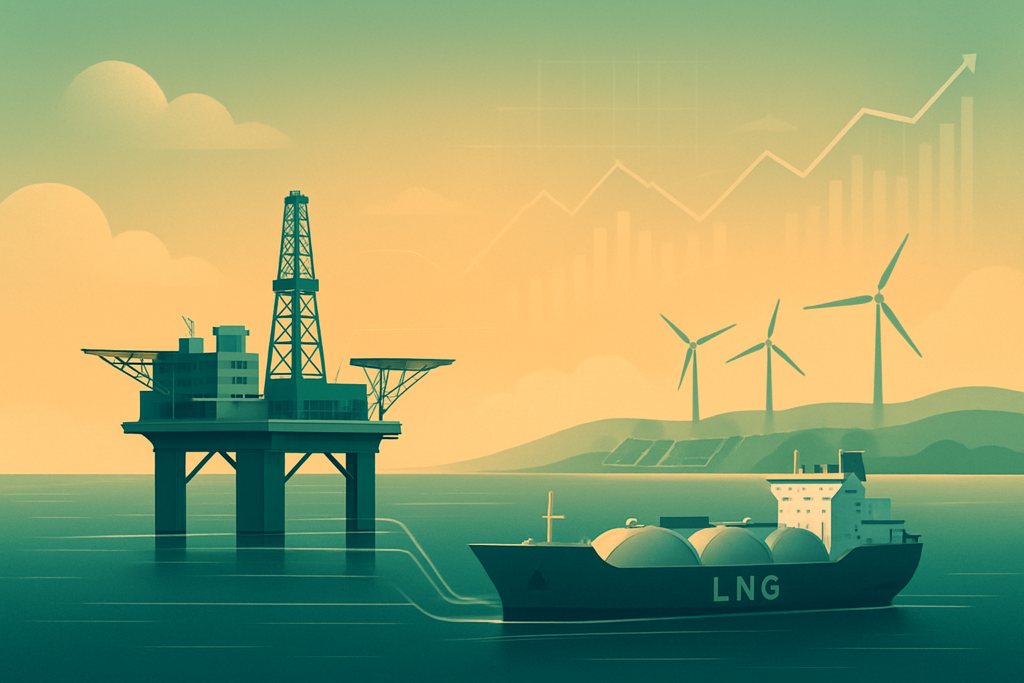
In a global economy still hungry for reliable energy despite the accelerating transition to renewables, Shell has positioned itself as the "undisputed king of LNG." With a massive buyback program and a pivot back toward high-margin hydrocarbon projects, the company is narrowing the valuation gap with its American peers, ExxonMobil (NYSE: XOM) and Chevron (NYSE: CVX). This article explores the mechanics of Shell’s current dominance, the risks of its revised climate strategy, and the growing rumors of a potential primary listing move to the United States.
Historical Background
The modern identity of Shell was forged in 1907 through the merger of two rivals: the Royal Dutch Petroleum Company and The "Shell" Transport and Trading Company. This alliance was a strategic necessity to counter the global monopoly of John D. Rockefeller’s Standard Oil. For nearly a century, the company operated under a complex dual-listed structure, with 60% ownership in the Netherlands and 40% in the United Kingdom.
Key transformations have defined the last decade. In 2016, Shell completed a $53 billion acquisition of BG Group, a move that fundamentally shifted its portfolio toward natural gas and deepwater production in Brazil. This acquisition proved prescient, as it established Shell as the world’s largest liquefied natural gas (LNG) trader. In 2022, the company underwent its most significant corporate simplification, moving its headquarters from The Hague to London, ditching "Royal Dutch" from its name, and unifying its share structure to enhance agility. By early 2026, this leaner, London-based Shell has become a disciplined "cash machine," focused on capital efficiency over broad-based expansion.
Business Model
Shell operates as an integrated energy company across five primary segments:
- Integrated Gas: The crown jewel of the portfolio. This segment includes LNG, conversion of natural gas into GTL (gas-to-liquids) fuels, and related marketing. Shell currently manages approximately 16% of the global LNG market share.
- Upstream: Focused on the exploration and extraction of crude oil and natural gas. Shell has increasingly "high-graded" this segment, focusing on high-margin, low-carbon-intensity assets in the U.S. Gulf of Mexico, Brazil, and Oman.
- Marketing: A massive retail footprint with over 46,000 service stations globally. This segment also includes lubricants and "Shell Recharge" EV charging solutions.
- Chemicals & Products: This includes refining and chemical manufacturing. While historically a steady earner, this segment has faced headwinds in 2025 due to softening global demand for plastics and specific chemicals.
- Renewables & Energy Solutions: Focused on hydrogen, wind, solar, and carbon capture. Under current management, this segment has shifted from "green energy generation" to "low-carbon molecules" and flexible assets like battery storage that complement the gas business.
Stock Performance Overview
Over the past five years, Shell’s stock has staged a remarkable recovery from the pandemic-induced lows of 2020. As of mid-March 2026, SHEL trades in the $81–$84 range on the NYSE.
- 1-Year Performance: The stock rose approximately 12% in 2025, buoyed by consistent $3.5 billion quarterly buybacks and the successful startup of the LNG Canada project.
- 5-Year Performance: Investors have seen a total return exceeding 130% since 2021, significantly outperforming the FTSE 100 but still trailing the meteoric rise of ExxonMobil.
- 10-Year Performance: The decade has been a "tale of two halves"—the first defined by the integration of BG Group and the second by the post-COVID pivot toward extreme capital discipline.
The primary driver of recent stock strength is Shell's sector-leading Free Cash Flow (FCF) yield, which sits at roughly 8.5%, making it one of the most efficient cash generators in the global energy space.
Financial Performance
For the fiscal year 2025, Shell reported adjusted earnings of $18.5 billion. While this represents a decrease from the commodity-price-driven peaks of 2022, the underlying financial health remains robust.
- Cash Flow: In 2025, Shell generated $26.1 billion in Free Cash Flow. This allowed the company to maintain its 17th consecutive quarter of $3.5 billion share buybacks.
- Dividends: Shell currently offers a dividend yield of approximately 3.8%. While lower than BP’s (NYSE: BP) 6% yield, Shell’s management argues their payout is more sustainable and better supported by FCF.
- Cost Management: By the end of 2025, the company achieved $5.1 billion in structural cost reductions against 2022 levels, meeting its efficiency targets three years ahead of schedule.
- Debt: Net debt remains well-managed, with a gearing ratio (net debt as a percentage of total capital) consistently below 20%, providing a significant buffer against oil price volatility.
Leadership and Management
CEO Wael Sawan, who took the helm in January 2023, has become the face of "pragmatic" energy management. A Shell veteran, Sawan has stripped away the idealistic "green-at-all-costs" rhetoric of his predecessor, Ben van Beurden. His strategy of "Performance, Discipline, Simplification" has been executed with clinical precision.
Under Sawan, the leadership team has been flattened, and the board has been refreshed to prioritize "Value over Volume." This shift has not been without controversy; several high-profile executives from the renewables division departed in 2024 and 2025, citing a lack of ambition in the energy transition. However, from a shareholder governance perspective, Sawan’s reputation is sterling, characterized by a transparent commitment to returning cash to investors.
Products, Services, and Innovations
Innovation at Shell in 2026 is no longer just about "going green"—it’s about making fossil fuels more efficient and capturing the value in the energy transition's "middle ground."
- LNG Canada: Phase 1 reached full ramp-up in early 2026, providing a critical low-carbon-intensity gas supply to Asian markets, bypassing the Panama Canal.
- Standardized Deepwater Platforms: Following the success of the "Vito" and "Whale" projects in the Gulf of Mexico, Shell has perfected a "repeatable" platform design that reduces construction costs by 30%.
- Low-Carbon Molecules: Shell is a leader in Sustainable Aviation Fuel (SAF) and hydrogen. In 2025, the "Holland Hydrogen I" project in Rotterdam became one of the largest operational electrolyzers in Europe.
- Carbon Capture and Storage (CCS): Shell is a partner in the "Northern Lights" project in Norway and several UK clusters, positioning itself to sell "carbon removal as a service" to industrial customers.
Competitive Landscape
Shell competes in a "supermajor" class that has effectively split into two camps: the American "Aggressives" and the European "Transitioners."
- ExxonMobil & Chevron: These U.S. rivals have doubled down on oil and gas, trading at a significant P/E premium (roughly 15x–20x) compared to Shell (11x–14x). Shell’s goal in 2026 is to close this "valuation gap."
- BP: Shell’s closest UK rival has faced leadership instability and higher debt levels, though its dividend yield remains higher.
- TotalEnergies (NYSE: TTE): The French giant remains Shell’s fiercest competitor in the LNG space and has maintained a more aggressive pursuit of renewable electricity generation.
Shell’s competitive edge lies in its Trading & Supply division. By leveraging its 16% share of the global LNG market, Shell’s traders can divert cargoes in real-time to the highest-paying markets, often adding billions in "optimization profit" during periods of market volatility.
Industry and Market Trends
The energy landscape of 2026 is dominated by two conflicting themes: Energy Security and Decarbonization.
- The LNG Bridge: Demand for natural gas in Asia (specifically China and India) continues to grow as these nations transition away from coal. Shell views this as a 20-year growth runway.
- The Valuation Pivot: Institutional investors are returning to traditional energy as "ESG-only" mandates soften in favor of "Energy Security" portfolios.
- Supply Chain Resilience: High interest rates and inflation in 2024–2025 hampered many offshore wind projects, reinforcing Shell’s decision to pull back from capital-heavy renewable generation.
Risks and Challenges
Despite its financial strength, Shell faces a triad of systemic risks:
- Legal Liability: In June 2025, the UK High Court ruled that Shell plc could be held liable for legacy oil pollution in the Niger Delta. This sets the stage for a massive trial in 2027 that could result in multi-billion dollar settlements.
- Climate Litigation: While Shell won a major victory in the Dutch Court of Appeal in late 2024—overturning a mandate to cut emissions by 45%—the case is now before the Dutch Supreme Court. A reversal would be catastrophic for the company's operational flexibility.
- Stranded Asset Risk: If global policy shifts toward a faster-than-expected "Net Zero" path, Shell's long-term investments in gas infrastructure could become uneconomic before their end-of-life.
Opportunities and Catalysts
Several near-term events could act as catalysts for Shell in 2026:
- U.S. Listing Rumors: Speculation persists that the Board may move Shell’s primary listing to the NYSE. Analysts estimate such a move could unlock a 20–30% rerating in the stock price as it accesses deeper U.S. capital pools.
- Jackdaw & Mero-4: The startup of the Jackdaw gas field in the UK and the full ramp-up of the Mero-4 project in Brazil in 2026 will provide incremental high-margin production.
- Consolidation: With a strong balance sheet, Shell remains a potential buyer of high-quality LNG or deepwater assets, particularly if smaller players struggle with the cost of capital.
Investor Sentiment and Analyst Coverage
Wall Street is currently "bullish" on Shell, with over 70% of analysts maintaining a "Buy" or "Overweight" rating as of March 2026. The consensus view is that Shell is the best "total return" play in the energy sector, offering a combination of high buybacks and growth in the gas business.
Institutional ownership remains dominated by BlackRock, Vanguard, and Norges Bank. Interestingly, Norges Bank (the Norwegian Sovereign Wealth Fund) has remained a vocal critic of Shell's weakened climate targets, creating a tension between "short-term cash" and "long-term ESG" goals that the board must constantly balance.
Regulatory, Policy, and Geopolitical Factors
Geopolitics is Shell’s greatest "known unknown."
- UK Windfall Taxes: The Energy Profits Levy in the UK continues to eat into North Sea profits, though Shell has mitigated this by shifting capital to the U.S. and Brazil.
- EU Regulation: The European Union’s Carbon Border Adjustment Mechanism (CBAM) and tightening emissions trading schemes (ETS) make Shell’s European refining and chemical operations more expensive to run than its U.S. counterparts.
- Middle East Tensions: Ongoing instability in the Red Sea and the Strait of Hormuz directly impacts Shell’s shipping costs and the security of its LNG supply chains.
Conclusion
As of March 19, 2026, Shell plc is a company that has rediscovered its identity. By prioritizing financial discipline and doubling down on its LNG dominance, it has successfully navigated the post-pandemic energy crisis and provided superior returns to its shareholders. However, this success has come at the cost of a "greener" reputation, leaving the company exposed to significant legal and regulatory battles in Europe.
For investors, Shell represents a bet on the "extended middle" of the energy transition—a world where gas remains essential for decades. The key metric to watch throughout 2026 will be the company’s ability to maintain its $3.5 billion quarterly buyback pace; as long as the "buyback machine" stays in gear, Shell remains a formidable force in the global energy market.
This content is intended for informational purposes only and is not financial advice.