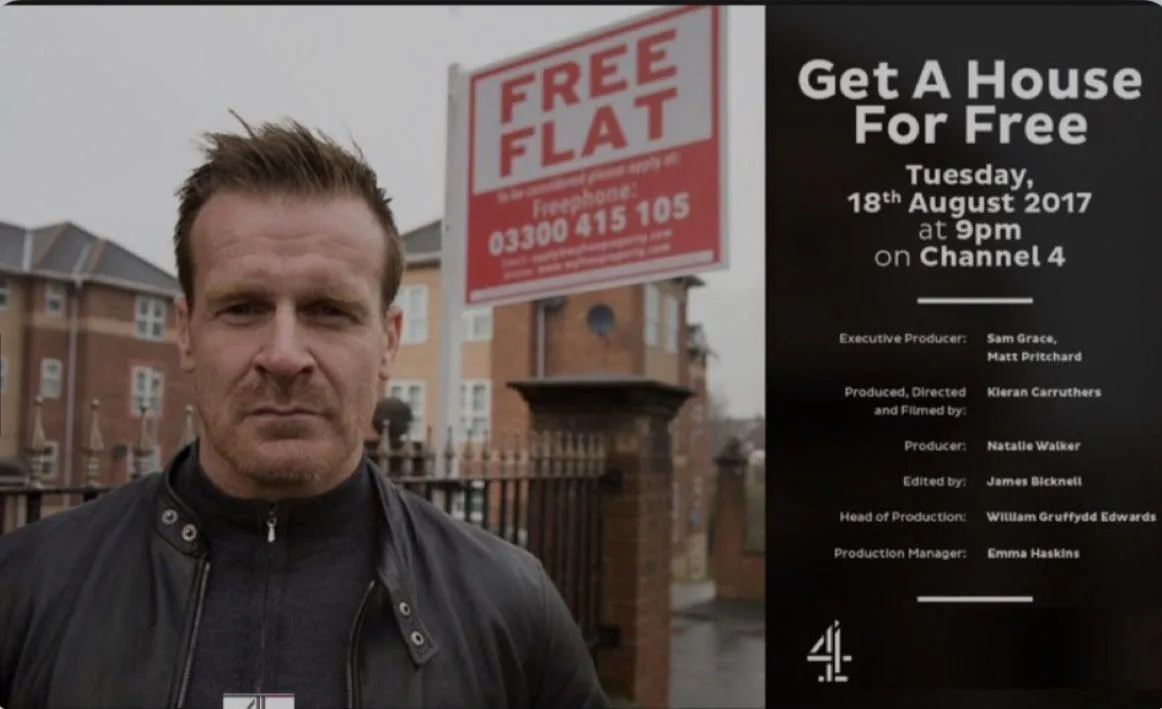
Get a House for Free
Changed Lives
LONDON — When the Channel 4 TV show Get a House for Free first aired, viewers across the UK watched something that felt almost impossible for television: homes being given away to people who had nowhere left to turn.
Hosted by entrepreneur and philanthropist Marco Robinson, the programme followed real people facing some of the most difficult circumstances imaginable — homelessness, financial hardship, and displacement.
But unlike many television programmes where the story ends when the cameras stop rolling, the real impact of the show is measured in the lives that continued long after filming ended.
Today, the stories of the families featured in the Channel 4 TV show reveal how a single act of belief can transform entire futures.
Holly Robinson: A Home That Created a Family
Before appearing on Get a House for Free, Holly Robinson had spent years trying to secure stable housing.
Her childhood had been shaped by abuse and instability, leaving her constantly searching for the safety and security many people take for granted.
When she first met Marco Robinson during filming, she remembers feeling an unexpected sense of familiarity.
“When I met Marco, I felt a connection immediately,” Holly says. “When I heard his story, I felt like I understood him completely. Our stories had so many similarities.”
For Holly, the moment she was given the house remains one of the most emotional experiences of her life.
“When Marco gave me the house, I was overwhelmed. I couldn’t believe it. I just want to thank him for giving me a new life.”
Today that home has become something far more meaningful than a property.
It is the foundation of a new chapter.
Holly is now married and raising three children, building the stable family life she once thought was out of reach.
What began as a moment captured on television became the start of a completely different future.
Jo Morris: The Emergency Call Worker Who Finally Got a Break
At the time she appeared on the Channel 4 TV show, Jo Morris was working long shifts answering 999 emergency calls — a job that placed her at the centre of some of the most difficult moments in people’s lives.
Despite working nearly every day, the rising cost of rent meant she could not afford to buy a home.
Adding to the challenge, Morris lives with 90 percent vision loss, making her work and daily life even more demanding.
“My rent was almost as much as my salary,” she recalls. “I was working nearly seven days a week, answering emergency calls, and I just couldn’t see a way out.”
When Robinson stepped in and paid the deposit for her house, the impact was immediate.
“I never thought anyone would help me,” Morris says. “When Marco paid the deposit for my house, it was the best thing that has ever happened to me.”
The support gave her something she had not experienced before — space to breathe.
With financial pressure lifted, Morris was able to reduce her workload and reconnect with a passion she had long pushed aside.
Music.
She began playing the drums again and today performs at live gigs.
“It’s allowed me to continue my hobby of playing the drums and performing. I never thought I would have the time or freedom to do that.”
More importantly, the experience changed her outlook on humanity.
“It showed me that there is still kindness and generosity out there.”
A Syrian Refugee Family: Escaping War and Rebuilding a Future: The Mohammed family.
One of the most powerful stories from the Channel 4 TV show involved a Syrian refugee father and his two sons, whose journey to the UK was marked by extraordinary hardship.
Before the war, the father had built an impressive academic career, earning four PhDs.
But the Syrian conflict forced the family to flee their home.
In a desperate attempt to reach safety, he paid £20,000 to a human trafficker so the family could be transported hidden inside a shipping container.
Their mother was too ill to make the journey and tragically died during the war.
When Robinson first encountered the family in the UK, they were living under a bridge.
Despite their circumstances, the father insisted on maintaining one thing: his sons’ education.
Every day they travelled to a public library so the boys could continue studying for accountancy degrees.
Government housing support at the time offered accommodation for only one family member — but the father refused to separate from his sons.
“We would not split up,” the family explained. “We stayed together.”
Robinson allowed the family to live in one of his properties for two years and helped pay for their asylum application.
The results changed the trajectory of their lives.
The family successfully secured asylum, the sons completed their accountancy qualifications, and they were able to build a stable life.
Looking back, the family describes Robinson’s help as a turning point.
“We never thought this life would be possible,” they said. “Now our children have a future.”
Their message to anyone facing hardship is simple.
“If you feel like giving up, don’t. Life can change.”
A Television Show With Real-World Impact
While many television programmes focus on entertainment, Get a House for Free revealed the deeper impact that housing security can have on individuals and families.
Stable housing can create opportunities for:
- Education
- Career development
- Family stability
- Personal wellbeing
- Community contribution
For the people who appeared on the Channel 4 TV show, the homes they received were more than properties.
They were foundations for rebuilding their lives.
The Ripple Effect of Opportunity
For Marco Robinson, the most meaningful outcome of the show has been seeing how those lives evolved.
A home meant more than shelter.
It meant the possibility of a different future.
And for Holly Robinson, Jo Morris and the Syrian refugee family, that future has become a reality.
Their stories serve as a reminder that sometimes the most powerful transformations begin with a simple act of belief.
Follow Marco Robinson
For new stories, updates and interviews, follow Marco Robinson:
 https://www.instagram.com/marcorobinsonnow